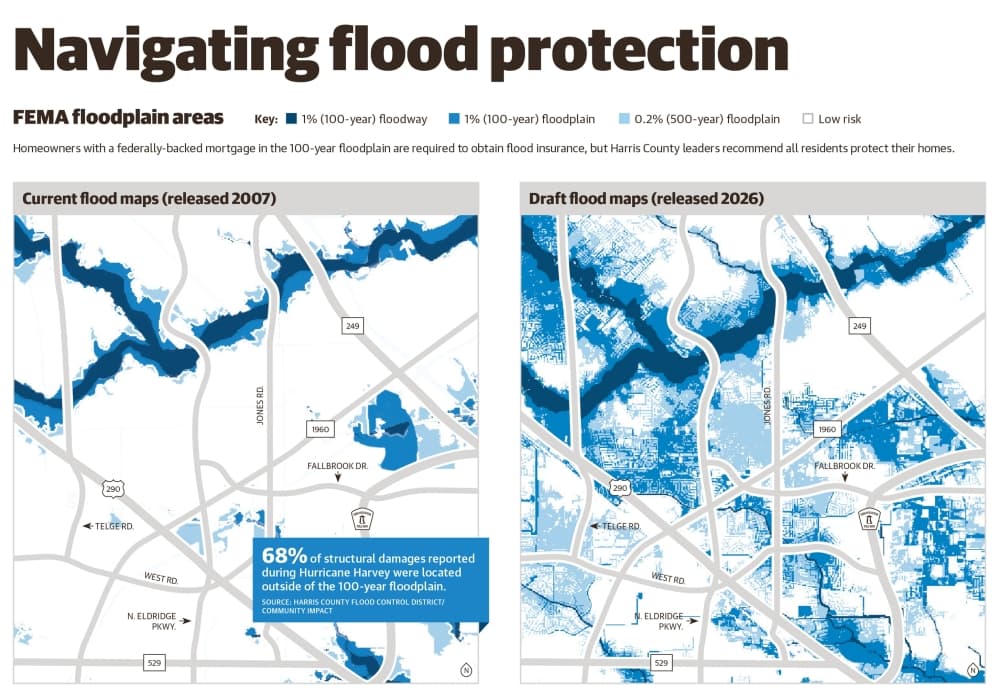


The Greater Houston Flood Mitigation Consortium released a report in March stating that many Harris County watersheds do not have sufficient flood mitigation projects planned in relation to the amount of damage they sustained during Hurricane Harvey. The consortium began its research shortly after Harvey devastated parts of Southeast Texas in August. Its membership consists of research institutions throughout the state, including the Severe Storm Prediction, Education and Evacuation from Disasters Center at Rice University, the Houston Advanced Research Center and Texas State University’s Barbara Jordan-Mickey Leland School of Public Affairs, Consortium Project Manager Christof Spieler said. During the course of its research, the group analyzed flood mitigation infrastructure, drainage, buyouts and development regulations in the Greater Houston area. The consortium found several of Harris County’s 22 watersheds—the area that surrounds and drains into a body of water—with high populations sustained damage during Harvey but do not have major flood mitigation projects planned. “[There are watersheds] which have not been fully studied and have not had a clear list of projects identified, which means if we get enough funding for all of the identified projects out there, these watersheds will not be fully addressed,” Spieler said. For example, the Cypress Creek watershed sustained $135.17 million in damage during Harvey—the third-highest total after Brays and Buffalo bayous, according to the report. However, only $14.76 million worth of projects are underway or planned in the watershed, according to the report. One project within the Cypress Creek watershed that has been discussed at Harris County Commissioners Court since Harvey is a third reservoir in Northwest Harris County. According to the consortium’s report, a third reservoir in the area could help mitigate future flooding, but its location and design are crucial. The consortium found construction of a reservoir—identified in the Cypress Creek Overflow Study released by the Harris County Flood Control District in 2015—would only mitigate the effect of future development and would not alleviate existing flooding. “That project is not one that will address the problems we saw in Harvey,” Spieler said. “That said, the decision of a new reservoir in Northwest Harris County is worthwhile because … a reservoir in this area could be very effective at addressing that flooding.” The consortium found that acquiring and preserving land along bayous and creeks can also be effective flood mitigation solutions, said Lisa Gonzalez, Houston Advanced Research Center CEO and a member of the consortium. “It’s important to understand the natural landscape and how we can live within that,” Gonzalez said.
Home buyouts
In addition to building infrastructure and preserving undeveloped land, the consortium found that home buyouts can be cost-effective tools. According to the report, the Harris County Flood Control District has bought more than 3,000 properties since 1985, with the majority purchased through grants from the Federal Emergency Management Agency. As a result of the buyouts, more than 1,060 acres of land have been restored to their natural states. However, because the buyouts are voluntary, some homeowners elect not to participate, which prevents the land from being used effectively for detention and flood mitigation projects, according to the report. Earthea Nance, associate professor at Texas State University and a member of the consortium, said she believes officials should implement a coordinated rehousing plan in conjunction with the home buyout system. According to the report, many of the Greater Houston area’s more affordable homes are located within the flood plains; therefore, when buyouts occur and less expensive homes are purchased, there are fewer affordable housing options for residents in the area. Nance said buying homes without planning to add affordable housing leaves residents with fewer options. “If you think about it, it’s a removal of affordable housing,” Nance said. “Without a comprehensive plan to add affordable housing, then we’ve kind of left people without any place to go.”
Next steps
Spieler said now that the consortium has released its initial report, it is identifying topics that deserve additional research such as watersheds. Spieler said the consortium is not an advocacy group and will not recommend officials take particular actions. However, the conclusions identified in the report can help officials make decisions, he said. “I’m seeing a real interest in doing things differently moving forward and seriously addressing flooding as an issue in this region,” Spieler said.