
The idea of joint replacement still conjures images of long hospital stays, rehabilitation facilities and weeks off your feet. But for many patients today, that scenario is no longer the norm.
Thanks to advances in surgical techniques, technology, pain management and early mobility, total joint replacement has changed significantly, with many patients now able to return home the same day as surgery.
At UTMB Health, those advances are part of an evolving approach to joint replacement care, from preparing patients for surgery to helping them get moving and continue their recovery at home.
How has joint replacement changed over the past 10 to 20 years?
The shift toward same-day joint replacement is the result of years of changes in how patients are treated before, during and after surgery. Advances in surgical techniques, technology, pain management and postoperative care have helped patients move sooner, manage discomfort and transition home earlier than in the past.
Technology has also become an increasingly important part of joint replacement. UTMB Health offers computer-navigated and robotic-assisted total hip and knee replacement, using computer technology to help surgeons plan and guide implant positioning.
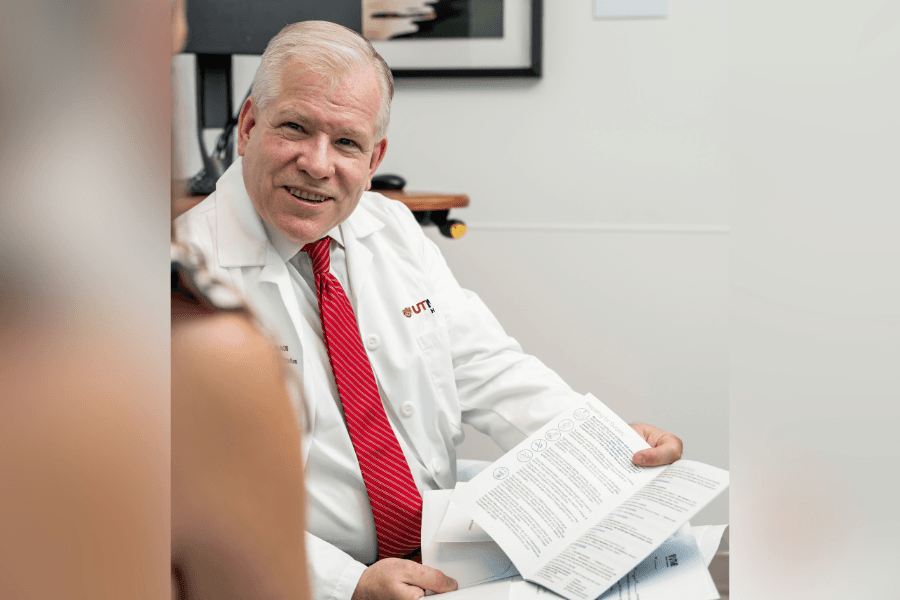
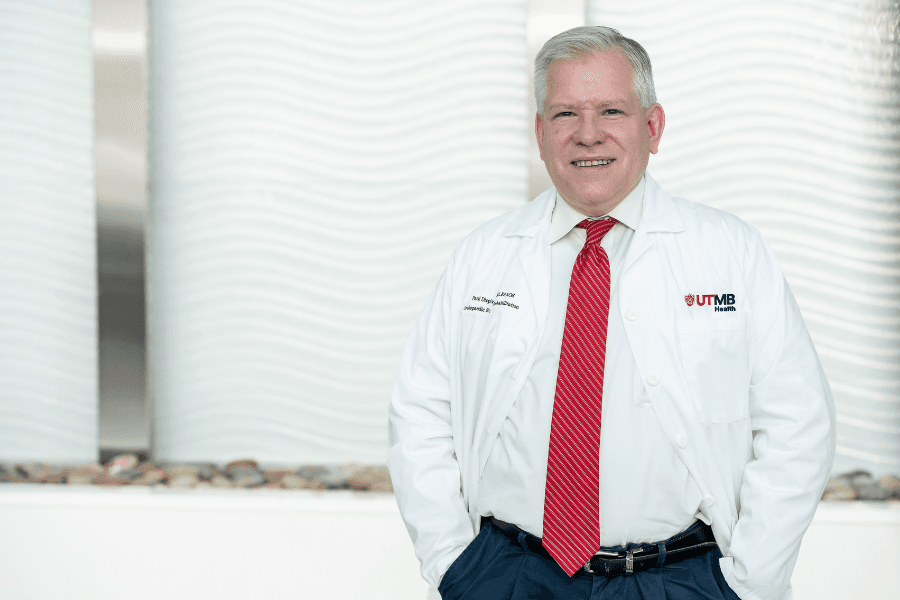
"Most people nowadays are going home the same day of their surgery, and if they're staying, it's usually just an overnight stay," orthopedic surgeon Dr. Paul Dicpinigaitis said. "It's no longer being in the hospital for two, three, five days and beyond."
Patients are also getting out of bed and walking on the day of surgery, helping them begin the recovery process sooner. Rather than spending several days recovering in the hospital before beginning rehabilitation, many patients can start that process within hours of their procedure and continue their recovery at home.
What does same-day surgery involve?
Going home the same day does not mean a patient is fully recovered. Instead, it means the early stages of recovery can begin at home rather than after several days in the hospital.
Patients are typically helped out of bed and encouraged to walk on the day of surgery, often with assistance. Pain management is also an important part of early recovery, allowing patients to stay comfortable enough to move and participate in rehabilitation.
How quickly someone progresses can vary based on factors such as their overall health, the type of joint replacement and how their recovery develops.
Despite the understandable anxiety that can come with surgery, the recovery experience may be different from what patients expect.
"Some patients are surprised because they're understandably expecting the worst, but then they go, 'Huh, this wasn't so bad,'" Dicpinigaitis said.
How can patients prepare for recovery?
Recovery begins before surgery. Preparing the body, the home and a support system ahead of time can help patients transition more comfortably after returning home.
Patients may receive guidance on medications, physical preparation, what to expect during the hospital stay and how to approach rehabilitation. UTMB Health also offers a free Joint Academy program designed to help patients prepare for total hip or knee replacement and understand what to expect before and after surgery.
Once home, patients continue following their care plan, including exercises and physical therapy as recommended by their care team. Planning for assistance during the first few days, understanding mobility restrictions and having necessary supplies ready can also help patients safely navigate recovery.
What does UTMB Health's Total Joint Replacement Center of Excellence accreditation mean for patients?
Joint replacement care involves much more than the procedure itself. Preparation, surgery, recovery, patient education and follow-up all play a role in the patient experience.
That approach was recently recognized when UTMB Health's League City Campus earned Total Joint Replacement Center of Excellence accreditation from The Joint Commission. The accreditation recognizes the program's coordinated, evidence-based approach to joint replacement care, including its focus on safety, clinical outcomes, patient education and continuous improvement.
For patients considering joint replacement, the recognition reflects the work that goes into coordinating care across the entire process, from preparing for surgery through recovery.
Ready to take the next step?
Learn more about total joint replacement options or the free Joint Academy program at UTMB Health.
To schedule a consultation with an orthopedic specialist, call 832-505-1200 or request an appointment online through MyChart.
How long do patients typically stay in the hospital after joint replacement?
Many patients can return home the same day as surgery, while others may stay overnight. The appropriate length of stay depends on each patient's health, procedure and recovery.
Does going home the same day mean I am fully recovered?
No. Same-day discharge marks the beginning of recovery, not the end. Patients may need assistance with mobility, exercises, physical therapy and other aspects of their care at home.
What can patients do before surgery to prepare for recovery?
Preparing medications, the home environment, transportation and support system ahead of time can help make the transition home easier. UTMB Health also offers a free Joint Academy program for patients preparing for total hip or knee replacement.
When might someone need a total joint replacement?
Joint replacement may be considered when pain and limited mobility interfere with daily activities and other treatments are no longer providing enough relief. An orthopedic specialist can help determine whether surgery is appropriate.
What does the Total Joint Replacement Center of Excellence accreditation recognize?
UTMB Health's League City Campus earned Total Joint Replacement Center of Excellence accreditation from The Joint Commission. The recognition reflects the program's approach to coordinated joint replacement care, including safety, clinical outcomes, patient education and continuous improvement.