The world's largest semiconductor plant could be coming to Austin after billionaire Elon Musk announced the project at a March 21 livestreamed event in downtown Austin.
Terafab—a joint venture between Tesla, SpaceX and xAI—would be "the largest chip manufacturing facility ever," producing a combined compute capacity of 1 terawatt annually, according to a post by Tesla on X.
The big picture
The advanced technology fab would enable Musk's companies to escalate their production efforts, he said. Musk said current global semiconductor production meets only a fraction of the energy and compute demands his companies anticipate.
“We either build the Terafab or we don’t have the chips," Musk said at the March 21 event. "We need the chips, so we’re going to build the Terafab."
Terafab would produce two types of artificial intelligence chips—one for electric cars and the Optimus humanoid robots, and another designed for space, Musk said. The facility would generate 100-200 gigawatts of chips for Optimus humanoid robots along with terawatts of chips for solar-powered AI satellites, according to Tesla information.
The semiconductor plan could quickly produce, test and improve chips of any kind, combining logic, memory and advanced packaging capabilities.
“We're really going to push the limit of physics and compute," Musk said.
The details
In a post on X, Musk said Terafab could be 100 million square feet. Several potential sites are under consideration for the facility, he said.
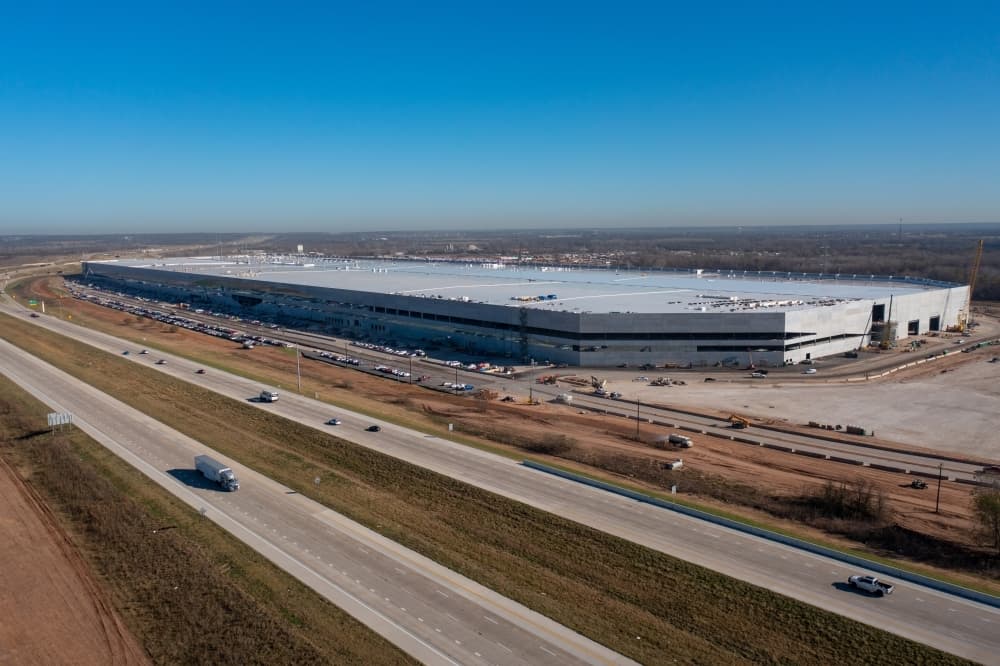
Tesla opened its new 10 million-square-foot headquarters—Giga Texas—in southeast Travis County in 2021.
"We couldn’t possibly fit the Terafab on the GigaTexas campus," Musk said on X. "It will be far bigger than everything else combined there."
Zooming out
Samsung has been building a $17 billion semiconductor plant in Taylor since 2022. The fab—or the actual manufacturing facility—will be operational by the end of 2026, according to previous Community Impact reporting.
In recent years, the city of Round Rock has provided millions in incentives to KoMiCo, Tekscend Photomask and Valex to expand their semiconductor facilities.
"We're very grateful to our existing supply chain ... and we would like them to continue to expand as quickly as they can," Musk said. "We will buy all of their chips... but there’s a maximum rate at which they're comfortable expanding, but that rate is much less than we would like."
At the March 21 event, Musk thanked Gov. Greg Abbott and the state of Texas for their support of the Terafab project.
One more thing
Musk said he eventually anticipates the production of 10-100 times more humanoid robots than cars, encompassing around "1-10 billion" robots a year with a "significant percentage" coming from Tesla. Musk said his products could one day enable a "multi-planet species" in which people live on the moon and Mars.
Some of Musk's initiatives have faced pushback, including Tesla's self-driving robotaxis that launched last year. Tesla faced a federal investigation assessing the safety of the company's autopilot system and its Full Self-Driving, or FSD, software after several reported fatal collisions, according to previous Community Impact reporting.
Community Impact requested more information about the Terafab project's location and timeline but had not received a response from Tesla as of press time.