Looking at San Marcos, there's some work to be done. There's some great assets; it's beautiful in so many ways, but you really have to get people off I-35 to see that. If you're coming up just on I-35, it doesn't show very well. That's something that we're talking to the city about. I have the ability coming in with eyes of an outsider, a different perspective, because we're selling this product. It has a lot of wonderful things. It's got a young, educated workforce, a population that from what I've seen is so—the admiration for this community is so deep. The willingness of people to work; it's just impressed me tremendously.
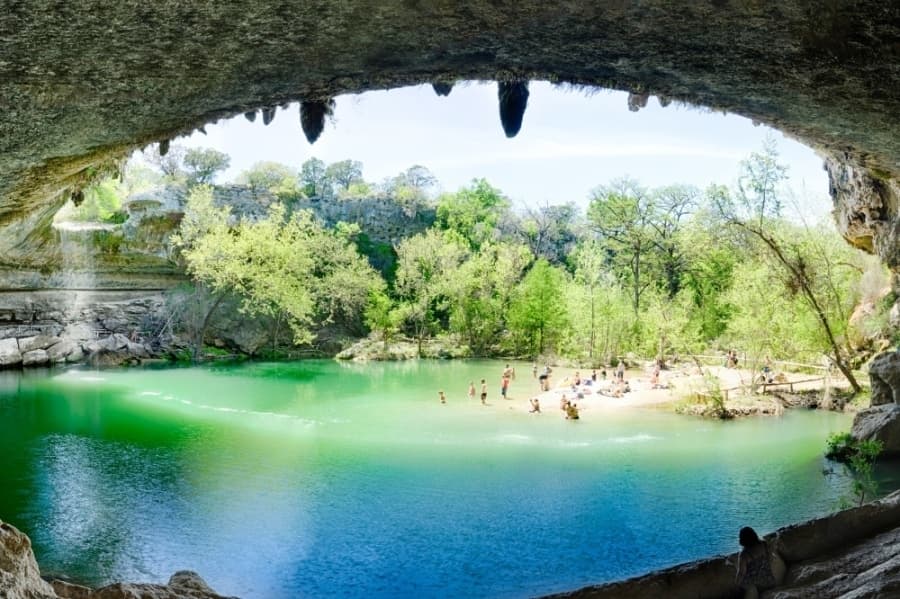
We have to roll up our sleeves, and there's some work to do on making sure that the city shows well, that the streets are clean, that curbs are repaired, that maintenance is done. There's some beautiful parks here, which is fantastic; the natural environment is a selling point. That needs to be maintained and taken care of because you need that in order to attract people here and companies here. You also need good restaurants. You need entertainment options. You need housing. There are some things that we need to work on, but nothing insurmountable. Nothing that I think the community isn't already aware of and just needs to pull together to move forward. The other parts of the region have differing challenges; some entertainment options, some schools. Overall, it's very positive. The opportunities are tremendous for the entire region.
How do you respond to people who push back against development because they like San Marcos the way it is?
In Austin, just up the road, we saw that a lot. The fact is that you're growing no matter what. We [San Marcos] were ranked as the fastest-growing city in America with a population over 50,000. The Austin metropolitan area doubles in population every 20 years and has since the 1880s. There is a sense of explosion, but it's actually not explosion; it's a growth rate that is fairly steady. San Marcos has outpaced, in the past year, that growth rate at 4.9 percent. It's a good problem to have. It's a far better problem than the opposite, where you have people leaving, a lack of growth. Without that growth, you stagnate and are not successful. It's managing that growth, and it's growing it in a way that is true to your identity and to your brand. The acknowledgement that you're growing—that's going to happen. Let's do it in a way that includes quality jobs, that includes benefits for citizens, that provides opportunities. Austin wrestled with that years ago and has been able to come to terms with it and now has one of the strongest economies in the country. We can learn a lot of lessons from our neighbors to the north and understand that that [growth is] going to happen, but let's do it in a way that is true to who we are and to our values.

.jpg "Adriana Cruz")