At the beginning of 2025, the city of Kyle Police Department began considering implementing a “Drones as First Responders,” or DFR, program.
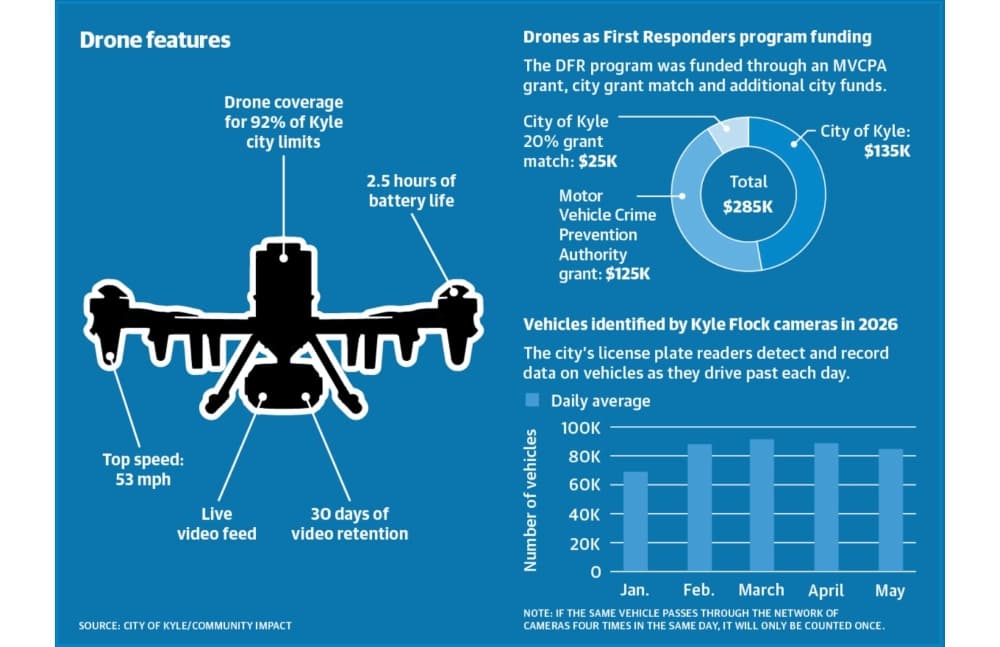
The Kyle City Council approved the purchase of two drones for the Police Department, partially funded through a Motor Vehicle Crime Prevention Authority grant, or MVCPA, in October 2025.
The overview
The program utilizes remotely controlled drones to observe and report information during active crimes, pursuits or emergencies to first responders and law enforcement.
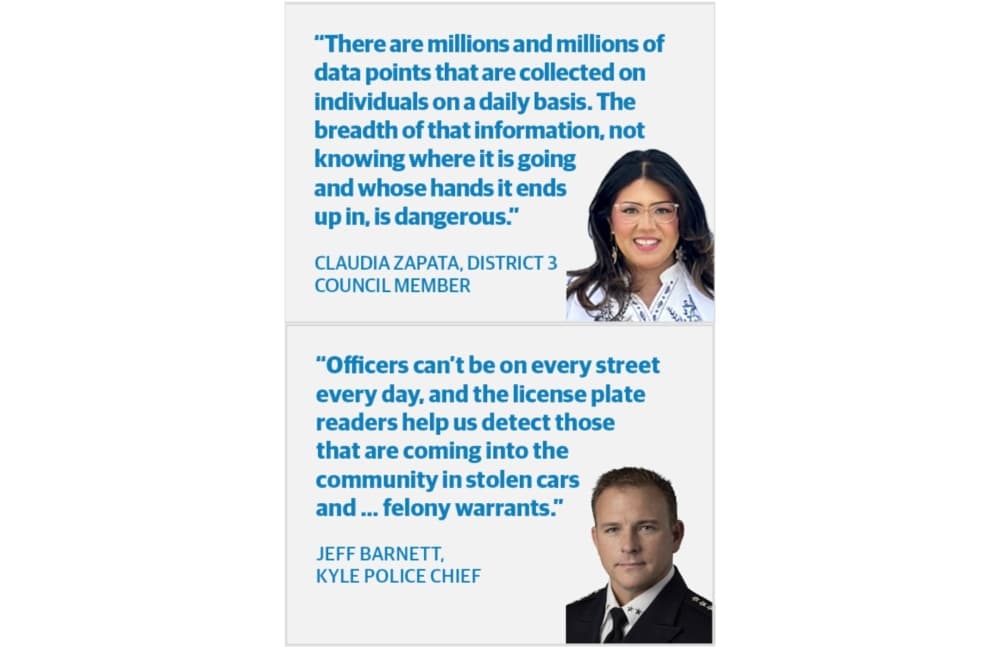
“They’re designed to respond first and foremost to any situation in which they can help improve life safety of our citizens and our first responders,” Kyle Police Chief Jeff Barnett said. “There’s really a pretty wide variety of situations in which we can fly the drones.”
The drones provide a live feed to dispatchers, allowing them to communicate directly with first responders and provide direction and situational insight.
The Police Department prioritizes certain crimes and events in determining when to deploy the drones, Barnett said, including:
- Robberies
- Thefts
- Motor vehicle accidents
- Wildfires
- Floods
- Missing persons
- Fleeing individuals who pose a threat to public safety
“The drones help put our people in the right spot, so it’s not always about the immediacy,” Barnett said. “That drone’s not going to go and land and save somebody’s life, but it can help our responding police, fire and EMS personnel get to the right location with the right equipment and the right people."
In addition to the DFR program, the city of Kyle operates 38 Flock Safety automated license plate reader cameras, or ALPRs, and 12 live feed cameras. Since their tentative implementation in March, the drones have seen success in their operations, Barnett said.
The Kyle Police Department has used the drones in a variety of situations, including the tracking of a suspect fleeing from the Kyle Public Safety Center into a nearby wooded area, Barnett said.
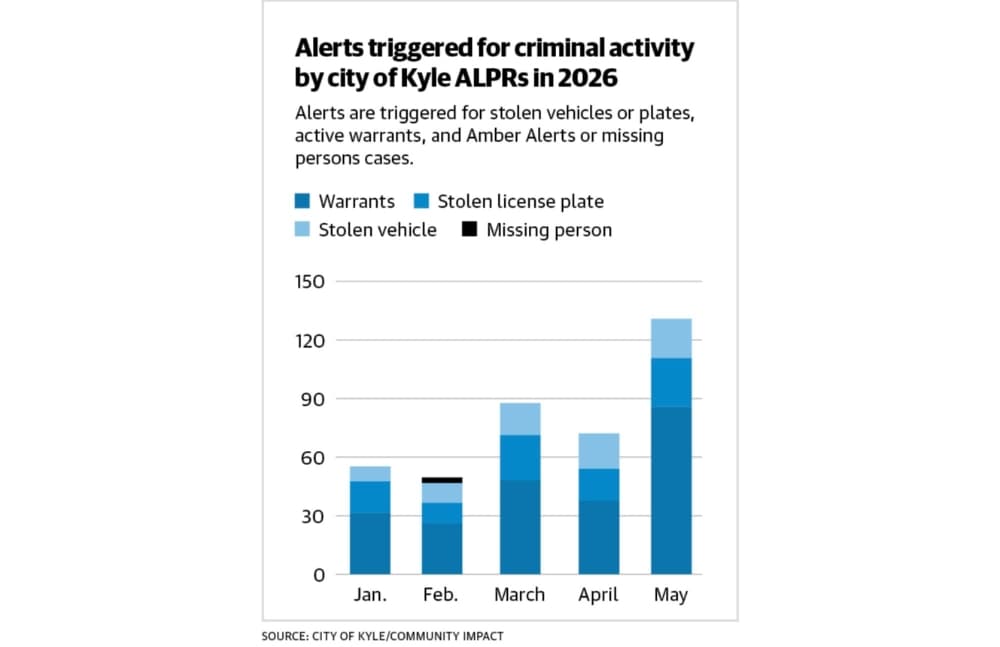
DFRs can be utilized in tandem with ALPRs in the city, Barnett said. If a license plate triggers a criminal activity alert, a drone can be deployed to that vehicle to observe the situation and provide information to officers.
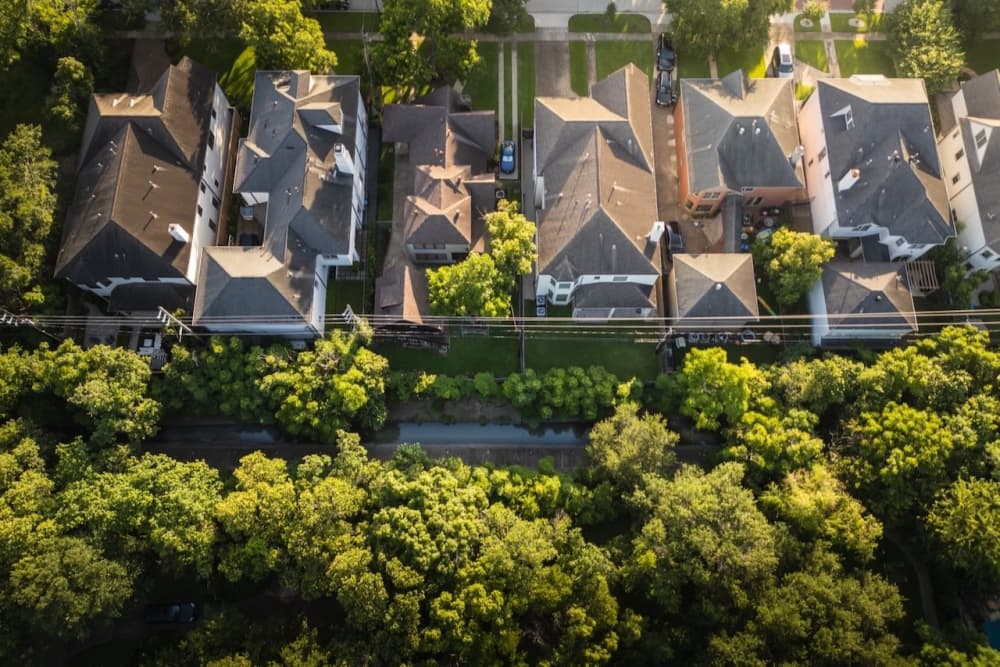
“Two drones don’t cover the entire city, but they cover the vast majority of our calls for service areas that are populated, as opposed to the more unpopulated areas that are still undeveloped in the city,” Barnett said.
 Diving deeper
ALPRs read every license plate that passes them and run the plates through a law enforcement database, checking for information indicating the vehicle is involved in an active case, Barnett said.
“[ALPRs] are probably one of the best crime-fighting tools that we now have in our country,“ Barnett said.
Barnett described criminal activity that the ALPRs have helped deter since their implementation in the city over a decade ago.
ALPRs have helped Kyle police officers respond to large-scale overnight car burglaries by identifying stolen vehicles used by groups of young adults traveling from Austin to target neighborhoods in the city, Barnett said.
Other cities in the area have utilized Flock technology and ALPRs. On Dec. 2, the San Marcos City Council voted to end its contract with Flock Safety. The city of Buda Police Department currently uses Flock ALPRs to identify vehicles in criminal cases.
The other side
In 2025, CEO and founder of Flock Safety Garrett Langley released a statement emphasizing that the company does not sell data, allows customers to decide independently what is shared with other agencies, and does not have any contacts with the U.S. Immigration and Customs Enforcement, or ICE.
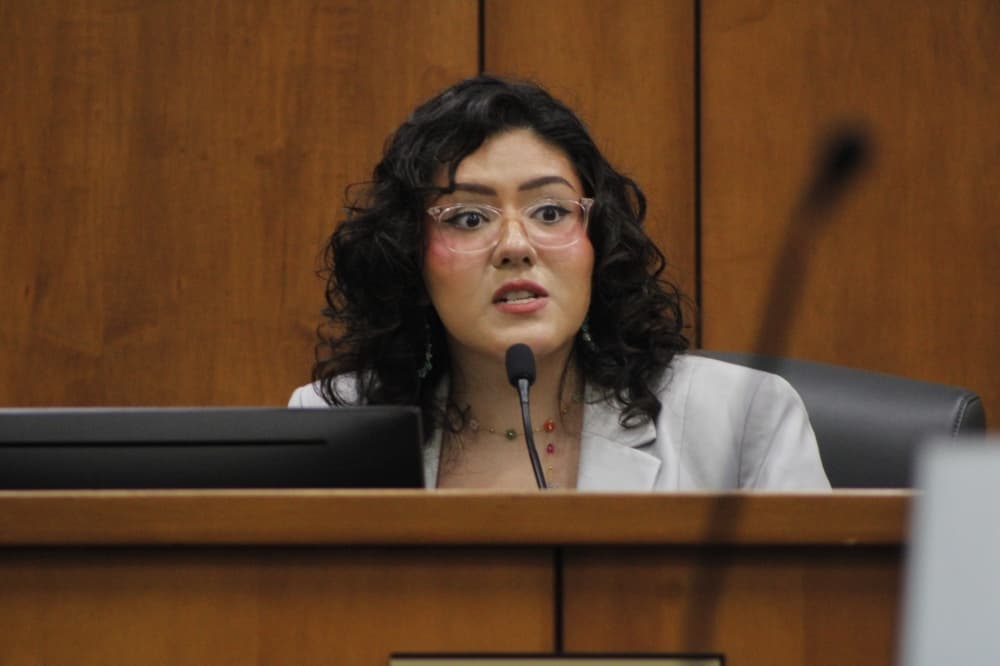
“I am very weary of Flock,” District 3 council member Claudia Zapata said. “They did not update their master services agreement. They still own nonexclusive worldwide perpetual royalty-free rights to all of our data.”
The city of Kyle’s ALPR policy states that the equipment may be used for any routine patrol operation or criminal investigation and does not require reasonable suspicion or probable cause.
“I think people’s rights are ultimately being trampled on,” Zapata said.
Looking ahead
The city of Kyle has an approximate population of 70,000, according to the U.S. Census Bureau. ALPRs in the city recorded an average of about 92,000 unique license plate reads each day, identifying more than the city’s population.
While the city does not currently have plans to expand its DFR fleet, the Kyle Police Department may invest in another drone as development continues and the program’s needs exceed the capability of the current fleet, Barnett said.