Comal County Commissioners unanimously approved a resolution accepting up to $1.25 million in funding from the Texas Water Development Board, or TWDB, to bolster flood water infrastructure and warning systems at a regular meeting Dec. 23.
What happened
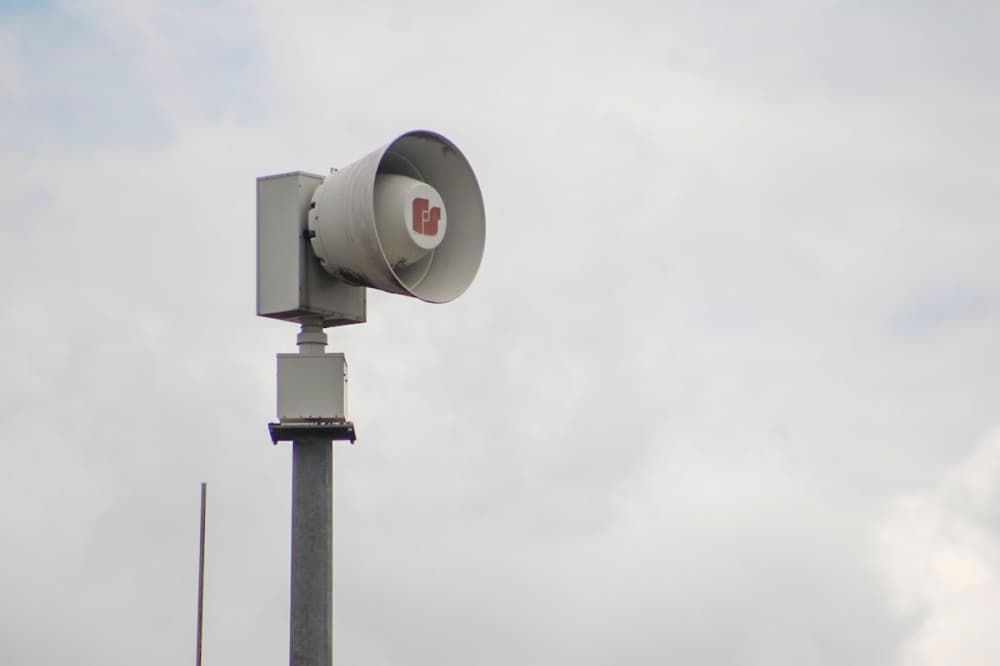
The action authorizes the county judge to execute a grant agreement for an initial grant of $1 million in financial assistance to enhance outdoor flood warning sirens, monitoring technology and low-water crossing safety measures, with the ability to accept an additional $250,000 if needed, according to agenda documents.
The funding was allocated from Senate Bill 3, passed during a special session of the state’s 89th legislature following severe flooding in July. SB 3 made $30 million available statewide to support flood mitigation efforts in 30 eligible counties, including Comal County, documents state.
The grant presents an opportunity to build upon the county’s existing flood warning system. Currently, Comal County operates 10 high-water warning systems—six downstream of Canyon Lake and four upstream—which were tested during the July 4 weekend flooding events. Following those tests, the county made adjustments and began upgrading the systems with AC power and fiber-optic communication, replacing cellular connections to improve reliability, Comal County Engineer Robert Boyd said.
Plans outlined improvements to warning lead times by installing weather stations in watersheds that feed into the Guadalupe River, along with flow sensors where water enters the river. By combining rainfall and river flow data and analyzing the information through geographic information systems, the county hopes to extend flood warning times, Boyd said.
“The whole idea behind this is to increase warning time by having these weather stations and these nodes,” Boyd said. “We could increase our warning time from 30-45 minutes to hours.”
Measuring the impact
As part of the plan, officials identified the need for an additional high-water warning system in the Lazy L&L area downstream of Canyon Lake. The county also plans to add lighting at key low-water crossings to improve visibility during nighttime flooding events, aiding first responders and increasing public safety, Boyd said.
Another component of the project includes installing additional cameras at critical locations. The county has budgeted funds in fiscal year 2025-26 for cameras at dams and has already seen benefits from cameras at downstream crossings during recent flooding, Boyd said.
With grant funding, officials propose adding cameras at upstream locations, including Spring Ranch Road and Nichol's Landing, to provide real-time flood monitoring during high-water events, agenda documents state.
The final phase of the proposal would expand the county’s automated low-water crossing system. Comal County currently has 16 automated crossings, with additional locations still requiring manual closures. Automating those crossings would trigger warning lights and roadway updates when water reaches unsafe levels, improving safety for drivers on county roads, Boyd said.
“The high water warning systems we have at our crossings right now are based on two factors. One is the rate of rise, and elevation of the floodwaters,” Boyd said. “We want to put a weather station in those watersheds and then have a flow meter, or a node, as it enters into the river.”
The catalyst
SB 3, signed into law by Gov. Greg Abbott on Sept. 5, directs TWDB to assess the 30 counties included in the governor's July disaster declaration to identify flash flood-prone areas with a history of consistent or severe flooding where outdoor warning sirens are warranted, according to the water development board’s website.
The bill requires:
- The appropriate county within those areas to install, maintain and operate an outdoor warning siren system
- TWDB to facilitate the development of best practices and guidance for the operation of outdoor warning sirens
- TWDB to develop rules relating to requirements for outdoor warning systems in flash flood-prone areas
Other counties identified by TWDB include Bexar, Guadalupe, Kendall, Llano, Travis and Uvalde, the declaration states.
Looking ahead
No exact timeline was presented to commissioners for when these projects would be completed, but the combination of grant funding and already-budgeted county resources could also allow all four phases of the project to be completed within the next year, Boyd said.
TWDB may reduce the amount of financial assistance available under the grant agreement if counties fail to submit approvable project plans for the full $1 million initial amount awarded by December 31, 2026, according to TWDB’s website.