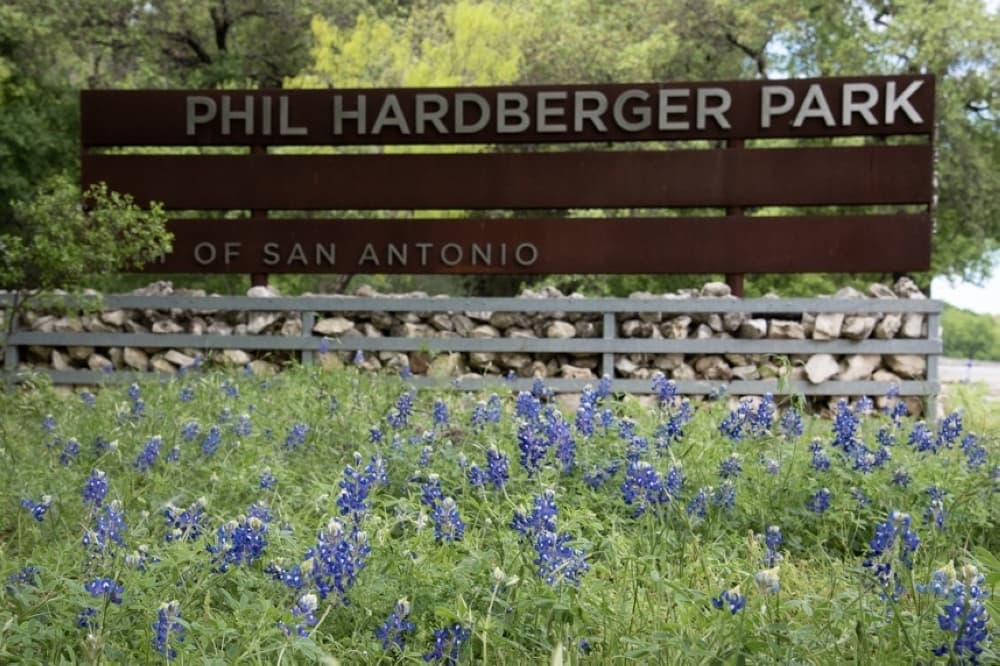
Phil Hardberger Park features trails, playgrounds, open spaces and natural environments in the heart of North San Antonio. (Courtesy Phil Hardberger Conservancy)
Opened over 15 years ago, Phil Hardberger Park has transformed from a former dairy farm into one of the most popular parks in San Antonio.
Melissa Kazen, executive director of the Phil Hardberger Conservancy, said thousands of residents use the park each week.
“On an average day, probably 1,000 [residents use the park],” Kazen said. “On a weekend, it’s [even] more.”
The big picture
Composed of approximately 330 acres, Kazen said Phil Hardberger Park is close in size to Brackenridge and Eisenhower parks, but larger than most neighborhood parks in the city, and includes approximately eight miles of trails, which allow residents to experience nature without having to leave the city.
“You can have an experience where you feel like you’re alone in nature,” Kazen said.
Phil Hardberger Park is also designed to be a self-sustaining environment that caters to natural plants and wildlife. Kazen explained that the park maintains three unique ecosystems—a woodland area, a savannah or grasslands, and a wetland area. Within these natural habitats, animals—such as bobcats, skunks, opossums, armadillos and cottontail deer—are able to live freely without human interference.
To maintain the natural Texan ecosystem, park staff and volunteers routinely remove invasive plant life. In 2025 alone, staff and volunteers removed 40,000 bags of invasive species, Kazen said.
Additionally, Kazen said the park uses renewable energy sources, such as solar, and captured rainwater in cisterns to reduce the park's dependence on city utilities, including a 250,000-gallon cistern, which serves as a water source for wildlife.
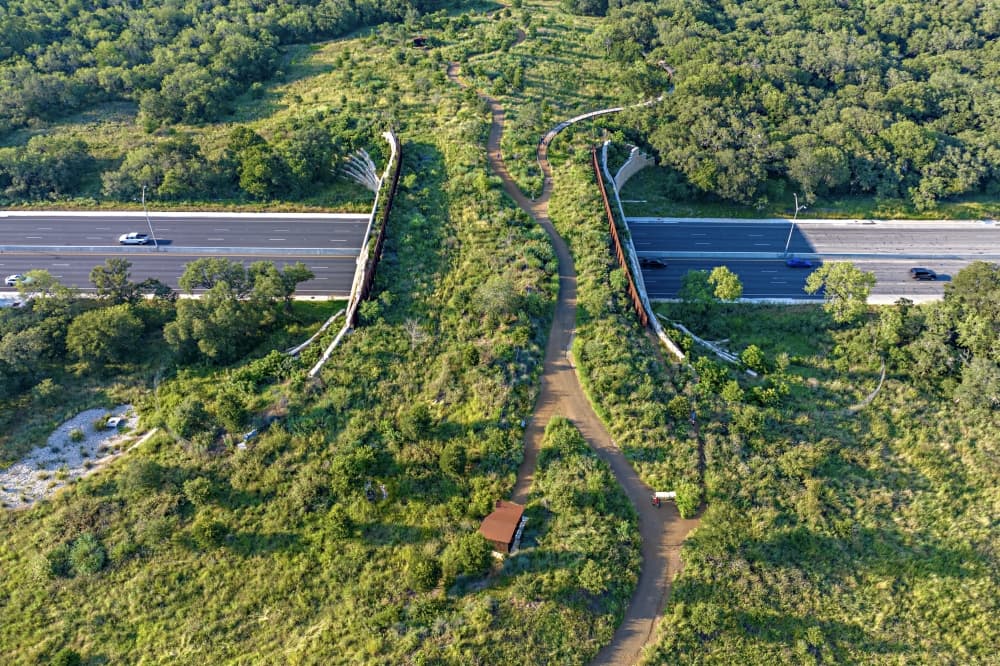
A major ecological innovation that was opened in 2020 is the Robert L.B. Tobin Land Bridge. Made possible through philanthropic donations, the bridge was built using a curved concrete arch, reinforced with rebar and geofoam blocks that cut down on the bridge’s weight.
“We brought in about 280,000 cubic yards of fill, but before we started building, we scraped off the topsoil and banked it so we’d keep the native seed bank. Then, once the bridge was built, we put that native soil back on,” Kazen said.
The Robert L.B. Tobin Land Bridge is one of the largest mixed-use wildlife crossings in the United States. (Courtesy Justin Moore Airborne Aerial Photography)
Stretching over Harry Wurzbach Parkway, the core-ten steel side walls and heat from the highway have created a microclimate that is a few degrees hotter than the rest of the park.
Kazen said the landbridge includes around 698 types of trees, with hundreds of shrubs, flowering plants and grasses. The land bridge allows wildlife to freely traverse the park without impeding traffic or endangering themselves. Kazen said two-thirds of the bridge is designated for wildlife, with a dedicated trail on one-third of the bridge.
Diving in deeper
On top of the trail network, Phil Hardberger Park offers multiple spaces for residents to play and relax in. This includes two main playgrounds, known as the red playground and the blue playground, as well as two 2.5-acre dog parks located on opposite ends of the park. Kazen said the blue playground is popular for children’s birthday parties.
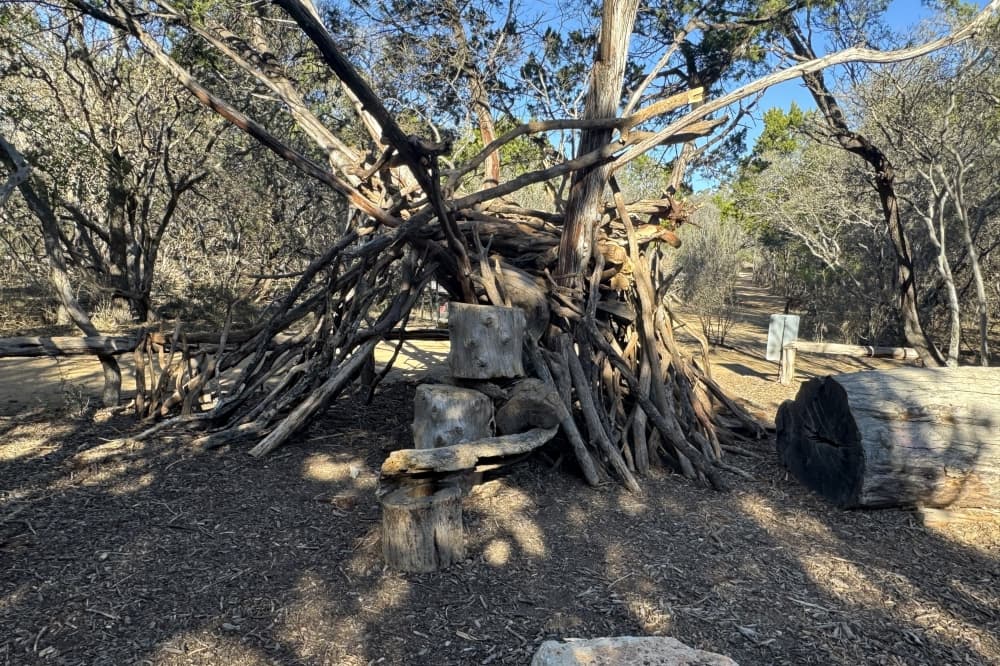
Additionally, the park boasts a natural play area that uses existing natural elements, such as stumps, large rocks and cedar branches that children use to build forts. Due to the success of the natural area, the park is building a second location using repurposed logs removed from San Pedro Springs Park.
Children use natural elements such as logs and branches to build forts in the natural play area. (Parks Kugle/Community Impact)
“[The natural play area] encourages the kids to really use their imagination ... it’s stumps that they can jump from, it’s big rocks that they can perch on and read a book, [and] they build little forts out of [cedar branches],” Kazen said. “It’s a way for them to engage with nature and really encourage their imagination.”
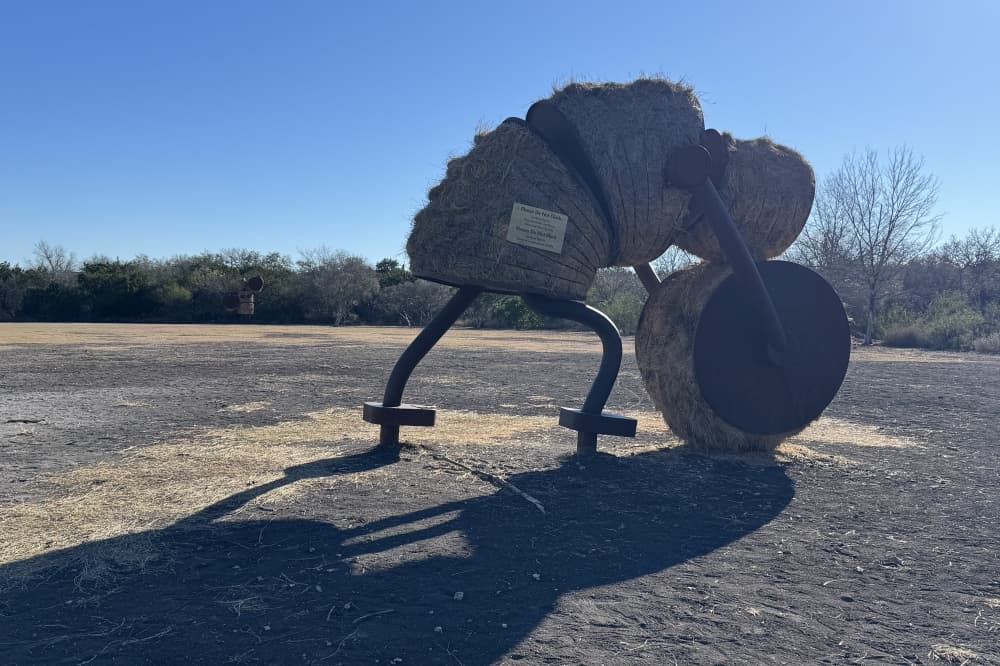
There is also a large field, known as the Open Table, which allows residents a space for other activities, such as soccer games and flying kites. The Open Table also features three statues made of corten steel and wrapped in hay. Created by Tom Otterness, the statues are self-portraits of himself and his family
"Makin' Hay" is a series of three sculptures made by Tom Otterness and includes the Hay Roller, Scythe Lady and Woman Carrying Hay. (Parks Kugle/Community Impact)
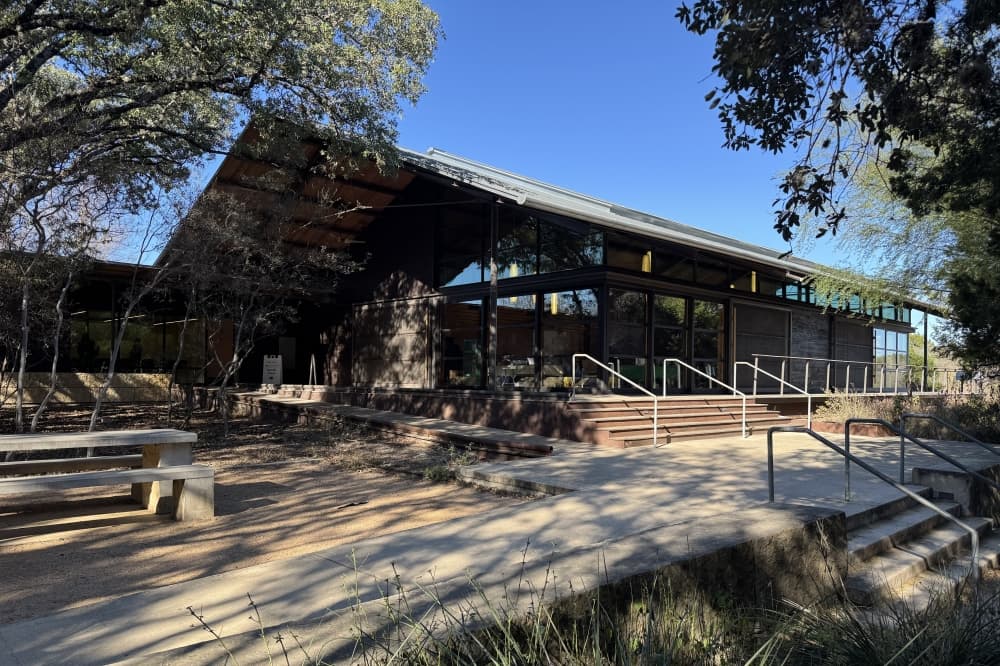
Situated near the Northwest Highway entrance, the Urban Ecology Center is a building that serves as an administrative office and a place for local town halls, children’s programming and environmental education. Designed as an ecologically friendly building, 60% of its power is generated through solar panels and it includes cisterns to capture rainwater.
The Urban Ecology Center is an ecologically friendly building that hosts a variety of events. (Parks Kugle/Community Impact)
Stay tuned
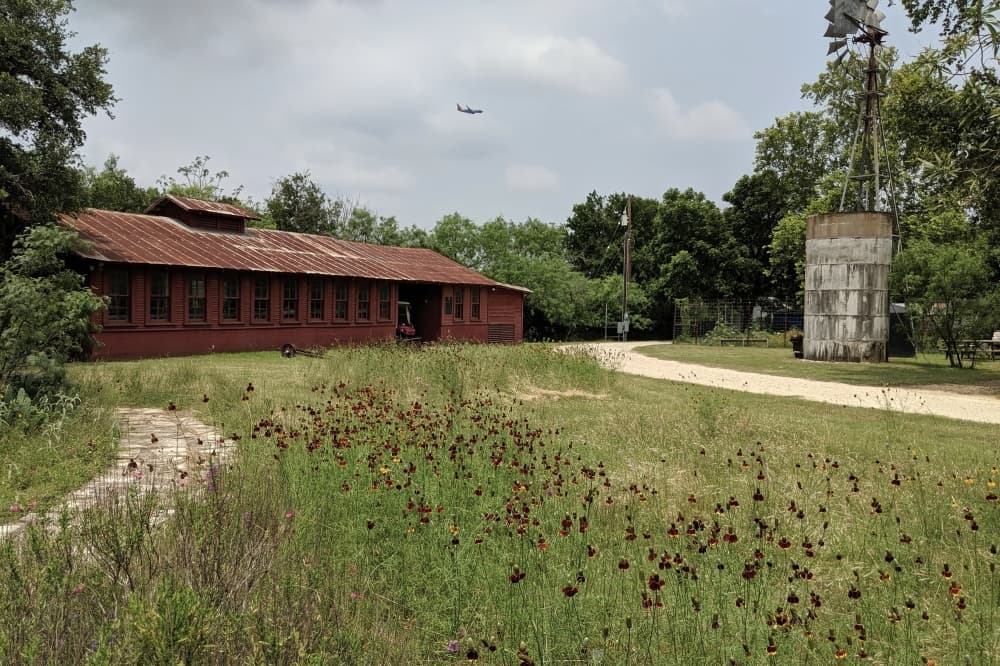
As a way to preserve the history of the Voelcker farmhouse complex, the conservancy is currently restoring the old dairy barn, which includes a new ADA-accessible pathway and restrooms. Kazen said the project is expected to be completed in June.
The restoration of the Voelcker Dairy Barn is designed to preserve the land's unique history. (Courtesy Phil Hardberger Conservancy)