


What’s happening?
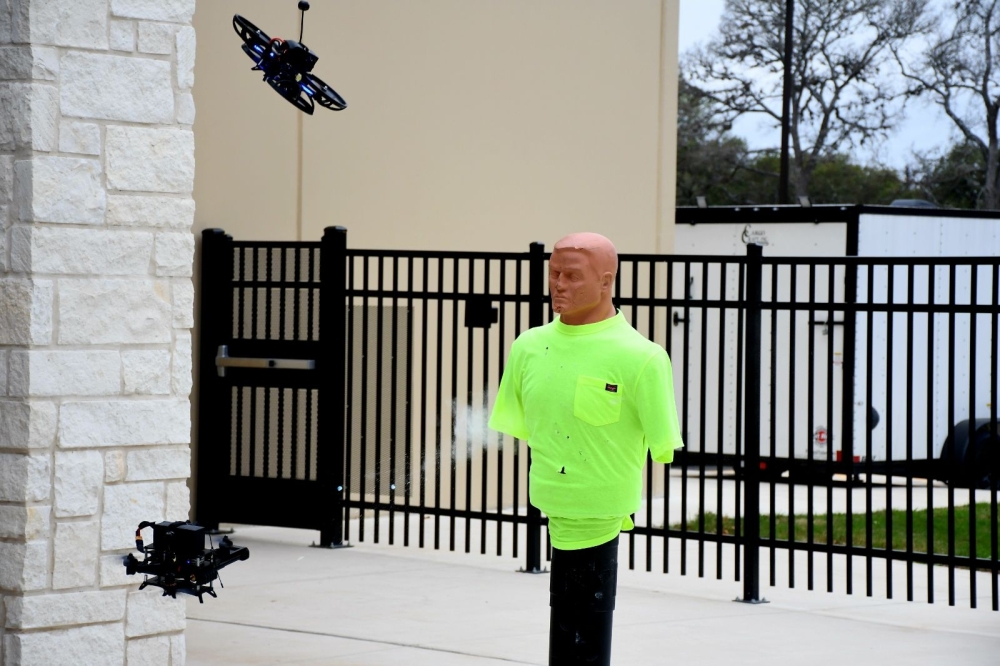
Campus Guardian Angel utilizes an Austin-based team to pilot drones housed on school campuses. The drones are designed for use during school shootings, working with law enforcement to stop an intruder and give key information on the location of the threat.
Justin Marston, CEO and founder of Campus Guardian Angel, said the primary goal was to have drones operate as the initial response, reaching the intruder in under a minute. By mapping the route of the intruder and utilizing drones to distract or incapacitate a shooter, the technology is designed to help officers respond while reducing the risk of being attacked by the intruder.
“In a school shooting, most of the deaths happen in 120 seconds,” Marston said. “Anything that is going to make a big difference is going to be there already, and we’ve got to be able to respond really fast.”
Rick Goodrich, BISD chief of safety and security, said the district opened its doors the week of Jan. 5 to train around 70 public safety officials on responses to critical events at schools.
“Boerne ISD is committed to making our facilities available for first responders to be able to train and prepare for that day we hope that never comes,” Goodrich said.
How it works
Drones are stored in boxes placed around a campus, with around 20-90 drones depending on the campus size. Marston compared the drone network to a sprinkler system, having coverage across a campus.
Marston said that through a mobile application and other integrated security systems, district staff can send an alert to a team at Campus Guardian Angel, who will pilot the drones from Austin. While drones map and identify the location of an intruder, real-time feedback is provided to on-campus officers and the police chief to ensure they have the intel needed to handle the situation.
Aside from serving as cameras providing intel, the drones can also be used as deterrents or distractions by incorporating sirens, non-lethal weapons or driving the drone into the intruder.
Marston said Campus Guardian Angel uses a non-internet peer network to connect from Austin to the drone location, meaning the drones are not connected to the school's Wi-Fi or the open web.
Upon drone integration for a campus, Campus Guardian Angel reconstructs a 3D model of the campus to run training scenarios in preparation for a possible intruder event.
The use of these systems helps ensure the most effective and rapid response, while reducing the risk to responder lives.
“The FBI has said that in 50% of mass shootings, a law enforcement officer gets shot, and we want to bring that number down to as close to zero as possible,” Marston said. “We don’t care if we get shot. We are a lump of plastic, we don’t matter and we just spawn into the next drone like a video game.”
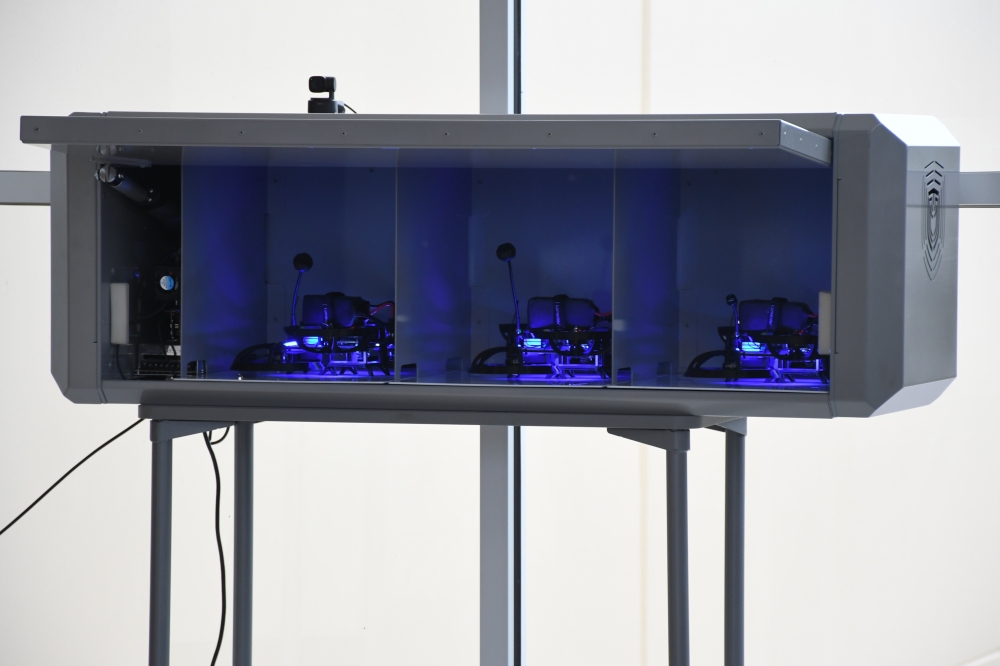
The Jan. 9 demonstration was a pressure test dedicated to highlighting the use of drones alongside public safety officers.
BISD has not signed an agreement with Campus Guardian Angel to deploy drones on campuses, but district staff said a potential agreement is in the works, possibly bringing the system to the district in the future.
While Campus Guardian Angel does not have drones in BISD, multiple districts in the state of Florida implemented the drones in 2025, and select districts in Texas are moving forward with the initiative.