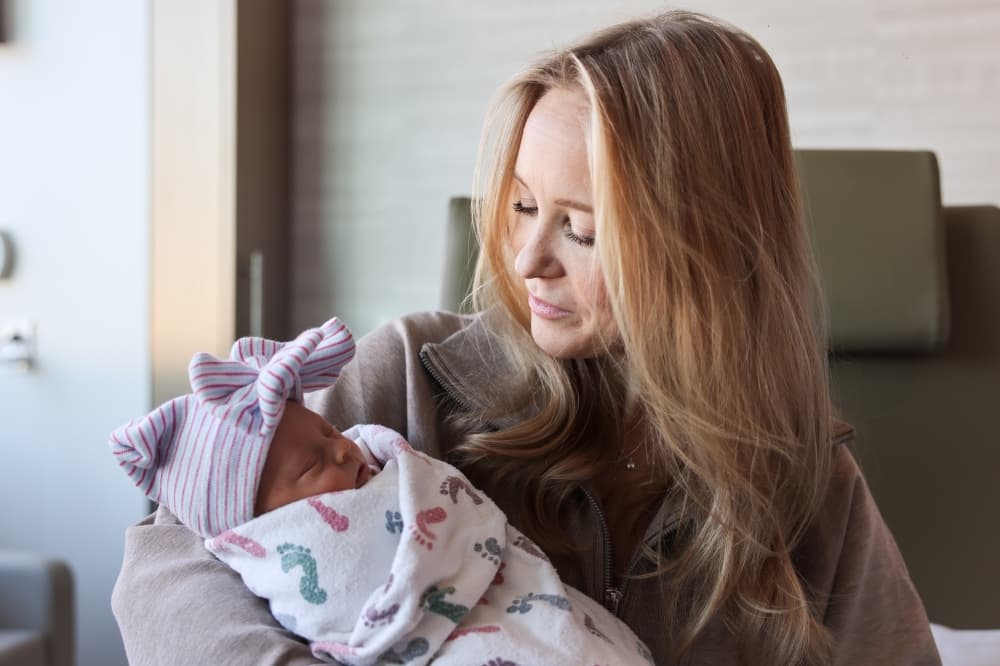
When its women’s services program opened last November, Methodist Celina Medical Center became the only hospital in Prosper and Celina with a labor and delivery unit.
In a nutshell
Methodist Celina Medical Center began seeing patients in March 2025. Eight months later, it opened its women’s services program and became the first hospital in the area equipped for nonemergency labor and delivery.
“There’s so many firsts,” Methodist Celina President Cody Hunter said. “First mammogram in Celina, first baby delivered at a hospital in Celina. We call those ‘BRICs’ up here: born and raised in Celina.”
The program spans the entire second floor of the four-story facility and provides a wide range of services, including annual screenings, prenatal care and labor and delivery.
As Celina’s population continues to rise, city officials say Methodist Celina’s women’s services program will make the area more attractive for growing families.
“When young families are moving in ... they want to make sure that they have access to quality health care that’s close by,” Celina Mayor Ryan Tubbs said.
Inside Methodist:
- 4 labor and delivery rooms
- 10 postpartum rooms
- 3 OB-GYNs
- 200+ total full-time employees
- $237 million investment
The need
Before Methodist Celina, women in the area faced an acute lack of options for obstetric and gynecological care, officials said.
“Patients had to travel out of Celina ... either going over to Denton or Sherman or coming further south into the Frisco area,” Methodist Celina OB-GYN Dr. Christine Hemphill said.
In addition to Prosper and Celina residents, a lot of her patients at Methodist Celina come from Little Elm, Aubrey and Pilot Point, she said.
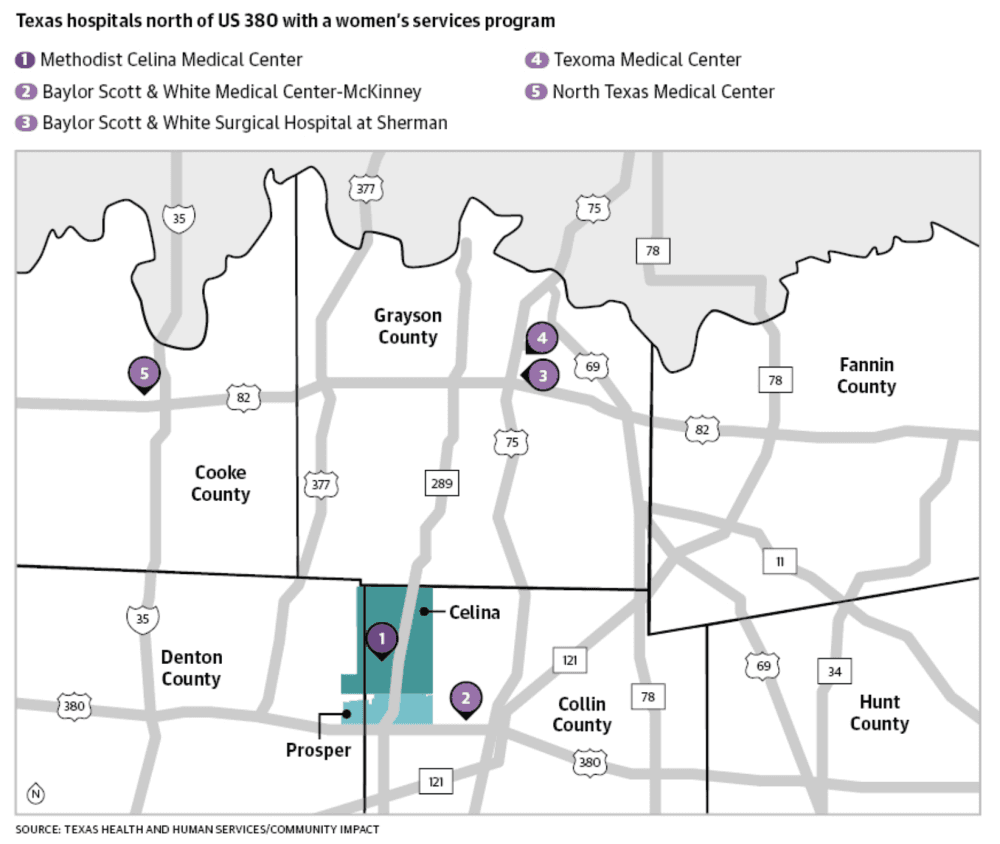
“[US] 380 kind of creates a natural divide, right?” Hunter said. “We care for folks really from the eastern edge of the lakes across Denton to about McKinney, and then almost all the way north to the Red River.”
About the program
Where Celina was once a desert for women’s health care, it has now become something of a destination.
Hemphill specializes in minimally invasive treatment for endometriosis, a condition where tissue similar to the lining of the uterus grows in other parts of the body, often leading to heavy periods and chronic pelvic pain.
“Last week, I did surgery on someone from Montana,” Hemphill said. “I’ve got patients who travel from other states to come right to our little old town to have their endometriosis surgery.”
Methodist Celina is also expanding access to care by working with local providers like Kristen Parks, a certified nurse midwife who owns the Texas Family Birth & Wellness birth center.
Parks’ patients usually deliver at her birth center but can be transferred to a hospital if necessary.
She said proximity to Methodist Celina played a large role in her decision to open her practice in Prosper last May.
“[Methodist Celina] is going to be a staple in the community that is long overdue,” Parks said.
The local impact
With over 200 full-time employees, Methodist Celina is the fourth largest employer in Celina, said Anthony Satarino, executive director of the Celina Economic Development Corp.
The hospital also creates benefits for nearby communities, Prosper Town Manager Mario Canizares said.
“[It’s] a huge convenience for our residents, and certainly a convenience for the doctors,” he said.
Looking ahead
Celina’s population is projected to reach 125,000 by 2030, according to data from the Celina EDC. As the city’s population grows, Methodist Celina has plans to grow alongside it.
Methodist Celina currently houses 51 beds. According to Methodist Celina’s master plan, the hospital will eventually build a north and south tower that will bring the facility to 200 beds, although Hunter said new construction is still a ways off.
“When you talk about the need for a 200-bed hospital, in my experience you have to have about 400,000 people in your hospital service area, so we’re not quite there yet,” he said.
Once the population starts to approach that threshold, new construction will take roughly two years, Hunter said.
Methodist Celina’s current facility has enough flex space to add 49 rooms, including two more labor and delivery rooms and two more postpartum rooms, Hunter said.
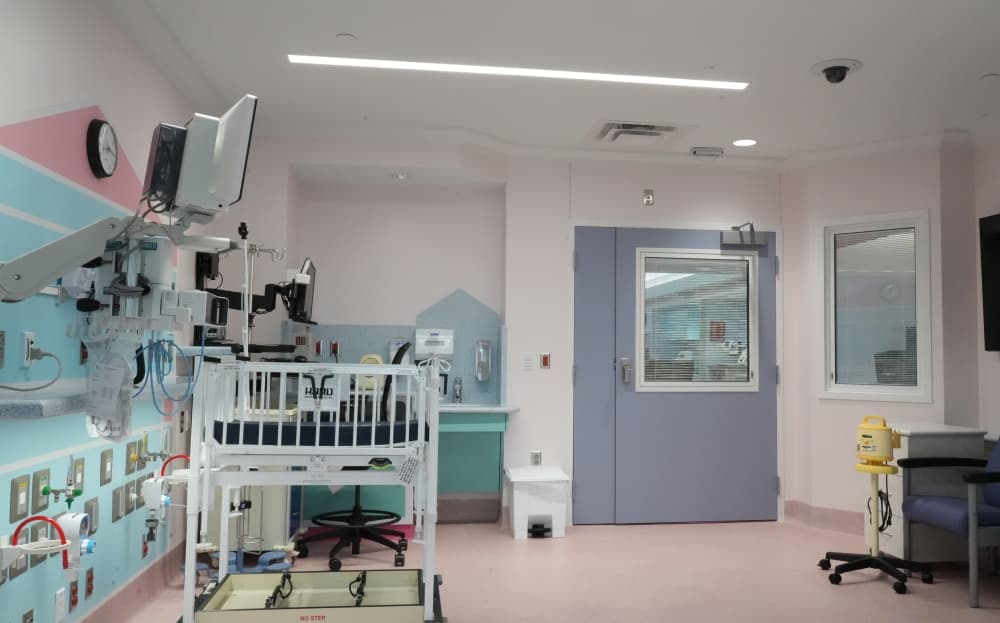
Right now, Hunter and his team have started the design process for a neonatal intensive care unit, or NICU, which will turn an empty hallway on the second floor into six to eight nursery beds for infants who require additional care.
“Our goal as a health system is ... how do we build that ecosystem to where in the future, a patient who needs care never has to go south of [US] 380 for it?” Hunter said.