As the weather heats up, medical experts are urging parents to take steps to prevent pediatric vehicular heatstroke.
“People say, ‘Oh, that was a bad parent. I would never forget my child,’” said Sharon Evans, a trauma injury prevention manager at Cook Children’s Health Care System. “Really, it can happen to anyone.”
What parents should know
According to a news release from Cook Children’s, 52.9% of pediatric vehicular heatstrokes happen when a child is accidentally left in the car.
To help avoid accidents, Evans advises parents to leave something they’ll need later in the backseat, such as a shoe, phone or car keys.
Leaving a child in a car isn’t the only risk, according to the release. A quarter of pediatric vehicular heatstroke deaths occur after an unattended child climbs into a car and becomes too disoriented to get out.
Parents should lock cars, even when they’re parked in a driveway or garage, and older children can be taught to honk the horn to call for help if they get stuck in a vehicle, Evans said.
The local impact
Texas leads the nation in pediatric vehicular heatstroke deaths, according to data from No Heat Stroke, an organization that tracks heatstroke deaths of children in vehicles.
“Last year was a bad year,” Evans said. “Out of 32 deaths, eight of them were in Texas.”
In Texas, it’s legal to leave a child younger than 7 years old in a car for more than five minutes if they are accompanied by someone who’s at least 14 years old.
“We have one of the weaker laws, and we really need to get that changed,” Evans said.
How to help
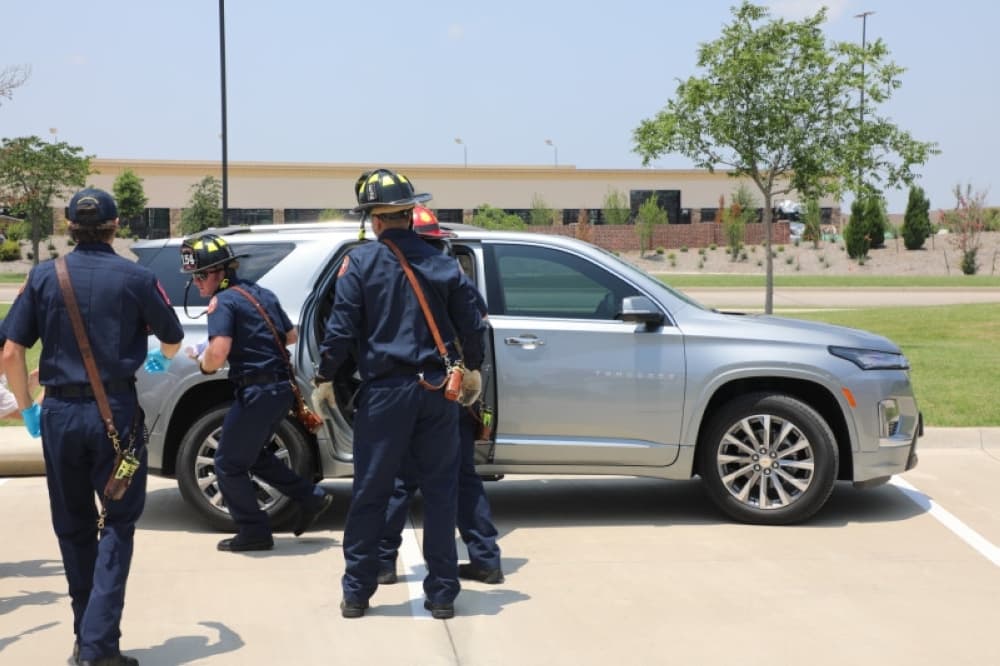
If a child is left in a hot car, individuals should call 911 and move the child to a cool area.
“If you’ve got ice packs ... you can put them under the arms and on the groin,” Evans said. “Most of it is just getting them out of the situation and into air conditioning as soon as possible.”