New Braunfels officials are pausing plans to call a bond election in 2027.
“We feel pretty strongly that this is the financially conservative thing to do,” Assistant City Manager Jared Werner said during a special City Council meeting on Nov. 16.
What’s happening
In July, city staff presented five potential bond projects during the council's summer workshop for consideration. Of the five projects—including citywide drainage improvements and Phase 1 of the 145-acre Northwest Park project—a joint public safety training facility was the item that received unanimous support. This project is currently undergoing a feasibility study.
Initial projections during the summer workshop indicated that the city has enough bonding capacity to call a $75 million bond election with no tax rate impact because taxable value would grow 3% from fiscal year 2026 to FY 2031. But for the first time in 16 years, existing property values have decreased, Werner said.
City staff modified the city’s bond capacity analysis, which assumes no growth in taxable value from FY 2028 through FY 2030 and 2.5% growth in FY 2031 and FY 2032. Under those assumptions, the city would not have enough capacity at the current tax rate to support a $75 million bond through FY 2031 and “smooth out” the existing $65 million of 2023 bonds that have yet to be issued, Werner said.
Under current projections, a 3.7-cent tax increase would be required to support a $75 million bond program, according to the meeting presentation.
Some context
City Manager Robert Camareno said there is a lot of support for public safety—both police and fire—within the New Braunfels community.
“There is continued desire to move that project forward; it’s just a matter of aligning that desire with capacity,” Camareno said.
City staff will continue evaluating future property value trends and debt capacity while continuing to pursue alternative funding sources, like federal grants, roadway/parkland development fees and the economic development corp., for capital projects.
“When we go to the voters next, I think it’s important that we have projects that are absolutely past preliminary design, well-vetted and we have plenty of time to educate the community on the project itself,” Werner said.
City staff will update their bond capacity analysis next summer for their annual 5-year financial forecast presentation, which is when council members could revisit the bond conversation.
Zooming out
City, county and school district bond propositions experienced an unusually high rejection rate in the November 2026 general election.
About 68% of school district propositions and 81% of city and county propositions failed. Only 25 of 78, or 32.1%, of school bond propositions passed, compared to an average annual passage rate of 62.9% from 2021-2026. Locally, Comal ISD voters rejected the district's $567 million bond in the Nov. 3 election. Only 6 of 31 propositions posed by cities and counties passed, compared with a historical annual average of 73.4% from 2021-2026, according to the presentation.
“That means that only 19% of city and county bonds were approved. That is, what we’re being told in discussions with our financial advisor, is a record-low,” Werner said.
What council is saying
District 3 council member D. Lee Edwards said the council has to be strategic about the “community pulse” on any potential projects in 2027 or 2028.
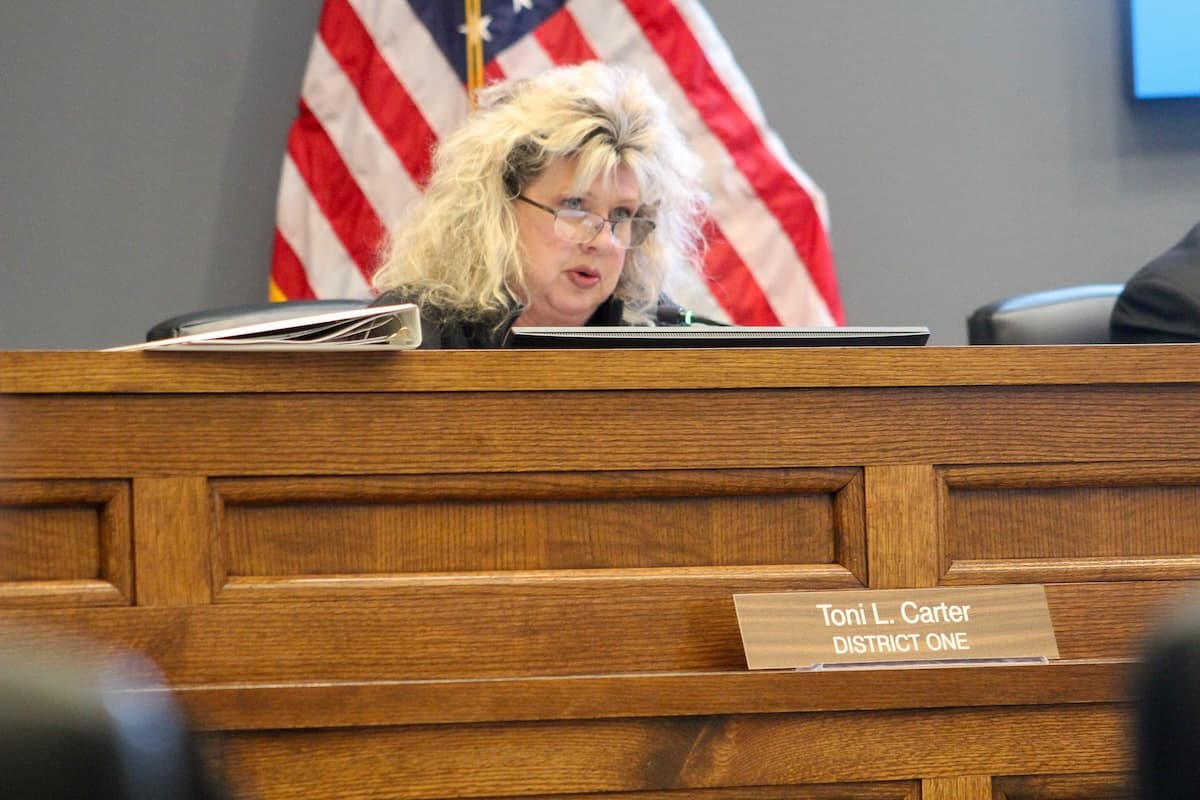
District 1 Council member Toni Carter asked whether the council could return the $65 million remaining from the 2023 Bond to the voters and reset all bonds. Werner said he did not think they could, but he would follow up with their bond counsel.
Michael Capizzi, District 2 council member and mayor pro tem, said bonds failed miserably statewide.
“We have no idea what the political climate in Austin is going to look like going forward,” Capizzi said. “Holding off for now, I think, is the wise move.”