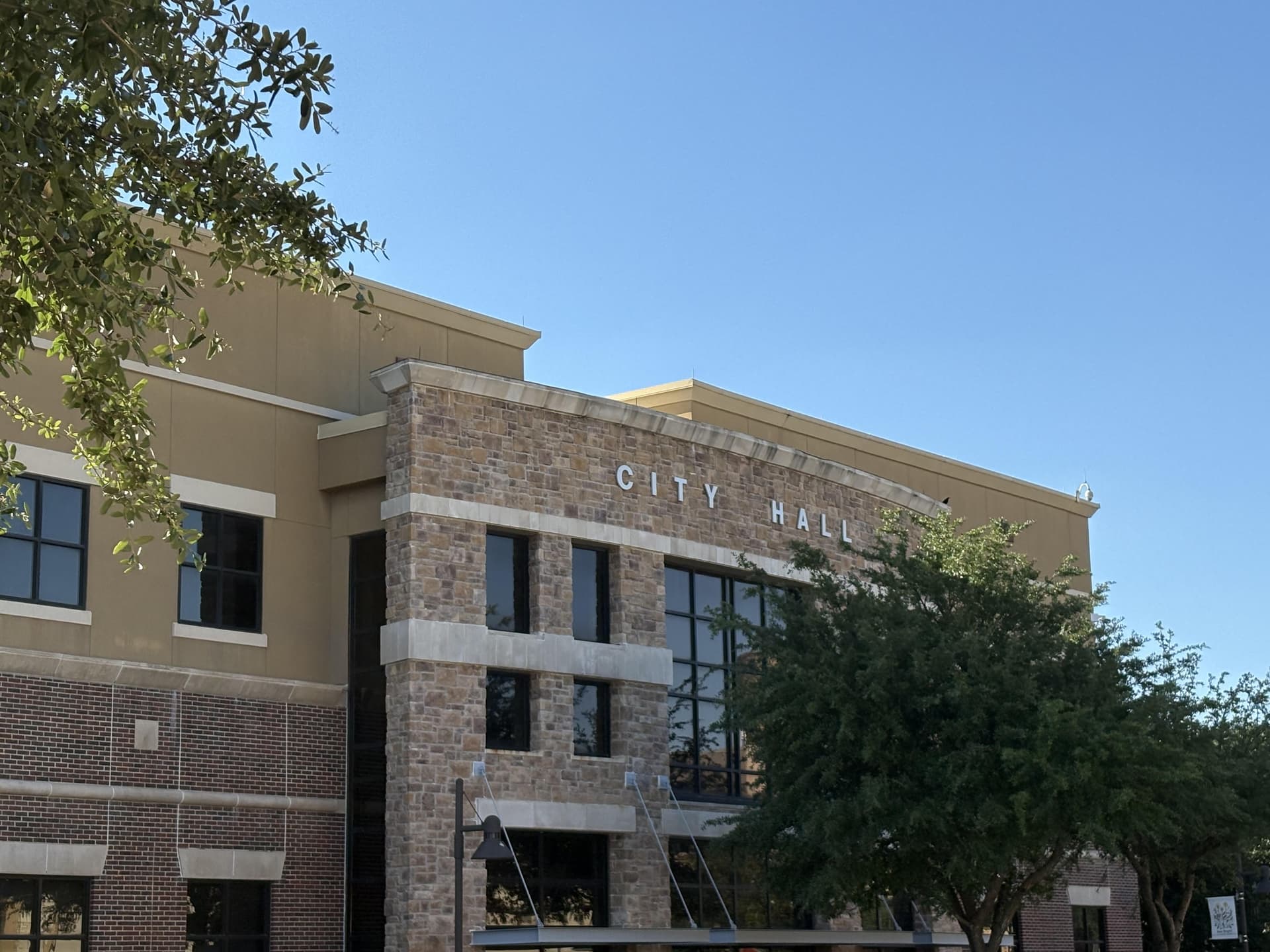
Bee Cave City Council decided at an Aug. 25 meeting to not move forward with an updated ordinance that would allow fiber internet installation through microtrenching, due to potential damage to the roadways.
The background
Microtrenching is a construction technique commonly used by broadband fiber optic companies to install new lines in existing streets, according to city documents.
The technique involves cutting a narrow and continuous trench in the existing asphalt or concrete, laying a fiber line and then backfilling and patching the street.
However, this means that the streets are cut, increasing the potential for structural damage.
Beyond microtrenching, there are other methods for properties to receive fiber internet services, such as aerial wiring.
“They can put fiber in homes without cutting up our streets,” Bee Cave Mayor Kara King said.
The issue
Damage to roadways from the microtrenching was a primary concern for council members.
Representatives from AT&T and GFiber, formerly Google Fiber, said the companies typically do not conduct further road repairs after the microtrenching process is completed due to cost.
“This is an added amenity at its core ... if we have all these cuts in the road, we’re going to have to go back to our pavement assessment plan,” Council member Blake Sbrocco said. “If I can’t go back and explain to residents over coffee why we wanted to up your Wi-Fi with this enhanced amenity that you have to pay for, and you're going to have to pay for the roads on top of it ... I struggle with it.”
What else
The ordinance was originally presented at a May 26 City Council meeting and brought back in at the August meeting with council recommendations.
Among these changes included a clause stating that the first fiber internet provider must also install up to two additional conduits, which will allow future providers to add their fiber without the need for a new pavement cut.
Yet, representatives from both GFiber and AT&T said this addition to the ordinance may not be feasible.
“There are some items in here that are going to make it extraordinarily unlikely for our company to deploy the capital here,” said John-Michael Cortez, government and community affairs manager for GFiber in Texas. “This ordinance is asking for a provider to come and deploy capital to build their network, but also to build their competitor’s network ... . We design our networks differently than our competitors ... it’s going to be very difficult for one provider to design a network that’s going to meet the necessary standards and requirements of another provider.”
The outcome
Both representatives from AT&T and GFiber requested that action on the ordinance be postponed in order to further discuss the proposed regulations with staff, yet council decided not to move forward.
“We’re done. We’re not cutting the streets,” King said.