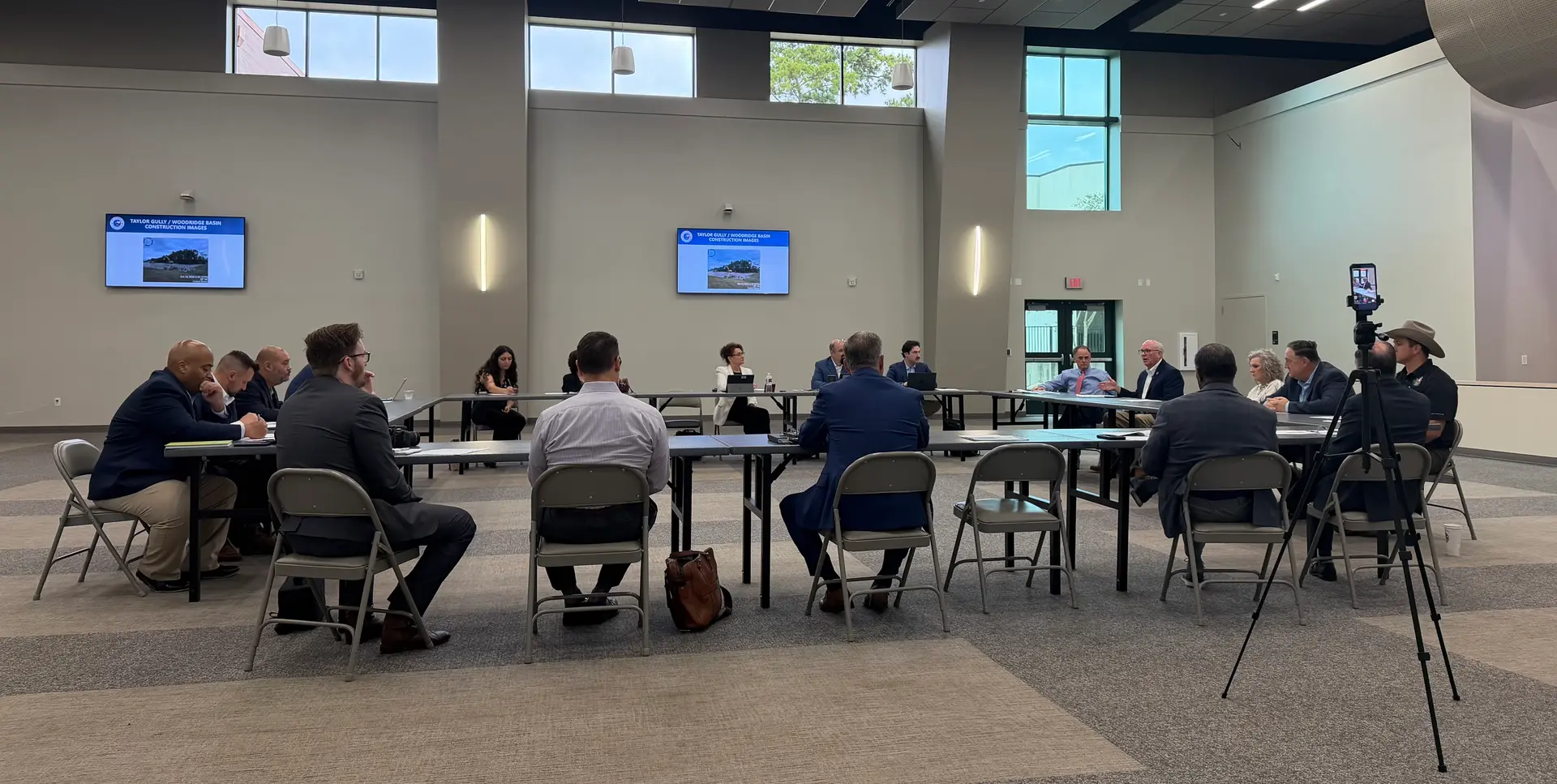
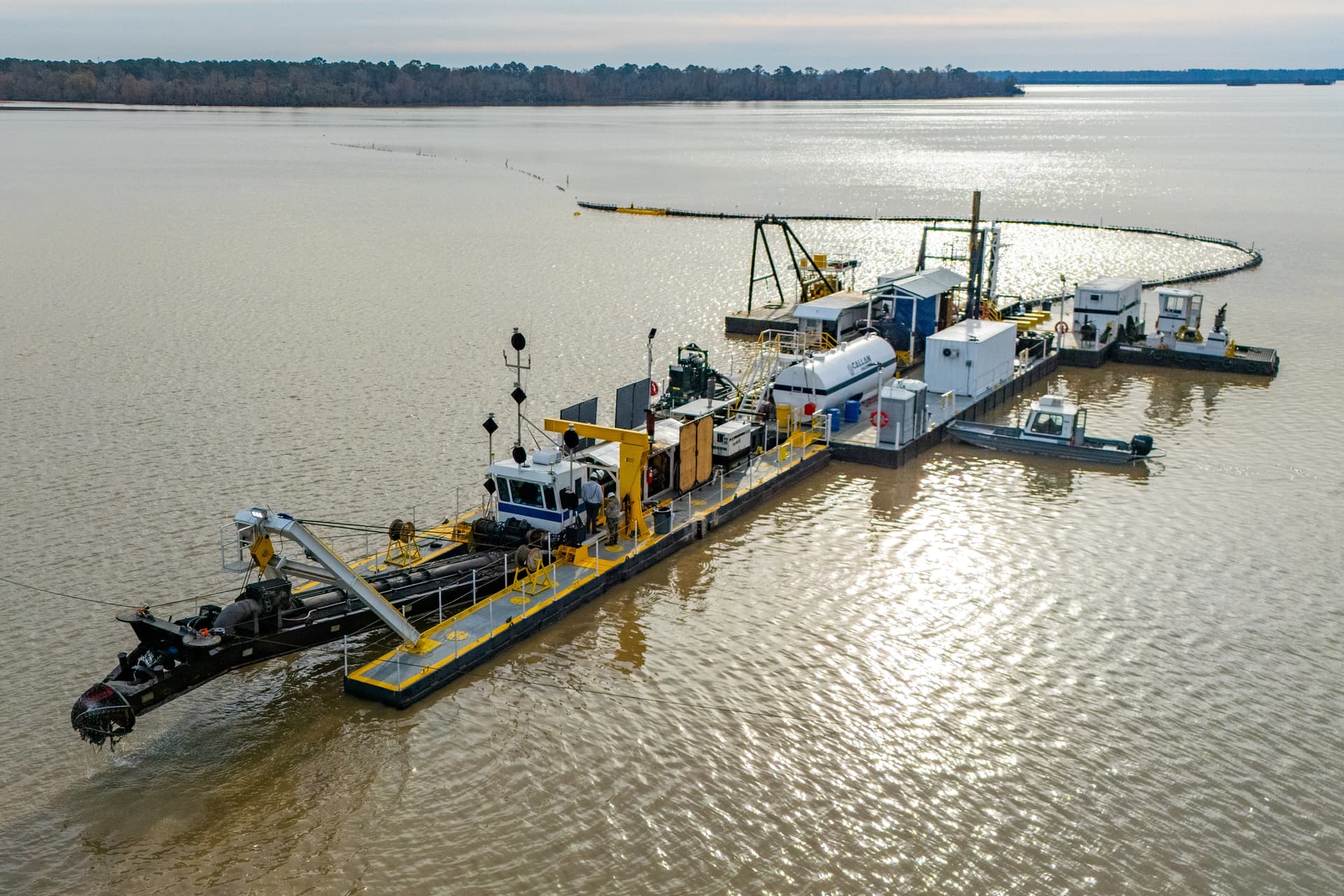
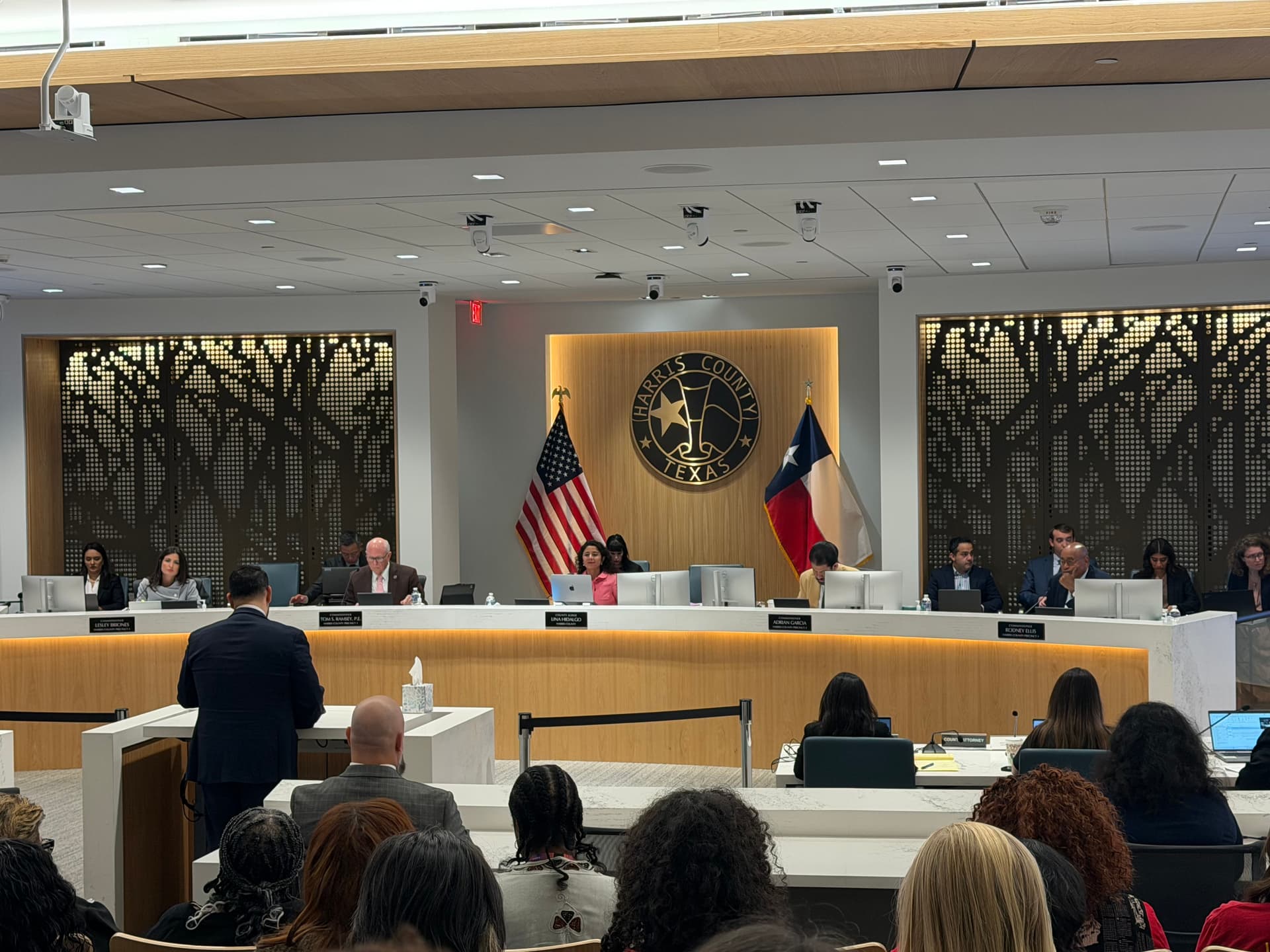
Members of the Lake Houston Dredging and Maintenance District met for the first time in late August, paving the way for continued dredging operations in Lake Houston and portions of its tributaries.
State lawmakers approved House Bill 1532—authored by state Rep. Charles Cunningham, R-Humble—in May 2025, resulting in the creation of the district.
According to the bill, the district will be charged with overseeing ongoing dredging operations in Lake Houston.
The overview
Since Hurricane Harvey caused massive flooding in the Greater Houston area in 2017, local, state and federal agencies have contributed roughly $175 million to remove more than 4 million cubic yards of sand and sediment from Lake Houston and its tributaries.
Cunningham said the district will now continue those efforts to provide long-term flood mitigation.
“I have been a resident for decades and we have faced long, ongoing struggles with flooding,” Cunningham said. “The dredging district means now we have a plan for moving forward.”
Cunningham touted the new members of the board, who were appointed to begin work with the district in early August.
Board chair William Simpson indicated several areas of work that will need to be completed as the district gets off the ground, including developing a scope of work, estimating costs and determining a funding plan.
“We’re really starting from ground zero,” Simpson said. “We don’t have anything, no design. We don’t have any funding yet. We don’t have any contractors or consultants yet.”
The Lake Houston Dredging and Maintenance District board members include:
William Simpson, board chair, worked as a project manager for 38 years at Chevron Corp. He has also worked as a professor in the construction department at Lone Star College. Simpson was appointed by Houston Mayor John Whitmire’s office.
Derek St. John, board treasurer, is a professional engineer and certified floodplain manager, and one of the two founding members of Gauge Engineering. He specializes in water resources and stormwater issues. St. John was appointed by Houston Public Works Director Randy Macchi.
Kathleen Todd Jordan, board secretary, is a 47-year resident of Kingwood and a community activist. She is a leader in the Kingwood Area Republican Women’s Club and served as a Republican precinct chair. Jordan was appointed by Houston City Council.
Sarah M. Berkey, board member, has worked with Carollo Engineers since 2014. She currently serves as project advisor and technical consultant on the Northeast Water Purification Plant Expansion Project. Berkey was appointed by Macchi.
Ken Kirchhofer, board member, is a member of the Humble ISD board of trustees, where he serves as chair of the Audit Committee. He also serves on the Building and Planning Committee. Kirchhofer was appointed by the Harris County Flood Control District.
A closer look
Cunningham said the creation of the district marks an important step in providing ongoing dredging operations in Lake Houston.
“This is the first step in a long road to cooperative management and risk reduction for residents,” Cunningham said.
Still, Cunningham said officials have a lot they need to accomplish before the district can begin carrying out its own dredging operations.
“The first [thing we need to focus on] is reaching stable, dedicated funding,” Cunningham said. “Other considerations include delivering success to the public, establishing strong leadership and securing partners to help dredge and sell the gathered materials.”
While the bill initially included $50 million in funding for the district paid out in two installments in 2025 and 2026, Cunningham said he was confident the district could attain additional funding during the state’s next legislative session.
"Funding is always a critical concern for any organization," Cunningham said.
The cost
David Wurdlow, senior assistant director of capital projects and grant management for Houston Public Works, said a total of roughly $175 million has been allocated from local, state and federal agencies toward dredging activities in Lake Houston since Hurricane Harvey.
Also of note
Simpson said the district’s most pressing matter is to create a funding plan to submit to state lawmakers during the 2027 legislative session.
“Our real objective here in the near term is to submit a ... plan to the state identifying what we need and where we plan to get it,” Simpson said.
Board Treasurer Derek St. John said additional milestones include hiring an attorney and an accountant to help advise the board and assist in carrying out operations during meetings.
Once the district is operational, Wurdlow said officials will be able to generate revenue by selling any sand, gravel, silt or other material removed from the lake.
“The sky is kind of the limit with the amount of volume of material that we expect in the long term to continue to flow into the basin from the tributaries,” Wurdlow said. “The challenge is coming up with that operating funding in order to do that.”
Houston District E Council member Fred Flickinger said he’s confident about the potential value of dredged material based on conversations he’s had with dredging and marine construction company Callan Marine.
“They certainly think there is value in the material that's going to be removed,” Flickinger said.
Wurdlow said about $7 million of the $175 million that has been allocated has not yet been spent.
“[This funding is] not going to really support dredging work, but it may be able to help position you for other asks,” Wurdlow said.
Wurdlow highlighted three additional potential sources of revenue for the district, including agreements with the city of Houston or Harris County, additional legislative appropriations and post-disaster grants.
While the district will not be able to impose any fees or new taxes, it does have the authority to eventually issue bonds that would be paid off using revenue generated by the district, according to the bill.
What's next
Moving forward, Simpson said the board will set up a finance plan committee, a professional services procurement committee, an outreach committee and a dredging operations committee to help with the process of detailing the district’s needs and how to meet them.
District officials identified several needs the district will have to address while developing a long-term plan, including:
Hiring an attorney and an accountant
Determining the scope of work
Developing a procurement plan
and website
Setting up board committees to help distribute work among members
Developing ways to communicate with the public and potential partners