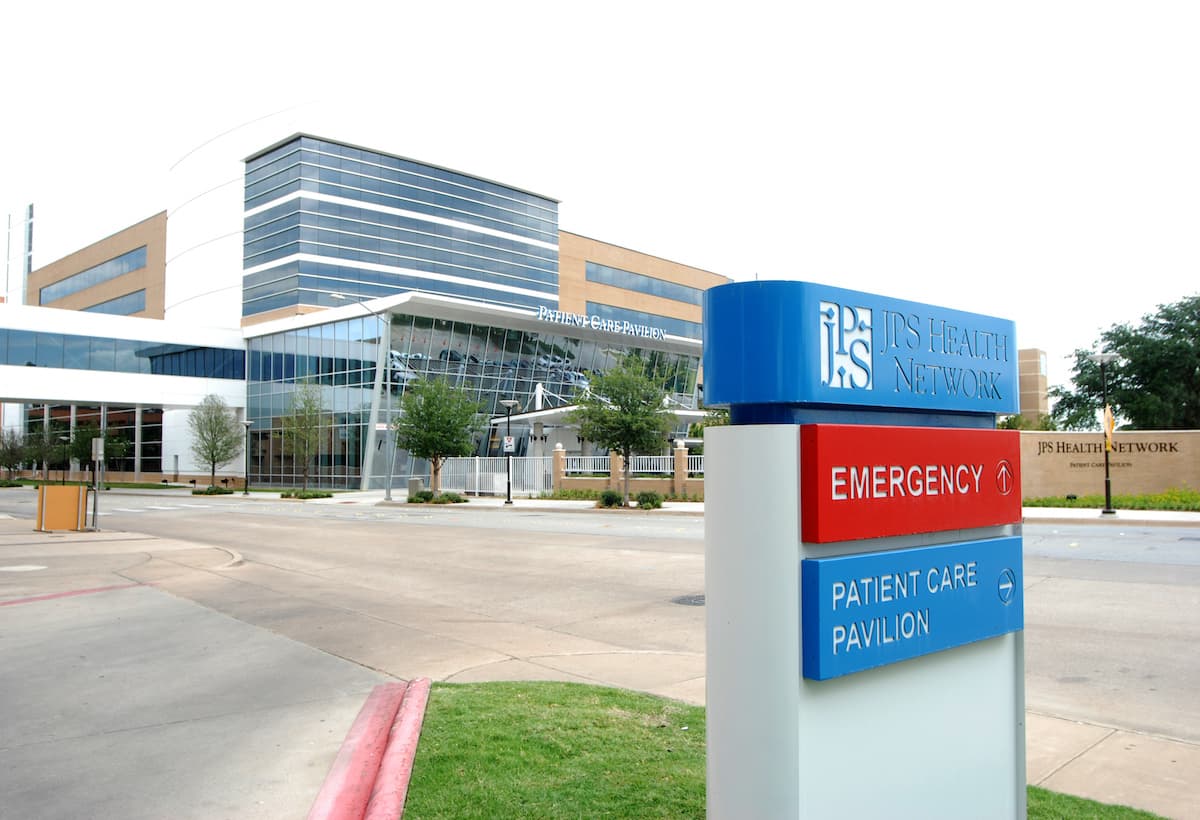
John Peter Smith Health Network is taking part in a three-year clinical trial designed to improve how pain is managed for trauma patients in emergency situations.
JPS Health Network is Tarrant County’s main tax-supported health care system and provides care to all county residents, regardless of insurance status or ability to pay, its website states.
The details
JPS is one of nine centers taking part in the trial, which is being led by researchers at the University of Pittsburgh.
The Prehospital Analgesia Intervention (PAIN) Trial could reduce risks linked to opioid dependency in trauma patients by comparing the effects of fentanyl and low-dose ketamine on patients who are experiencing lower levels of shock from traumatic injuries, according to the release.
During the trial, opioid medications will be given by Emergency Medical Service personnel while patients are in ambulance transit to the hospital. In Tarrant County, the initiative is being led by JPS Associate Medical Director Angela Cornelius.
According to the release, roughly 1,200 trauma patients will be enrolled across the country at the participating healthcare facilities. Patients will be randomly assigned either fentanyl or ketamine by EMS personnel. This will help first responders decide when and for whom to administer certain medications in traumatic situations.
“The PAIN study is crucial in advancing the understanding of optimal pain management strategies for trauma patients in the early time periods after a traumatic injury,” Cornelius said. “By evaluating the efficacy and safety of different pain control medications, this research helps to improve patient comfort, outcomes and overall trauma care.”
What else?
While fentanyl can help with emergency pain relief, it carries risks such as suppressed breathing and lowered blood pressure, according to the release. Ketamine can be used in similar situations while avoiding some of these risks.
“The PAIN study also extends beyond civilian trauma care into military medicine,” said Frank Guyette, professor of emergency medicine at the University of Pittsburgh and study co-lead. “The issue is even more critical in military settings, where care can be delayed if an injured service member requires multiple doses of fentanyl for pain management.”
Since the trial takes place in emergency situations and patients may not be able to consent, the study is being conducted under federal regulation where there is an exception to informed consent for specific situations, the release states.
Those who do not want to be part of the study can contact the research team at 1-800-664-0557 or email [email protected] to receive a “NO PAIN Study” bracelet.