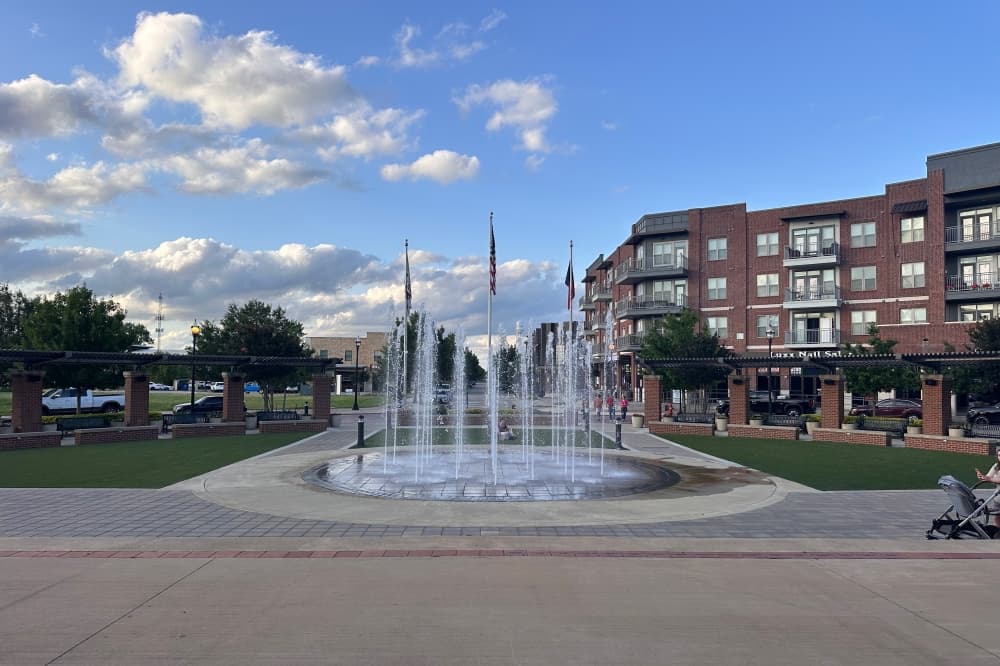
Roanoke officials recently discussed how medium- or high-density residential development along Oak Street could help bring more people to the downtown area during the March 3 work session, according to previous reporting.
This conversation reflects the challenge that every city has when planning for future development. According to Keller's future land use plan, a roadmap for how the city's land should be developed, planning for housing is fundamental to shaping a community's demographics. Housing provisions also shape the city's tax base, which impacts the city's economy.
Diving deeper
Housing density is defined universally as the number of units allowed on 1 acre, but each city has its own code for determining how many units are allowed per acre, said Sarah Hensley, the director of development services for Keller.
In Roanoke, low, medium and high density are not defined in its city code, but the city uses the land use plan, which is a roadmap showing how the city's land should be developed, to determine what lot size belongs in a specific area, said Ashlie Tolliver, Roanoke’s city planner.
What is considered low, medium and high housing density depends on market trends, the political environment and land mass of an area, she said.
“What defines [housing density] is what works for that municipality and that local government, which is why it varies between the governments,” Tolliver said.
In Keller, the future land use plan outlines single-family units, or houses, as its highest density for land use. This allows the city to maintain its goal of preserving large lot residential neighborhoods, according to the plan.
“We don't even include multifamily in that high-density category,” Hensley said. “We're still defining high density as single-family [homes].”
The city of Fort Worth has a maximum number of units per acre allowed in each residential district, said Kevin Neal, Fort Worth’s senior public information officer. The city does not exclusively use the terms low, medium and high density to define the number of units allowed on each acre.
Why it matters
Density shapes what a town looks like and how it functions, Tolliver said.
"We tend to have a really complicated balancing act of how much of an impact does density bring to the city of Roanoke," she said. "The community, from what I've noticed, doesn't seem to really be in favor of [high] density, and that's okay. That's also very common in Texas because we have so much land. What makes that difficult, though, is that as we run out of room, we move into a redevelopment process."
People who buy up homes and demolish them tend to request smaller lot sizes for the property's future development, which can slightly increase the density of an area, she said.
"Roanoke, because we are landlocked, seems to be very intentional with how we want to develop that land," Tolliver said.