


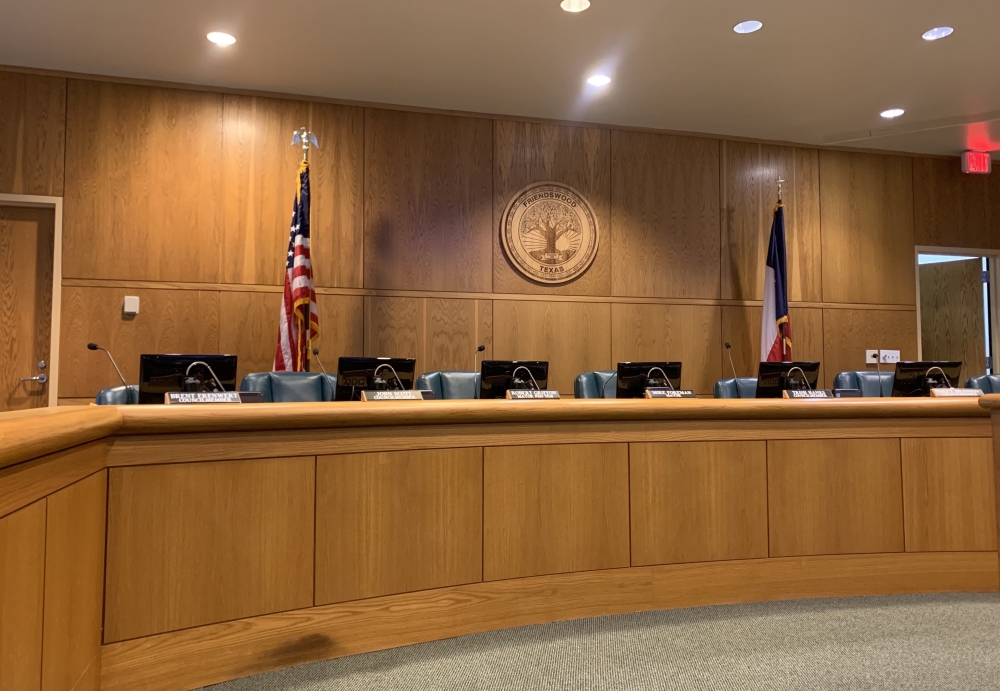
Ultimately, City Council chose to postpone voting on the proposed mixed-use rezoning, citing further analysis needed on noise, traffic impacts and land-use compatibility.
The details
The Clear Creek Village Planned Unit Development is a mixed-use development comprising commercial, multifamily residential, shared green space and on-site detention, according to city documents. The development will include a proposed 391 residential units, which was a point of contention for nearby residents.
The Planning and Zoning Commission voted 5-0 to recommend approving the development at its Dec. 11 meeting.
In order to consider the proposed zoning change, the city would need to change how the land is designated in the city’s Future Land Use Map, approved in 2021.
The future land use map guides the city in making future development decisions, such as zoning ordinances, and it currently designates the land for industrial and retail use.
Public input
Nick Deutch, owner of Garage Ultimate, a garage condo storage facility that sits adjacent to the subject property, said changing the area’s zoning would create problems with noise and traffic and ultimately undermine confidence in the city's adherence to zoning plans that new businesses make decisions based upon.
“We’re being asked to usurp that whole process ... usurp the 2021 process, when this council said that property should be industrial,” Deutch said.
Phil Raddison, a Friendswood resident, said as someone who lives in the neighborhood along Blackhawk Boulevard, he was worried about the increased traffic and drainage risks the large development could create. He also expressed concerns about the potential for an increase in service calls to the police department, citing recurring incidents in nearby apartment complexes.
“You just read your police report every Monday,” Raddison said. “... What’s the amount of police this one’s going to take too? We have, and we love our police, but do we want to add another area like this that will affect them?”
Another point of view
Jeffrey Boutte, the project manager with Houston-based EHRA Engineering, who is the applicant for the zoning change, said the proposal was a compromise that, while allowing for residential development, would still deliver commercial and open space.
“This is an area of transition,” Boutte said. “It’s not developed as a lot of industrial on all of our adjacent sides.”
Addressing concerns about the impact on traffic, Boutte said the developer would perform a traffic analysis and said it was possible that, because the development is mixed-use—including commercial and residential development—some multifamily residents could work in the commercial sections of the development, mitigating traffic impact.
The local impact
Council member Joseph Matranga noted the differences between industrial noise allowances and residential noise limits, noting that industrial areas can operate at 70 decibels while residential areas require a lower threshold.
“I know 70 to 58 [decibels] doesn't sound like a big deal, but as noise levels go, that's a pretty big deal,” Matranga said. “... 70 [decibels] is something like a running vacuum cleaner, and 58 is more like a quiet conversation.”
Boutte said he was not aware of whether a study had been conducted to identify the barriers that would need to be addressed to ensure residential noise levels could be maintained in the development, but he would discuss looking into it with the developer.