As energy costs across Houston have begun to skyrocket amid a changing climate that has led to multiple extreme weather events, many homeowners and developers are looking to build more energy-efficient and sustainable homes.
What you need to know
Sam Luna, director of product sales at BKV Energy, an electric utility company in Houston, said while sustainability is still more of a luxury, he has seen developers start to create new homes with climate-conscious and energy-efficient features in mind.
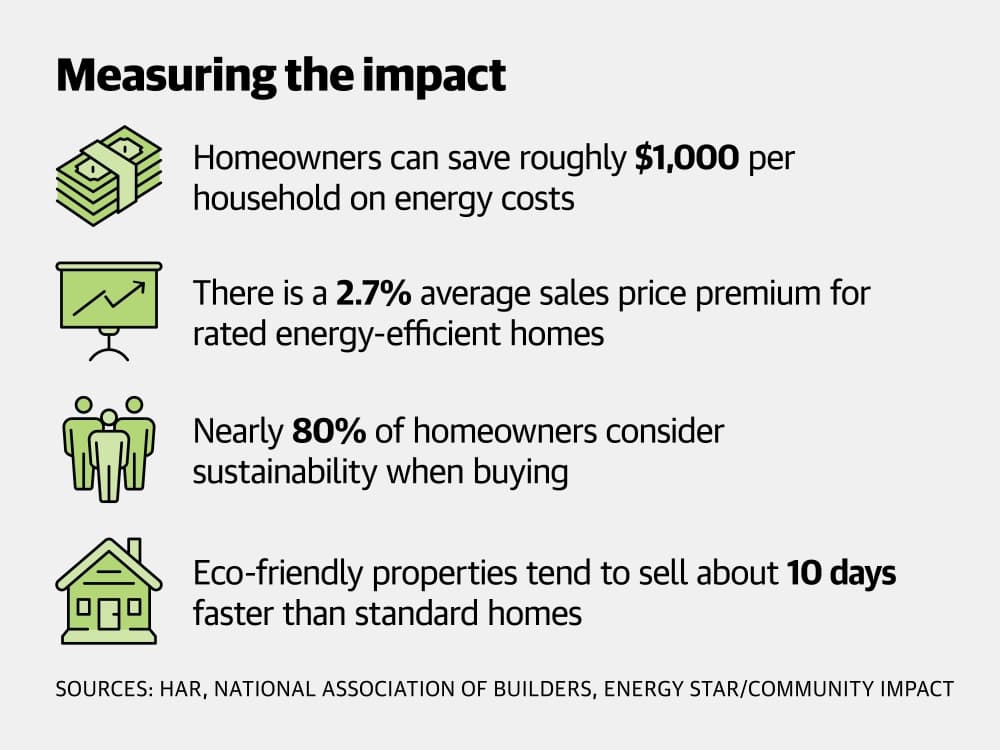
According to a recent report by the National Association of Builders, nearly 80% of homebuyers consider sustainability when purchasing.
“New buyers do expect it,” Luna said. “They are pushing for it ... and these additional features may not always add revenue dollars, but buyers are asking for it and builders are accommodating it.”
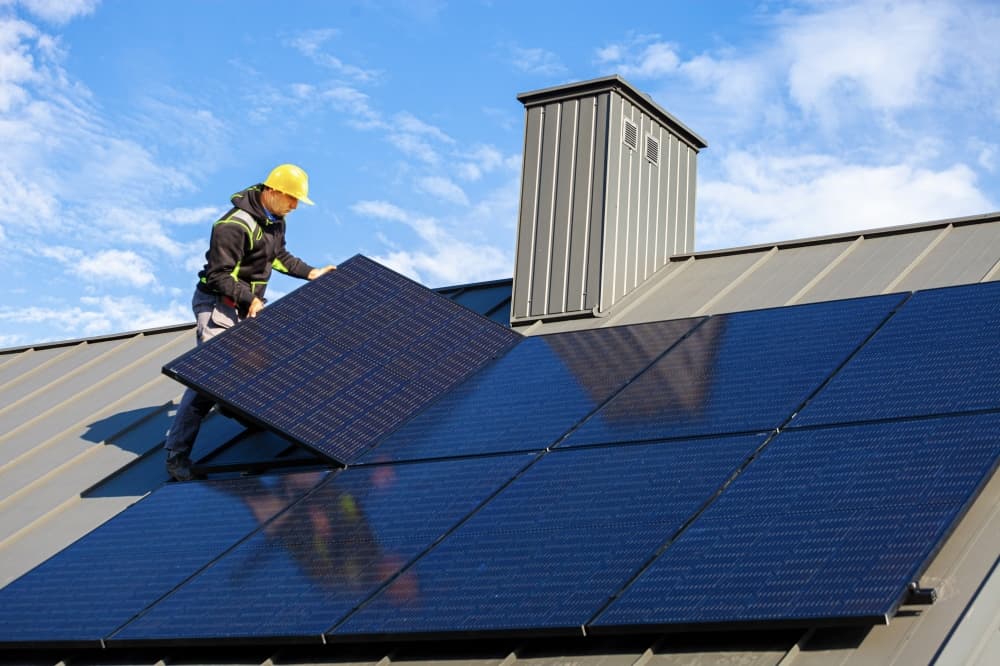
Features of the most efficient homes combine energy-efficient construction, appliances, lighting and renewable energy systems, according to the U.S. Department of Energy.
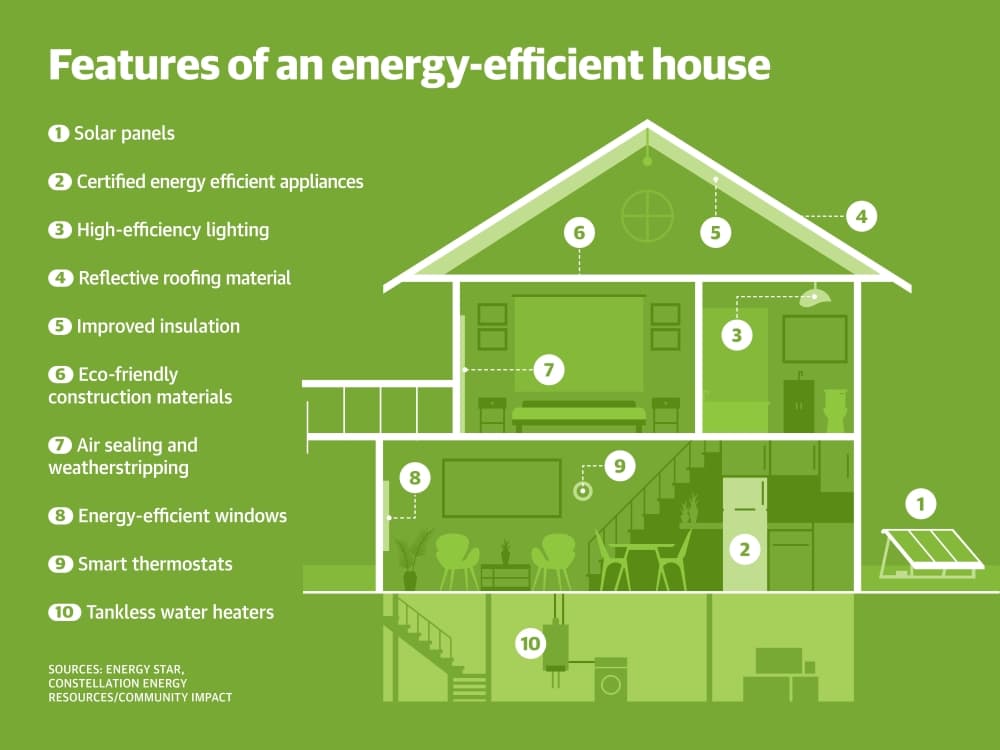
They also take advantage of local climate and site conditions, such as natural shade, landscaping and the position of the home.
Luna said homeowners with more energy-efficient houses save anywhere from $2,000 to $5,000 per year on their electric bill. In Texas, CenterPoint Energy shows that a monthly bill for a 2,000-square-foot home could drop from $170 to below $100 per month.
The cost
Energy-conscious homes often require 2% to 10% higher upfront costs than a standard home build, according to the Department of Energy.
However, despite higher upfront costs, energy-efficient homes often sell faster and at a higher price point, with an additional value of around $5,000 more than a standard home, according to the National Association of Builders.
Final takeaways
Current homeowners can also take measures toward creating a more energy-efficient home, including upgrading the HVAC system, sealing the roof and checking doors and windows for weatherstripping.
“Don’t let this sound so scary,” Luna said. “Take it in chunks. You can make little changes with little costs first.”