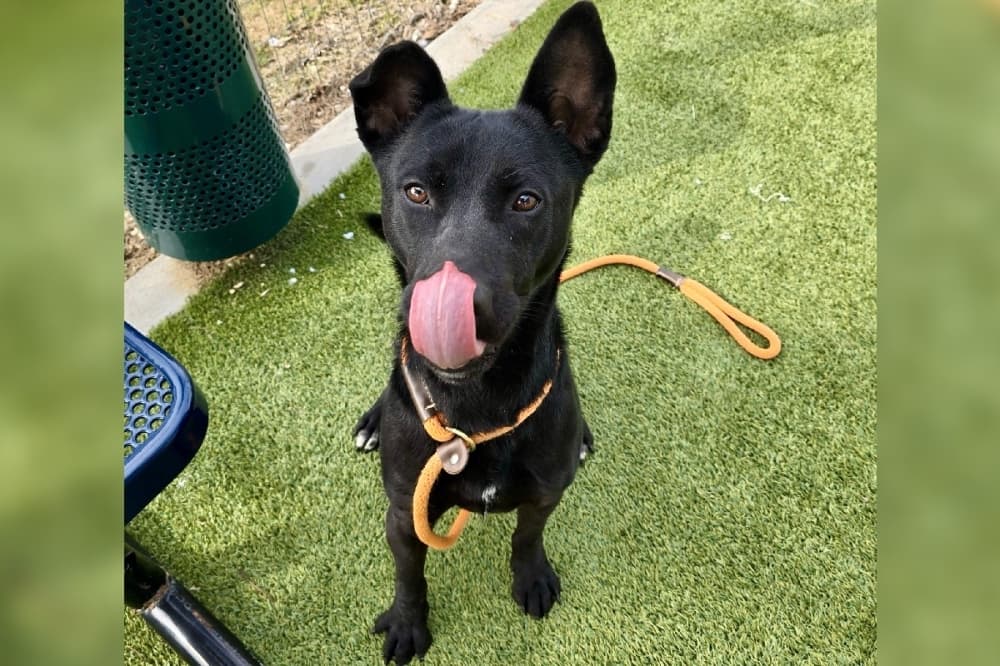
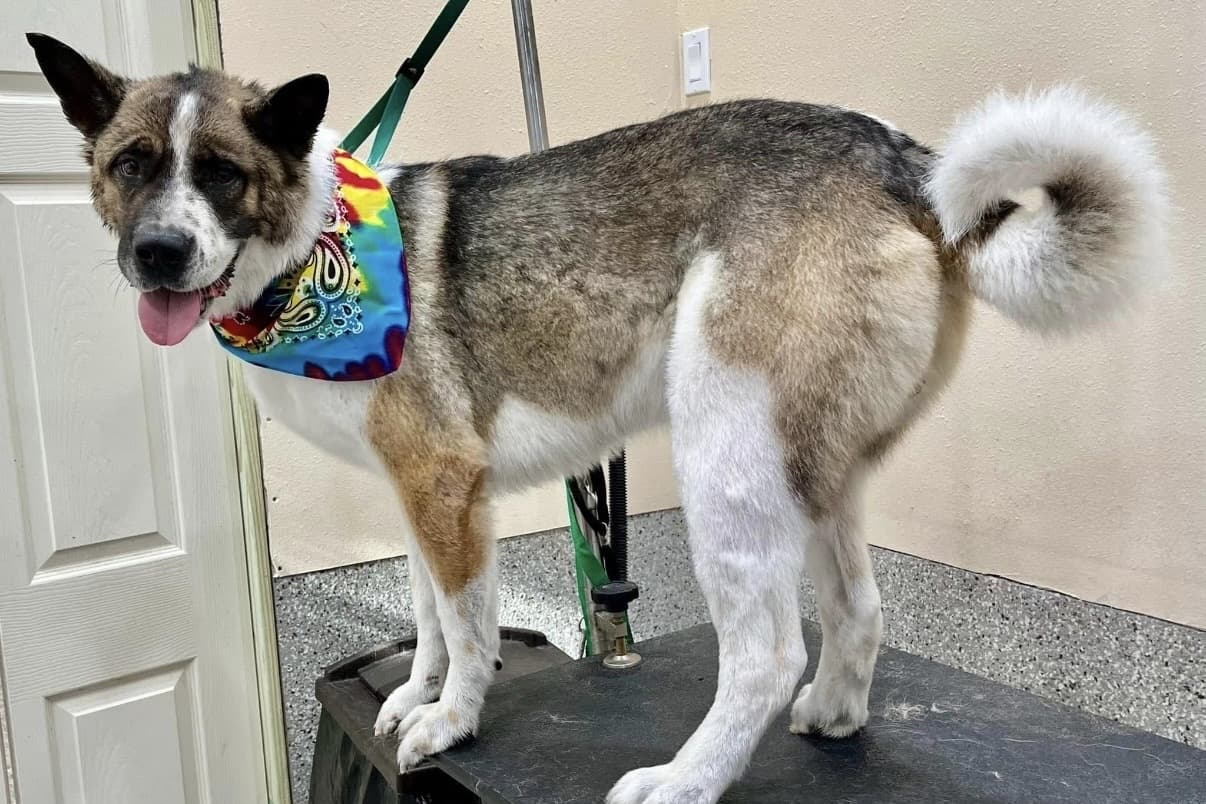
Located at Harris County Pets since Jan. 27, this female black and white Labrador retriever mix appears to be a year old and is available for adoption as of press time. (Courtesy Harris County Pets)
On Nov. 1 2024, Harris County officials approved a policy that halved the amount of time—from 30 to 15 days—a pet can stay in the animal shelter before being considered for euthanasia.
The big picture
Euthanasia is the last resort for animals within its custody, according to HCP officials. However, it is an essential component of its operation to ensure the health and safety of other pets in the shelter and residents in the community.
Corey Steele, director of veterinary public health at Harris County Public Health, said euthanizations increased by 1,355 from November 2024 to October 2025.
“We focused on the 15 days specifically because, as a municipal animal shelter, we get animals of all kinds ... but we do obviously have a ton of good adoptable pets,” Steele said.
How we got here
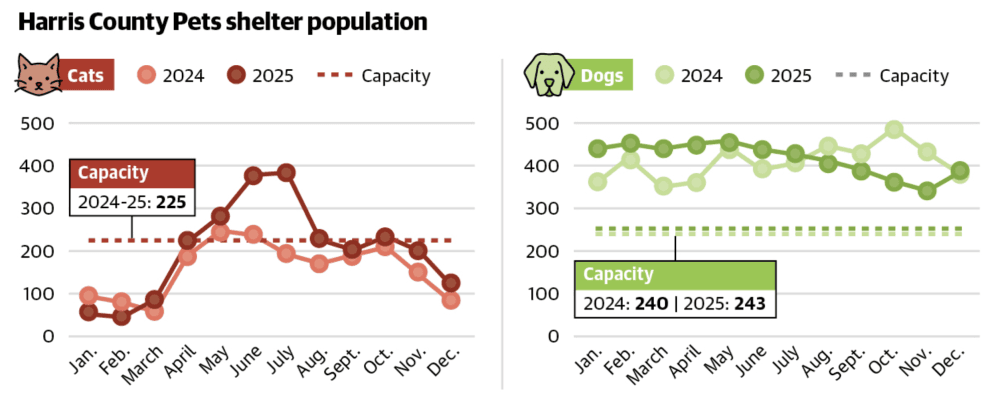
Steele said before its updated euthanasia policy, the shelter was consistently at least 175% over capacity—with over 30,000 animal control calls received a year.
“Our intake dropped significantly, the amount of animals that we can pick up. ... Those decrease just because of the space. So we saw a very high population here, but a lesser intake of animals,” Steele said.
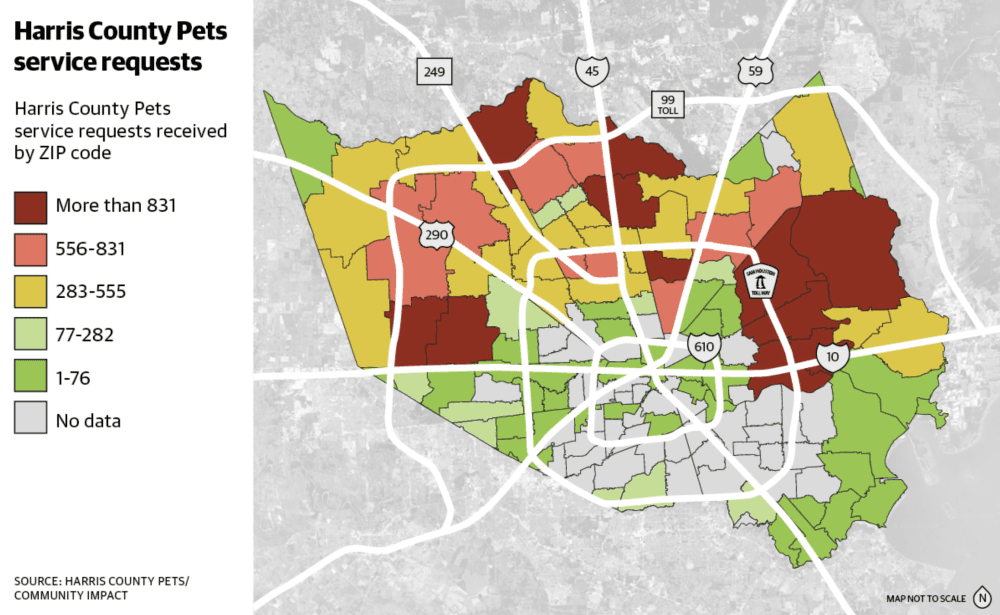
Northern Harris County is where most of the calls for service from Harris County Pets originate. (Harris County Pets/Community Impact)
After seeing consistent upward trends in animal population, Steele said HCP sent out a survey to over 1,000 animal networks and animal welfare organizations to get their input on the issue.
With animal welfare in mind and the surveys sent out, Steele said HCP made the decision to update its policy.
“When we were holding them for 30 days, we saw multiple animals in a kennel, which is not the best environment for them,” Steele said. “And when animals are in a four-by-six kennel with other animals for months at a time, it’s not good for them either, and so we needed to figure out a way to help move animals to the shelter quicker and decrease that length of stay.”
In addition, Steele said that with a high population of animals also comes an increase in disease transmission among animals.
“Even with vaccinations and boosters that we do when they first come in and throughout their stay, we still see a high disease transmission,” Steele said.
Jennifer Le, owner of A Couple of Vets, said there are several diseases that can be contracted between pets at shelters such as Bordetella, a highly contagious respiratory disease.
The impact
Sarah Mills, senior director of operations at nonprofit animal advocacy group PetSet, said when it comes to animals in shelters, there are limited options.
“There are very difficult decisions that have to be made, but the reality is not every dog is adoptable,” Mills said.
Steele said in November, HCP saw a 175 increase in adoptions and a higher intake.
Source: Harris County Public Health, Veterinary Public Health Division/Community Impact
Big Love Rescue board member Tonya Mathews said the policy change limited the time rescues have to assist pets.
“It truly takes a village to save these animals,” Mathews said.
Yet, an uptick of adoptions doesn’t translate to a higher overall live release rate. Live release rate refers to the percentage of animals that are adopted or rescued.
“The one thing I want to say is stop bashing the shelters. The shelters are a direct result of our failures as a community. So we as a community need to take responsibility for this overpopulation crisis. The shelters are just the end result,” Mills said.
Le said shorter rescue times reduce animals’ chances of survival.
“What makes me sad about the situation is that some of these are healthy animals that are adoptable,” Le said.
The action taken
Mills said it is imperative to strengthen legislation to help reduce animal homelessness.
“I would say the main two things that are going to impact euthanasia in the long run—it’s going to be spaying and neutering at low cost and funding our shelters,” Mills said.
Greg Evans, community impact director at the Houston Humane Society, said the nonprofit is dedicated to ending cruelty and the overpopulation of animals through its Affordable Care Clinic and various programs offered.
In 2025, Evans said the HHS performed over 8,000 spay and neuter procedures.
“We don’t ever euthanize for space, and so there are no time limits for pets within our shelter. And we pride ourselves in having a very high percentage for live release rates.” Evans said.
Evans said the HHS is one of the networks the HCP calls to house and provide veterinary care to animals they don’t have space for.
How to help
Numerous organizations provide resources to help unhoused pets find forever homes:
Big Love Rescue: This organization is dedicated to rescuing and transporting homeless pets to areas with a shortage of adoptable pets.
Rescued Pets Movement: RPM has been crucial in reducing the number of animals euthanized by transporting homeless animals to areas where there is a demand for adoptable pets.