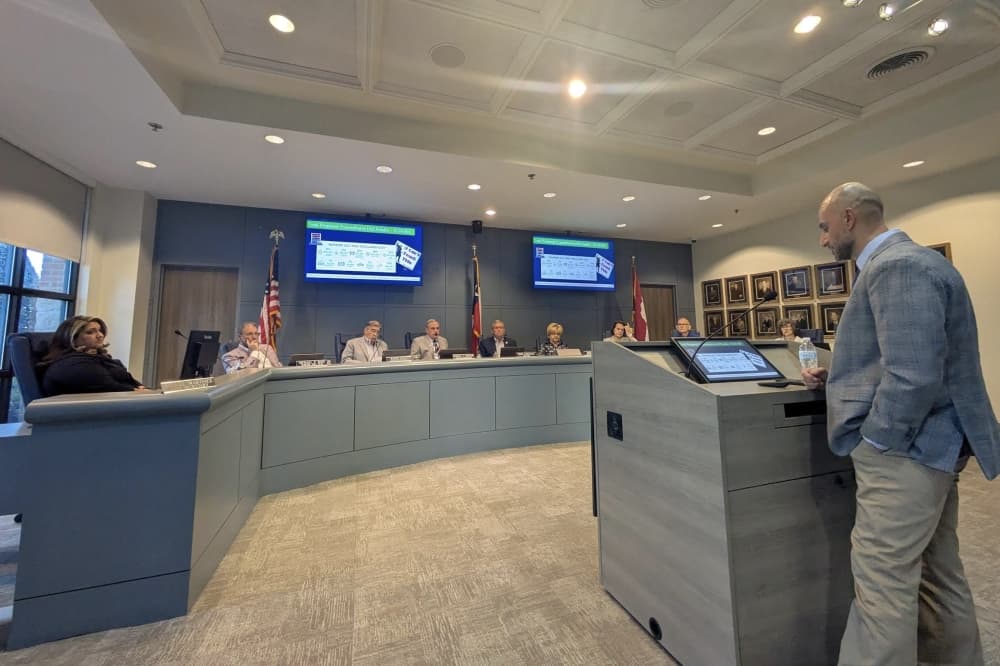
Cy-Fair ISD officials are workshopping a new policy that outlines districtwide expectations for artificial intelligence use in the classroom, paving the way for standardized incorporation of AI into the learning environment.
The overview
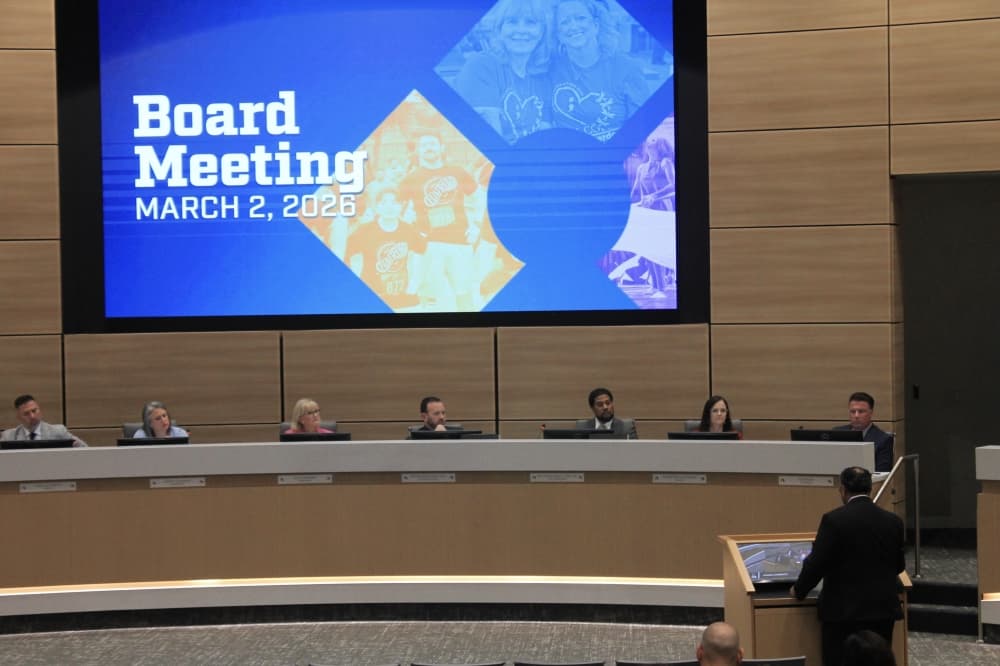
During its March 2 regular meeting, the board of trustees approved a first reading of a policy that aims to guide ethical AI practices for students and staff. With the board's direction, district staff will fine-tune the implementation plan and send the policy back to trustees for final approval.
CFISD is one of few large Houston-area school districts without a local policy specific to AI use. While students and teachers can independently access free generative AI tools, such as ChatGPT and Claude, the districtwide policy aims to establish appropriate use of the technology in the classroom and encourage AI literacy, officials said.
Students must receive teacher permission to use the tools and will still be expected to produce original work, per the proposed guidelines. Additionally, students are prohibited from using AI to deceptively harm, bully or harass others.
"The use of AI shall only be as a support tool to enhance student outcomes and shall never take the place of the teacher and student decision making," the first draft of the policy states.
Zooming out
As more industries embrace the rapidly-evolving technology, school districts are exploring new ways to prepare students for an AI-focused workforce, according to prior Community Impact reporting.
Several other districts in the Greater Houston area, including Houston ISD, Katy ISD, Fort Bend ISD and Pearland ISD, have adopted AI handbooks or included sections specific to AI use in their academic dishonesty policies. Katy ISD also has plans to roll out AI administrative assistants, Community Impact previously reported.
Additionally, Tomball ISD partnered with an educational software company in 2024 to pilot an AI tool for designing classroom content, according to Community Impact reporting.
A 2025 College Board report of AI use in high schools found that 84% of surveyed high school students nationwide use generative AI to complete coursework. Common uses include brainstorming ideas, revising and editing essays, and conducting research, per the survey results.
Additionally, approximately one in five school districts allow generative AI use but do not have a formal policy in place, College Board found.
What they’re saying
Hemant Patel, an instructional coach at Cy-Fair High School, told the board that an AI policy would help CFISD stay on par with neighboring districts that have already implemented the technology.
“Instead of being in a position from lagging behind, we can be in a position of responsible leadership,” Patel said. “It’s not just about technology—it’s about empowering AI literacy [and] those tools for our students to compete in tomorrow’s workforce.”
Trustees Lesley Guilmart and Cleveland Lane Jr. also expressed support for the guidelines ahead of the board’s vote to approve the first reading.
“When the internet came out, people thought, ‘oh it’s just a fad.’ Now it’s what we can’t live without,” Lane said. “Artificial intelligence is here, and if we don’t have the guidelines and boundaries showing our students how to think critically with it ... then when it starts hallucinating on you, you don’t know what to do.”
Lane also said the district’s implementation would improve efficiency by allowing teachers to use the technology to create rubrics and workshop curriculum.
“This is also about teacher retention,” instructional coach Kristy Owens said during the meeting. “In a competitive region, educators are and will choose districts that empower innovation. Supporting thoughtful AI implementation helps us retain and attract forward-thinking teachers.”
Next steps
Superintendent Doug Killian said the district is creating a committee to develop the policy in collaboration with the Technology Services Department. The committee will review how AI tools are currently being used in classrooms and propose training guidelines, he said.
The board is expected to revisit the policy for a second read later this school year. Pending final approval, the new guidelines would take effect immediately, officials confirmed.
Trustees will return to the dais April 9 for a board work session and April 13 for a regular board meeting, per the district's website.