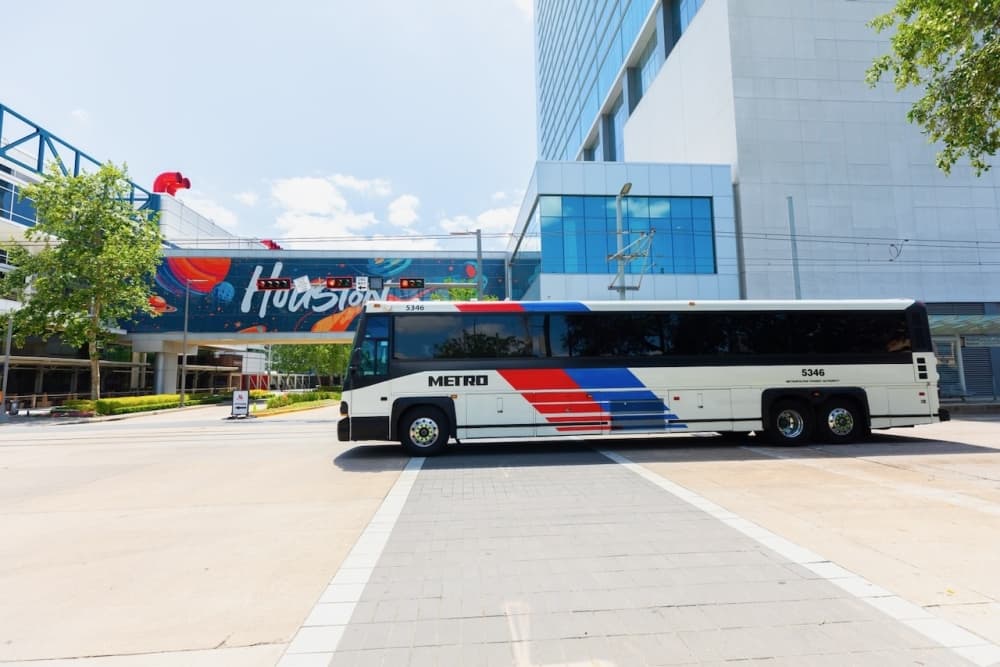
The Metropolitan Transit Authority of Harris County was awarded more than $100 million in federal funding for several low-emission initiatives aimed at significantly improving air quality across METRO’s service area.
“This funding represents a major step in our effort to transition METRO’s fleet to cleaner, more fuel-efficient vehicles,” interim President Tom Jasien said in a Nov. 24 news release. “These improvements will strengthen our commitment to sustainability while ensuring we continue to deliver reliable service for the Houston region.”
Zooming in
METRO officials said the $100 million grant will allow for the following projects to be completed:
- Replacing at least 100 aging diesel buses with new compressed natural gas buses
- Building a new CNG fueling station
- Upgrading maintenance facilities to support expanded CNG operations
The new CNG bus fleet, according to METRO officials, will improve air quality across METRO’s service area by reducing up to 98% of harmful pollutants such as nitrogen oxides and particulate matter. Communities near high-traffic corridors with populations susceptible to harmful pollutants will benefit, according to METRO.
The need
The Houston-Pasadena region ranked No. 7 out of 228 metropolitan areas on the American Lung Association’s most polluted cities by ozone, according to its 2025 State of the Air report released April 23. High ozone levels can lead to a range of negative health effects, according to Houston-based environmental nonprofit Air Alliance, and can worsen conditions such as bronchitis and asthma.
Harris County was one of 10 Texas counties that did not meet the Environmental Protection Agency’s 2020-22 federal air quality monitoring levels, as previously reported in Community Impact.
The big picture
METRO was selected as one of the transportation agencies across the country to receive grant funding as part of the Federal Transit Administration’s $2 billion initiative called the Low or No Emission Grant Program.
“These grants will strengthen connections between communities, boost bus safety and reliability, and enhance mobility and quality of life for passengers,” FTA Administrator Marc Molinaro said in a Nov. 20 news release.