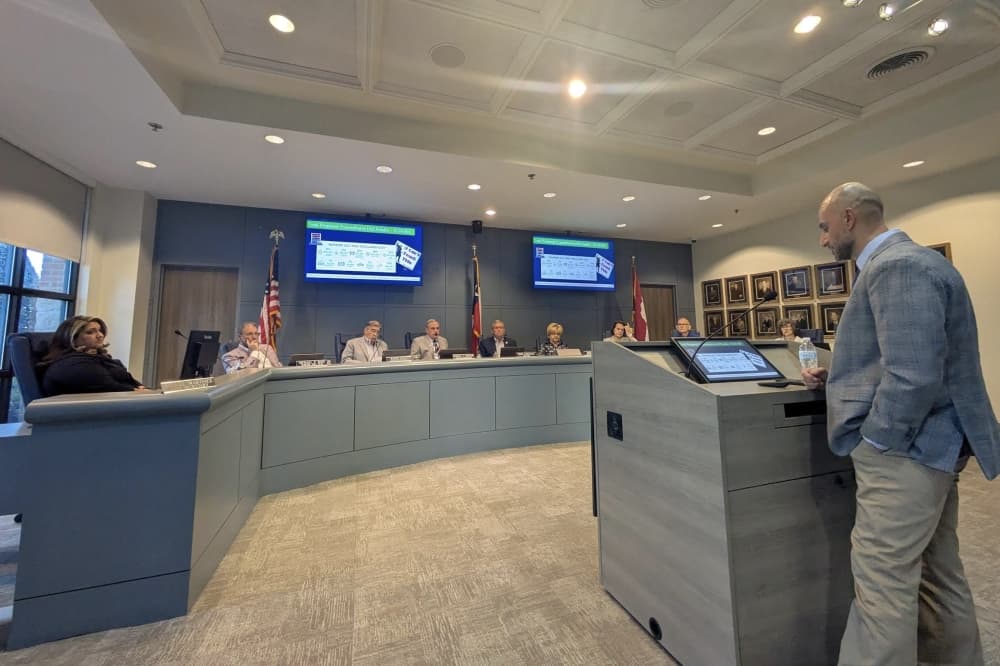
Houston City Council members unanimously approved an amendment to the city’s code of ordinances May 6 that officially establishes an apartment inspection program intended to address unsafe living conditions and repeat offenders across multifamily units.
About the program
Former council member Letitia Plummer originally proposed the ordinance in July 2025. Since then, city officials and council members have gone back and forth to tweak the ordinance and receive feedback from residents and property owners.
The final ordinance approved establishes a High-Risk Rental Building Program to identify and address certain properties through enhanced registration, inspection and enforcement measures, according to the agenda item. Specifically, the ordinance:
- Establishes criteria for the designation of high-risk rental buildings
- Requires registration and inspection of designated properties
- Provides enforcement mechanisms and penalties for noncompliance
- Creates procedures for appeals, ownership transfers and repeat offenders
Mayor Pro Tem Martha Castex-Tatum said this ordinance is a good starting point to address the ongoing issues of unsafe apartment buildings.
“This is an opportunity for us to collect more data, to hear from more people,” she said. “It is not the solve-all for the problems in the city. It is a big problem, but this ordinance is a great start for us and a chance for us to target those repeat offenders without punishing all owners.”
How it works
Properties with 10 or more citations in six months will be designated as a high-risk rental building and will be required to register the property in the program for at least six months from the date the notice of designation is issued. Violations can include:
- Failure to maintain or obtain a valid certificate of occupancy
- Nonfunctional smoke detectors, fire alarms or sprinkler systems
- Inadequate sanitation, plumbing or waste disposal
- Any other condition indicating neglect, inadequate maintenance of threat to the welfare of occupants or the public
Property owners who violate the ordinance can receive a fine of between $500 to $2,000 per day for each violation and will be subject to mandatory, frequent city inspections.
“We have to be able to oversee and hold bad actor properties accountable,” council member Abbie Kamin, District C, said. “It has to stop being the ‘cost of just doing business as usual.’”
The program also includes the creation of an Apartment Standards Enforcement Committee, which will coordinate city responses to “substandard and dangerous” apartment buildings, according to the ordinance. The committee will consist of representatives from multiple city departments, including police, fire and health.
What else?
Castex-Tatum said the city will review and reevaluate the new ordinance after roughly a year to see if any adjustments will need to be made.