Officials are considering changes to Georgetown’s ride-hailing program, rideGTX, to cut down on costs following the council guidance to start phasing out the GoGeo program.
Council members directed staff to increase the base fare, reduce overnight service hours and remove service in the extraterritorial jurisdiction.
The current situation
At an Aug. 11 City Council workshop, Transportation Manager Lua Saluone presented an update on the rideGTX program in order to determine what cost-saving measures council members preferred.
Because of the growing popularity of the service, the program could cost the city $795,000 to $865,000 per year, according to city documents.
"I think we got a problem here which is a good problem," District 5 council member Kevin Pitts said. "We created a new service, and it's working very well. Working too good actually for the money we have allocated for it. So looking at the numbers, I think we have to make some change or we're going to have to make an amendment to the budget."
The history
Georgetown formerly provided two transit programs. GoGeo offered services for residents age 65 and older, as well as limited services for those with a disability, for $2 per trip through CapMetro.
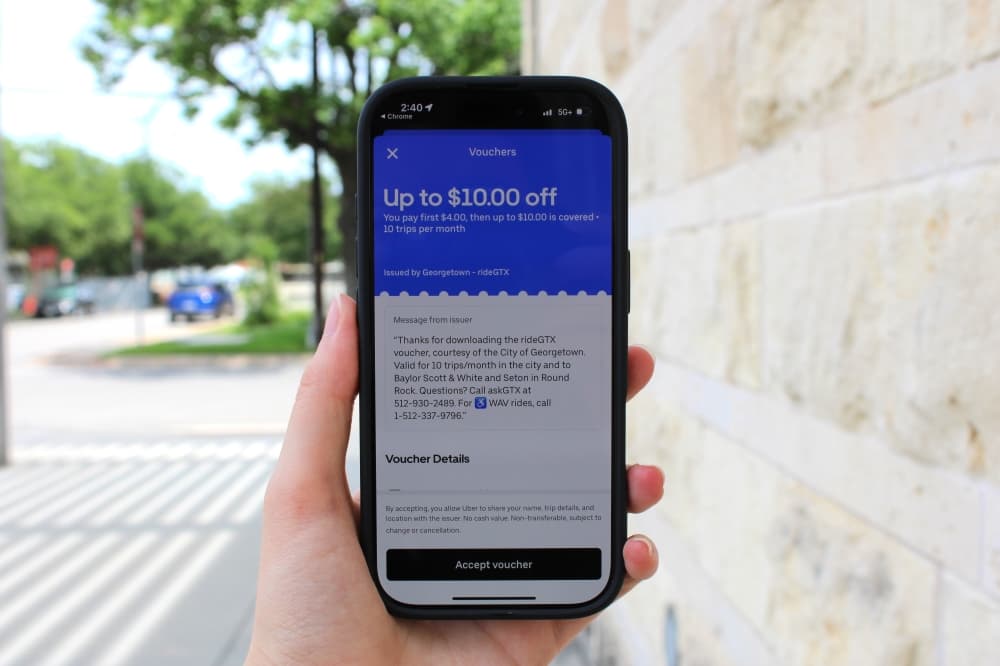
The rideGTX program launched in 2025 and has provided users 10 vouchers per month for 24/7 ride-hailing services. Riders pay the first $4 of the trip, with the city subsidizing the next $10. The user pays any amount after the subsidy.
RideGTX does not limit trips for wheelchair-accessible vehicles, or WAVs, and these users only pay the first $4 per trip.
In February this year, council members decided to end the GoGeo program at the end of the fiscal year, encouraging users to instead use rideGTX ride-hailing or WAV trips.
The update
To keep the program financially sustainable, council members supported:
- Eliminating ETJ service, which will affect about 55 trips per month, or around 16 to 20 regular users
- Reducing hours from 24/7 to 6 a.m. to midnight, expected to save the city between $40,000 and $50,000 per year
- Increasing the base fare for standard voucher rides from $4 to $5
What they’re saying
District 3 council member Ben Butler supported keeping late-night options open to encourage safe driving decisions, but proposed a tiered system where daytime rides remain lower, while evening and weekend rides cost more.
“And so I'd like to focus on those people, especially those people that are holding down a job, but can't or shouldn't be driving, and allowing them to get to work without having to depend on their parents or other people,” Butler said.
District 1 council member Amanda Parr agreed, saying that residents using the service for essential daily needs like work, groceries and medical appointments should be prioritized.
What’s next
City staff will collaborate with transit contractor Trippp Consulting to create a plan for a tiered rate structure for after-hours trips.
After the plan is complete, staff will return to council for approval.