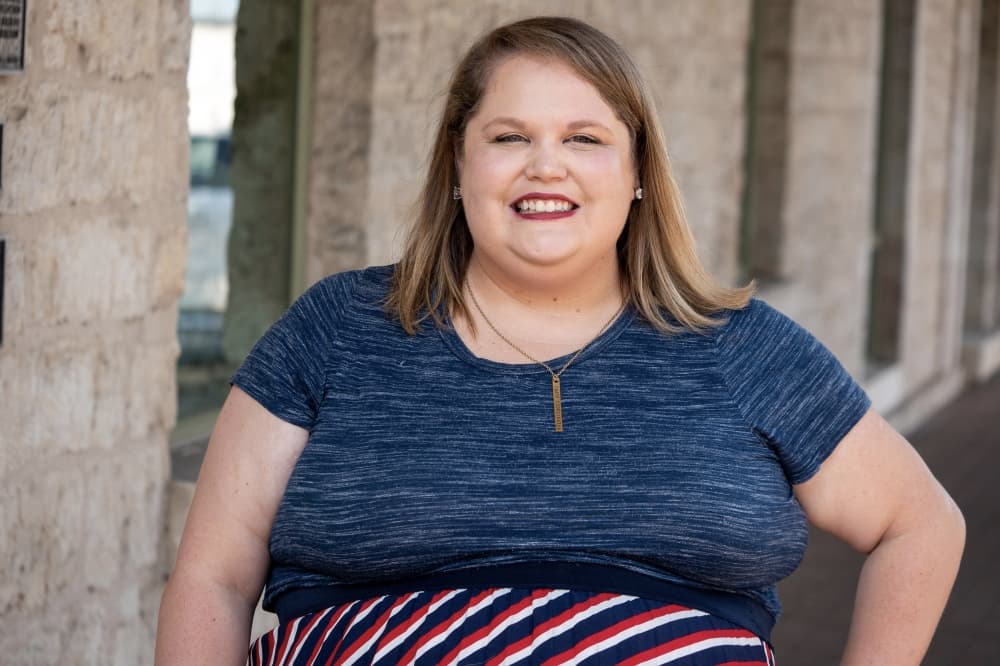
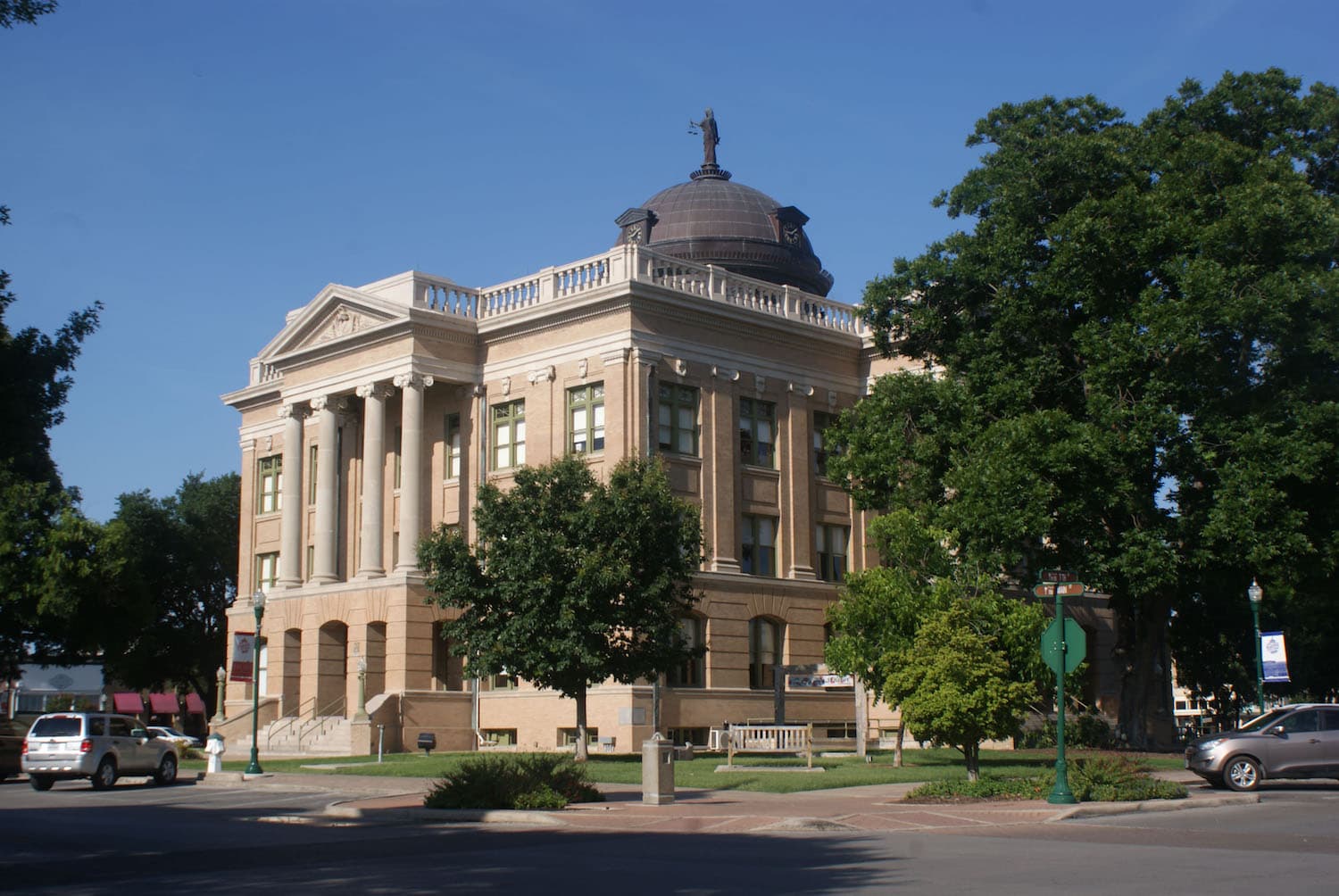
Danelle Houck, the executive director of the Williamson Museum, sat down with Community Impact to discuss the history of the museum ahead of its move from the farmer’s bank into the historic courthouse just across the Georgetown Square.
What do you do in your role as executive director?
I started actually in 2014 as the educational program coordinator for the museum. Basically, I went around with traveling trunks, educating students. I did that for 10 years. Then in July of 2024 I became the executive director.
My job is really to tell the stories [and] to support the staff—everything from what they need [for] exhibits to talking to different cities [about] how we can help tell their history, making sure it's all preserved.
That's what's really fun is being able to tell history in a way that's accessible and fun and engaging, but also reflects our county.
What are your goals for the museum?
We want to make history fun. Like it's not your just boring history class, right? If it's not behind a case, we want people to touch and interact with it.
Last fiscal year, we saw over 19,000 Central Texas students. We take traveling trunks into classrooms that have primary sources—they have artifacts that they get to touch and interact with. But this year, we're not even done with the year yet, but we're closer to seeing at least 22,000 students.
I think that's really what we're trying to do, is, through preservation, exhibition, acquisition and education, tell the stories of Williamson County.
How was the museum established?
Most [historical] commissions do things like [creating] historical markers and preserving historic cemeteries and keeping up those things ... but there is not really a way to collect artifacts or preserve that history.
So [the Williamson County Historical Commission] saw that need. The Williamson Museum, what was called the Williamson County Historical Museum, was established in 1997.
They saw this need to preserve all of this stuff, but have a home base, because even people who serve on the commission might not have the knowledge or background of how to take care of artifacts. That's why it was started. Then this building was renovated and we opened to the public in December of 2003.
What is the reason for the move into the historic courthouse?
It's been something that [the Commissioners Court has] been talking about for a while. Our biggest issue here is that we're limited by space. Even collecting artifacts, we have to take into account space. We have roughly 17,000 artifacts.
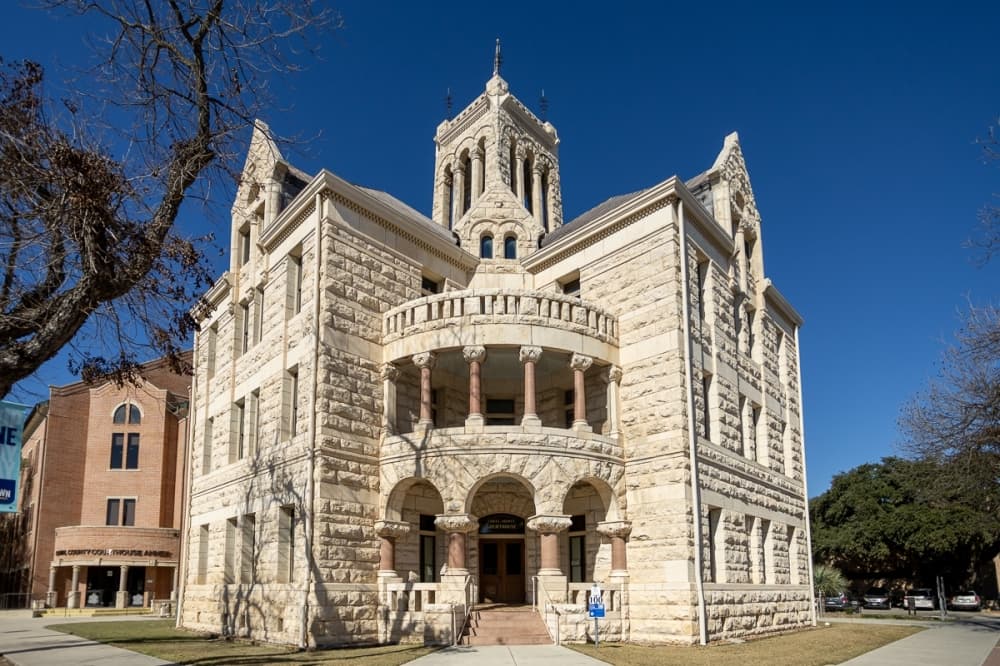
So our hope and what we're really excited to do is to be able to tell more stories of Williamson County. Even like the county judge's office down there ... we're excited ... to turn that into a county judge exhibit.
What's really exciting is the historic Williamson County courthouse is the county's biggest artifact. Its civic life isn't changing because it can still be able to tell the stories of Williamson County.