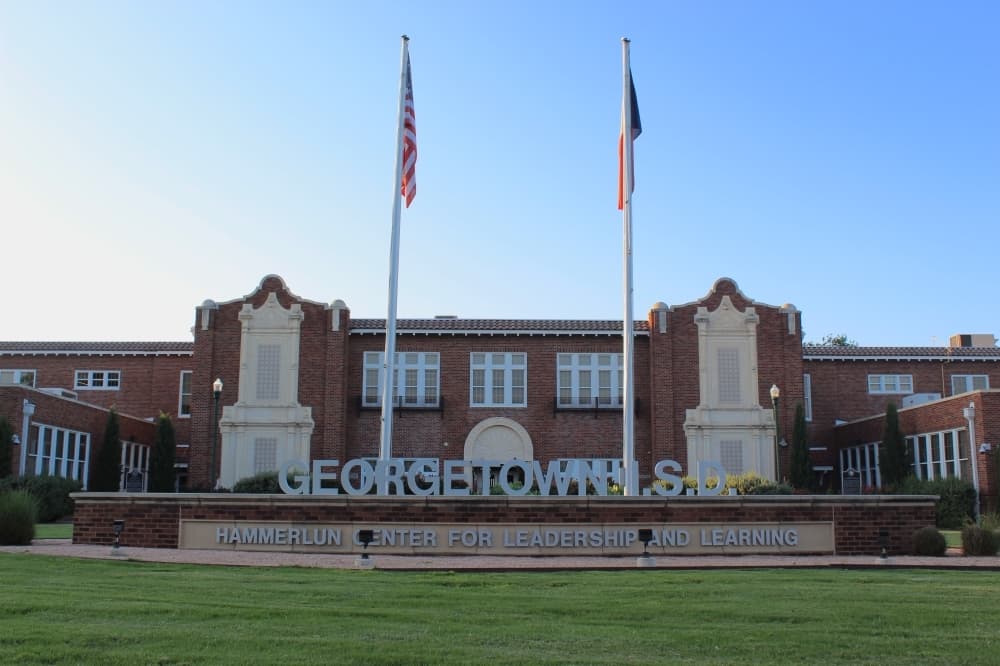
During its May 4 budget workshop, leaders from Georgetown ISD considered increasing contributions and integrating Next Level Urgent Care into its health care offerings to mitigate increasing medical insurance costs.
The cost of medical insurance is projected to increase to $18.4 million next year, GISD Chief Financial Officer Kenneth Adix said.
About the program
In response to the increasing cost of medical insurance, GISD is considering partnering with Next Level Urgent Care. Under this plan, the district would cover employees for $30, and any additional beneficiaries would be covered for $30. Therefore, a family of three and a family of eight would pay the same $60 under this proposal.
Employees would be able to use Next Level for primary and urgent care needs without out-of-pocket costs. Adix said Next Level would cover the difference between any costs not covered by the district or the employee’s contributions.
This switch would support the district as it seeks to cut costs by reducing premium increases, Adix and GISD Superintendent Devin Padavil said. The district would provide employees with education on when to use the Next Level program as opposed to other benefits.
“For families that have ongoing primary care needs or specialist needs, we wouldn't necessarily be trying to persuade employees from leaving that,” Padavil said. “We're talking about like, ‘I think I need to see the emergency room. I have a horrible sinus infection.’”
Crucially, visits to Next Level would avoid any costs incurred to GISD’s current insurer of Blue Cross and Blue Shield of Texas, while reducing any potential premium increases.
While GISD would spend $700,000 on this new initiative, district administrators claim this would save the district over a million dollars.
By the numbers
GISD lost $3.4 million last year due to medical insurance costs, Adix said. Using expenditures up to March of this year to project the rest of the district’s fiscal year 2025-26 spending, GISD is on pace to lose another $6.3 million.
The school district is seeking a $10 million transfer from the general fund to the health care fund to account for this year’s shortfall. To cover this transfer, GISD is considering using money from a one-time property value audit, which Adix says amounts to “a little over $12 million.”
While the district plans to provide $12.6 million to cover a projected $17.2 million medical insurance bill for next fiscal year, a gap of about $4.5 million still exists.
In order to close this gap, the district is considering increasing its per employee contribution from $450 per month to $600, which would amount to $2.8 million. Additionally, the district would increase the employee-only premium by $480 a year while increasing the cost for dependents by $9 a month. These efforts to close the gap would be augmented by an additional $900,000 from the fund balance.
However, Padavil noted that these figures could shift, saying “these dials are going to move back and forth just a little bit” as the district talks with insurers.
The big picture
Since the district left the health insurance provided through the state Teacher Retirement System in 2022, it is unable to rejoin until five years have passed, or in 2027.