Representatives and affiliates with Capland Development and Toll Brothers presented plans for the 362-acre Patience Ranch subdivision at a July 14 Georgetown City Council workshop.
About the project
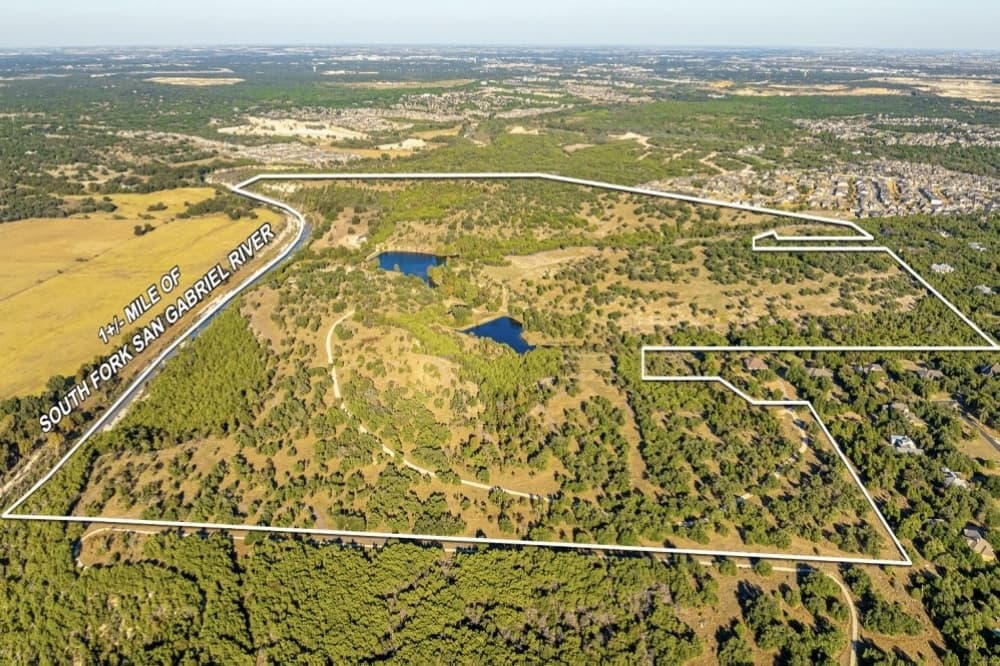
The property for the proposed development is located in Georgetown’s extraterritorial jurisdiction, east of Garey Park and north of the Escalera neighborhood.
Plans include developing the current private cattle ranch into a neighborhood with 535 single-family homes, with lots ranging from 60-100 feet. Assistant City Manager Nick Woolery said the development will provide the “executive-level housing options” that council has been requesting.
Preliminary designs also show natural features, including private and public access to two spring-fed lakes, river frontage, nature trails and parkland.
“It’s one of the most beautiful vistas you could ever want to see along the river,” said Seth Mearig, president and CEO of engineering firm Gray Civil.
The development partners are requesting a municipal utility district agreement that would set a maximum tax rate of $0.95 per $100 of assessed value. The purpose of a MUD is to help a development pay for amenities and infrastructure improvements, according to city documents.
What they’re saying
District 3 City Council member Ben Butler raised concerns about the MUD tax rate.
“It’s almost three times the city tax rate to live in the county [and] you don’t get the city benefits,” Butler said.
Woolery said although staff set a maximum MUD tax rate for developments in the ETJ, council members can establish a different rate through the development agreement.
“You’re not required to approve at $0.95; that’s just what the council’s policy has stated,” Woolery said.
The timeline
Phase 1 of construction is planned to begin in 2028, with Phase 2 beginning in 2031, followed by the final phase in 2034.
“The goal is to have a variety of product in each of the phases to allow a lot of different people to be able to come in here,” said Shane Lekwa, director of design at RVi Planning and Landscape Architecture. “But [we’re] definitely thinking about transitioning to larger lots as we move farther west.”
City staff will use council input to draft a formal MUD agreement to bring back to City Council for approval.
“We’re early in the process so we have not worked through all the details of the development,” Woolery said. “We like to get here pretty early and get initial feedback from [the] council.”