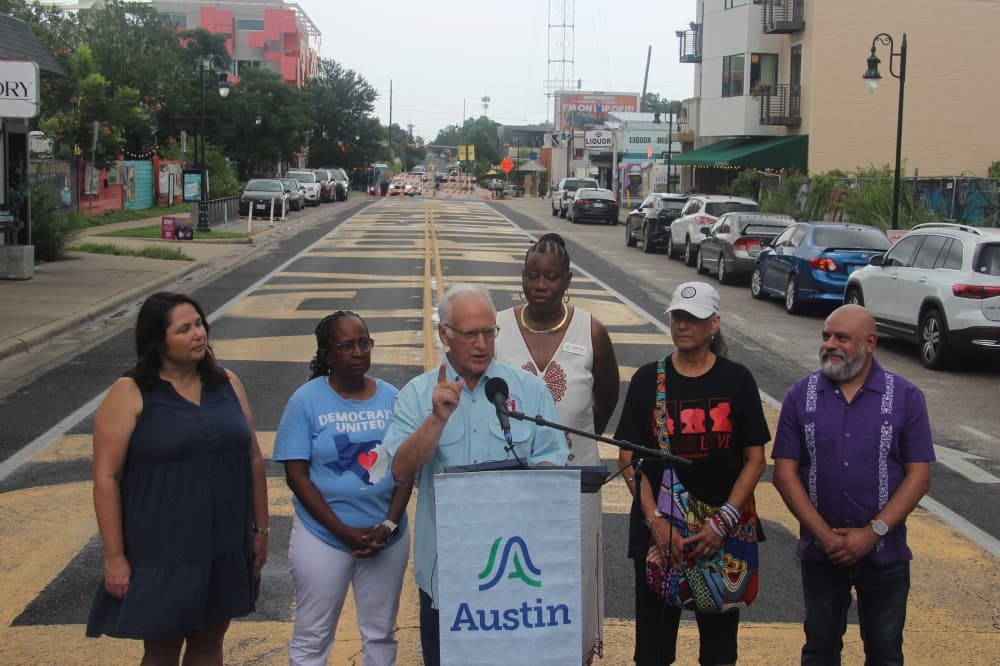
Mayor Kirk Watson spoke about the mandated removal of roadway markings at the "Black Artists Matter" installation on East 11th Street on June 19. (Ben Thompson/Community Impact)
Austin will strip "non-standard" markings like street art from several roadways in response to state and federal safety directives, ending months of local planning and opposition to mandates.
The full story
The national Safe Arterials for Everyone through Reliable Operations and Distraction-Reducing Strategies, or SAFE ROADS, initiative was presented by the Department of Transportation last year. In a statement, Transportation Secretary Sean Duffy framed it as a safety program to keep "distractions" like art and political messaging off roadways.
Months later at the direction of Gov. Greg Abbott, the Texas Department of Transportation detailed statewide standards to remove flags, symbols and other markings from roadways. TxDOT Executive Director Marc Williams said markings promoting a message that don't "directly support traffic control or safety" could cause confusion, and impact navigation for human drivers and autonomous vehicles.
Williams also said cities and counties that didn't remove non-compliant roadway markings could face withheld state and federal funding or cancelled transportation agreements. In Austin, more than a dozen installations were identified for removal last fall with prominent examples like rainbow-painted crosswalks on Fourth and Colorado streets in downtown's historic LGBTQ district, and the "Black Artists Matter" painting on East 11th Street in the African American Cultural Heritage District.
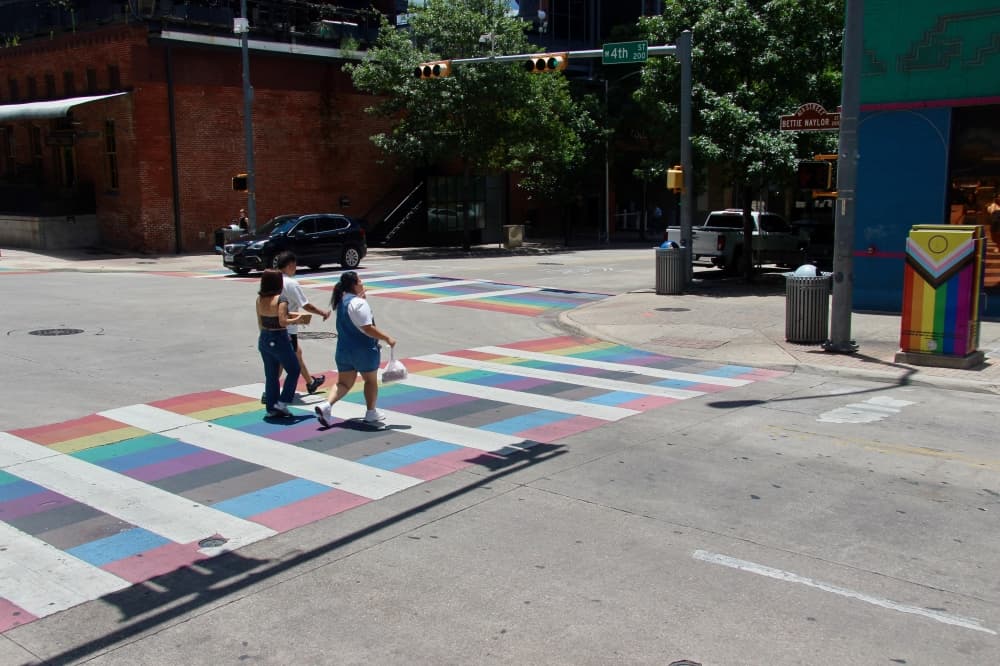
Rainbow crosswalks at Fourth and Colorado streets will be remediated as part of the city's pavement marking compliance process. (Ben Thompson/Community Impact)
Mayor Kirk Watson has said the mandates are a divisive waste of time, but that the city could risk losing hundreds of millions of dollars if it didn't respond to the safety directive. As Austin Transportation and Public Works began a local compliance process, Watson also called to establish a resident body to recommend ways to commemorate some impacted markings. That Public Spaces Task Force was formed last year with appointees by City Council and other local groups.
Affected installations included painted crosswalks and street art across the city. Some were already addressed, while others were yet to be stripped away as of the spring.
The approach
Austin's transportation department requested exemptions from TxDOT's mandate after finding the targeted markings didn't appear to negatively impact safety. Few crashes were reported in those locations to begin with, according to city data, and generally dropped off after markings were installed.
However, TxDOT notified the city on May 18 that no exceptions would be approved and all identified art should be removed. Austin then submitted a required compliance plan on June 16 and is now moving forward with with roadway remediation, to be completed later this summer.
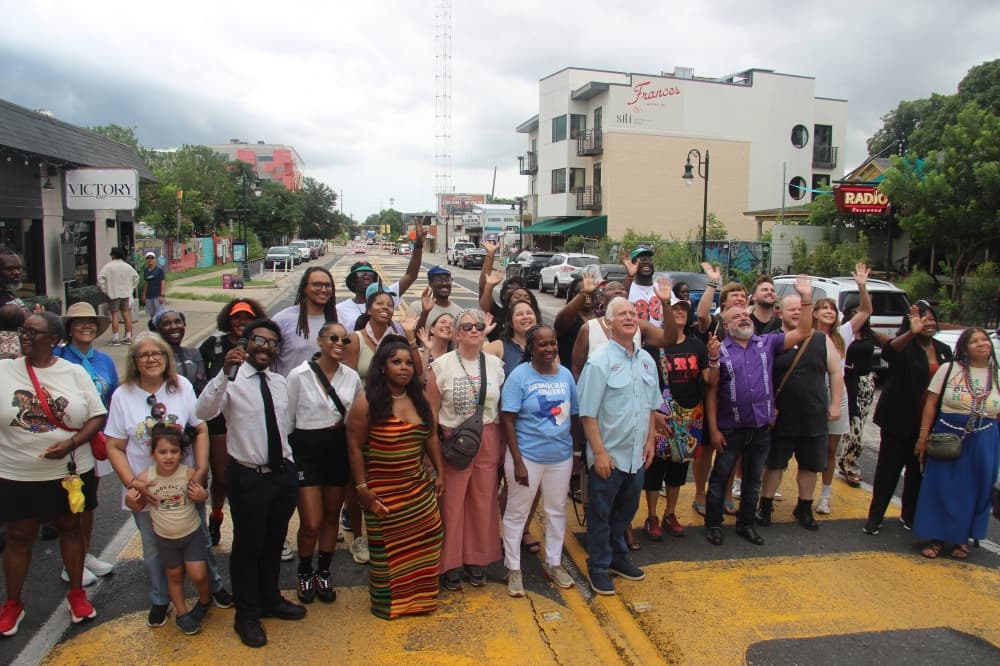
Public events were held at the east side and downtown installations ahead of their removals. In East Austin on June 19, Watson said the city was responding to a targeted attack by the state on certain communities with new chances to celebrate them.
“The edict about these murals was meant to create sadness, be demeaning and cater to those who discriminate. It’s ridiculous that with all our needs and all we could be doing, some use their power to divide and demean people and to devalue things that make our communities special," he said. “These artistic expressions are important to all of us, to all of our constituents, they’re important to me as the mayor. And this threat, while uninvited, creates an opportunity."
City leaders and residents gathered June 19 to commemorate an East Austin roadway installation honoring Black artists that must be removed under a state directive. (Ben Thompson/Community Impact)
Most of Austin's identified roadway markings will have to be fully removed. Those include the downtown and east side installations, a burnt orange "Texas" marking on Guadalupe Street next to The University of Texas at Austin campus and Central Austin neighborhood traffic circles. A crosswalk river painting near the Lower Colorado River Authority headquarters also has to be stripped, pending City Council approval given its status as a civic public art installation.
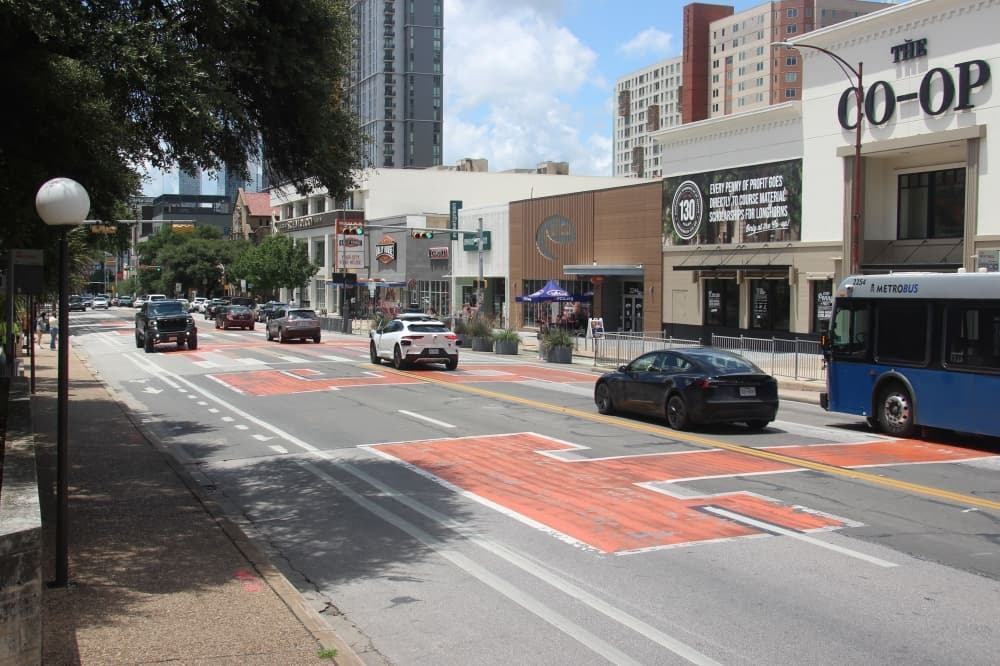
A "Texas" road marking and rainbow crosswalk on the Drag will be remediated as part of the city's pavement marking compliance process. (Ben Thompson/Community Impact)
Some identified markings are already covered, including brick- and rainbow-painted sidewalks in East Austin that were remediated earlier this year. A few markings were initially anticipated to remain in a modified form with mitigations like new curb installations, but a lack of funding now means they'll also be removed.
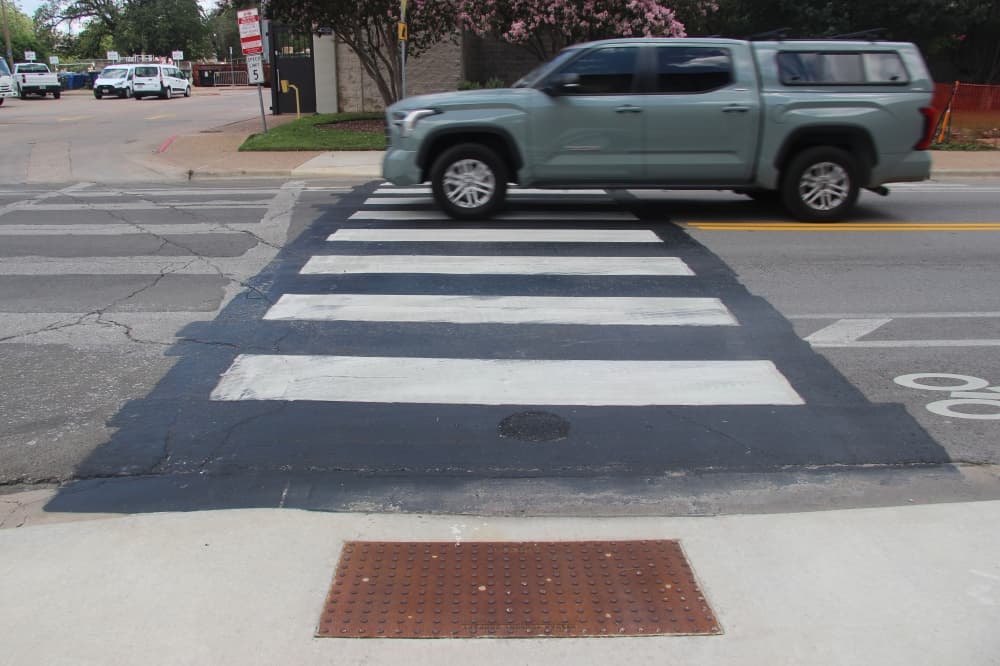
A rainbow crosswalk on Manor Road was recently remediated as part of the city's pavement marking compliance process. (Ben Thompson/Community Impact)
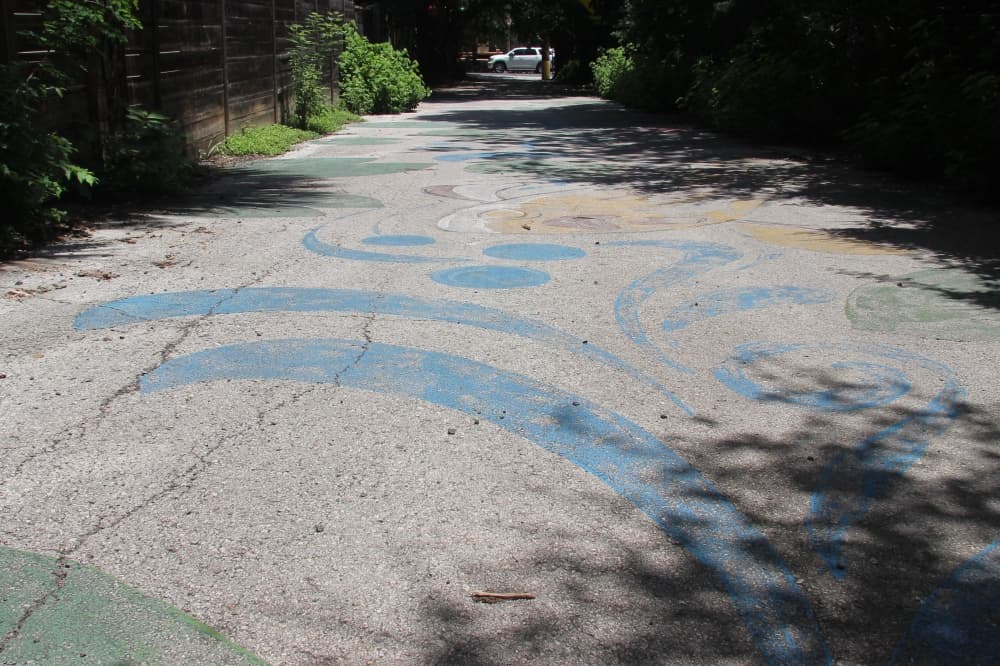
Three locations, including street art in the Zilker neighborhood's Fairy Alley, will be allowed to fade out over time. The city will review those roadways later this year and work with TxDOT on any further compliance.
Roadway paintings in the Zilker neighborhood's Fairy Alley will not be maintained under the city's pavement marking compliance process. (Ben Thompson/Community Impact)
Some context
The costs of Austin's compliance with the TxDOT directive aren't yet known. A final total will be reported after all work is completed, according to Austin Transportation and Public Works.
"The work is, and will be, funded through current fiscal year operational budgets. Staff are not tracking time spent on meetings and developing responses, so we are unable to provide a number as to what the cost has been to date," a department spokesperson said.
Austin currently has more than $400 million in total transportation-related state and federal funding, according to the city. The ongoing compliance process ensures none of that grant money is at risk.
The transportation department alone has more than $227 million in active or awarded federal grant funding. It's unknown how much of that would've been at risk without remediating the roadways.
"The City has no information on how much of those funds would have been at risk if the City had not complied with the directive," a spokesperson said.
What's next
The placement of off-street art installations and other improvements as suggested by the Public Spaces Task Force is also to be determined, and planning is ongoing. Community members contributed to a new mural painting near the Fourth and Colorado crosswalks on June 20, and a long-anticipated LGBTQ historical marker will also be placed there later this summer.
“If they’re going to take something off of the pavement, then we want to create more than one opportunity off the pavement adjacent to that for us to have that creative art space that comes from the public," task force Chair Steven Rivas said in an interview.
Future mobility updates in the area could include the conversion of Bettie Naylor Street—a stretch of Fourth Street named in honor of the civil rights advocate and home to several LGBTQ establishments—into a new pedestrian plaza and mini-entertainment district. Rivas said it could resemble a plaza planned near the Capitol as part of Austin's Congress Avenue Urban Design Initiative.
The city's LGBTQ Quality of Life Advisory Commission had previously recommended the street closure and entertainment district concepts. Other additions like public art and a memorial park have also been contemplated, and Rivas said the proposal has support from area business owners. Funding could come from the creation of a small public improvement district, or PID.
“We believe it’s our job now to take seriously the institution, the establishment, of that corridor and make it our own unique Austin spot," he said.