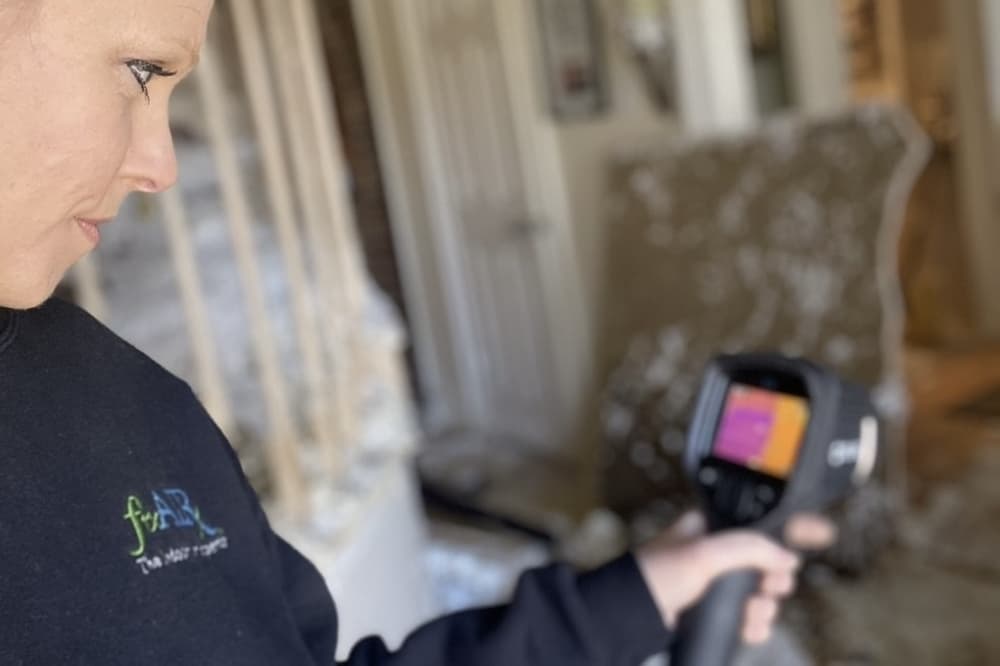
Wendy Michaelis and her daughter, Anna Bell, are the owners and operators of FixAIRx, a forensic indoor environmental health company based in Denton County, which is dedicated to assessing the air quality to address complex indoor health concerns.
Elevated mold exposure can affect health, especially for people who are sensitive, allergic, asthmatic, immunocompromised or already dealing with other health concerns, Michaelis said. Damp or moldy buildings are associated with respiratory symptoms, asthma concerns, allergic rhinitis, hypersensitivity pneumonitis, respiratory infections and eczema.
“It’s crazy that 13 years ago, I started this company to find solutions for Anna’s asthma. I never expected that this would become our journey together.” Michaelis said.
Community Impact spoke with Michaelis, a licensed mold assessment consultant, on how to monitor a home’s air quality, especially when it comes to mold assessment and mold remediation. Responses have been edited for length, clarity and style.
What is indoor air quality?
Indoor air quality, or IAQ, is a term that refers to the overall conditions of the air inside your home or building and how those conditions affect your health and comfort. Indoor air quality is influenced by several interconnected factors and can become expensive and confusing when something is out of balance. When these intricate systems are working properly, your home can breathe, dry, filter, drain and protect itself and everyone in it. When one system is stressed, whether from a hidden leak, poor airflow, high humidity, dirty ductwork, chemical exposure or storm damage, the whole home can start showing symptoms.
What does an indoor air quality specialist do?
I often compare our role to the diagnostic side of healthcare. Before treatment begins, someone has to understand the symptoms, identify the cause, and document the plan. That distinction is especially important in Texas, where mold assessment and mold remediation are regulated fields. The person evaluating the problem should be independent from the company performing the cleanup. This helps protect homeowners from conflicts of interest and ensures the work is properly documented before, during, and after remediation. We are identifying, testing, interpreting and documenting damage conditions that affect health risks to both the home and everyone living inside it. If mold or significant water damage is involved, it’s important to involve a licensed mold assessment consultant as early as possible.
How can mold and poor indoor air quality affect the structure of your home?
Mold is not just an air quality concern; it is usually a sign that moisture is present where it does not belong. Most modern homes are built with materials like wood framing, drywall, insulation and paperbacked products. When they stay damp, they can become food sources for mold and bacteria. Over time, moisture can weaken building materials, damage drywall, affect flooring, compromise cabinetry and create conditions that attract pests, such as termites, ants and other insects. In North Texas, this matters even more because our homes already deal with extreme heat, storms, humidity and shifting soils. When moisture intrusion is added to that mix, small building problems can become expensive structural and environmental problems if they are ignored.
For those looking to buy a new home, how can you spot signs of poor indoor air quality?
Whether a home is brand new or simply new to you, there are a few things buyers should pay attention to before closing because most homes are built with moisture-sensitive materials. During your walkthrough, pay close attention to what you see, what you smell and how the home feels. Musty odors, water stains, swollen baseboards, peeling paint, buckled flooring, freshly patched areas or dirty HVAC components can all be signs that there may be a bigger issue.
How can homeowners keep track of their home’s indoor air quality, and what indicators should they watch for?
We recommend every home have working smoke alarms and carbon monoxide monitors as basic life-safety devices. From there, a simple humidity monitor can help homeowners watch for elevated moisture conditions, and a basic indoor air quality monitor can help track trends in particulates and volatile organic compounds from dust, smoke, cleaning products, fragrances, renovations, building materials or poor ventilation.