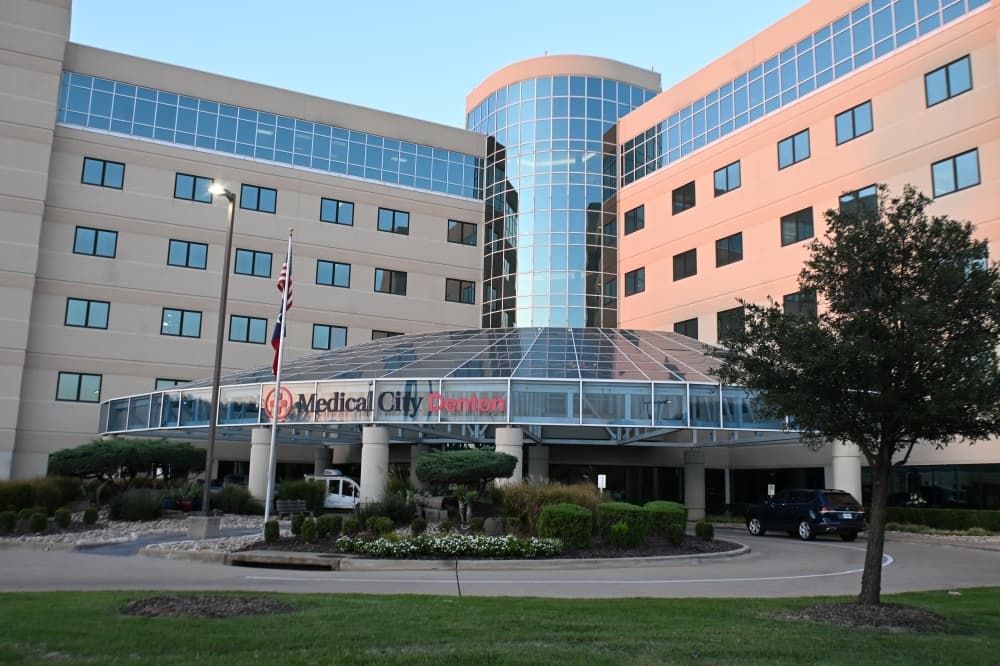
Medical City Denton’s mortality rate for its cardiovascular patients is less than half the national average, Chief Medical Officer Dr. Glenn Hardesty said. The hospital implements several strategies, including specialized staff training and data transmission with ambulances, to reduce mortality for its cardiovascular patients.
The hospital opened an $8 million cardiovascular intensive care unit May 18 to provide specialized care for patients recovering from major heart procedures. The hospital expects to treat 53 patients in the cardiac ICU over the next year.
What you need to know
About 2,000 out of 14,000 patients admitted to Medical City Denton, or 14%, were treated for cardiovascular conditions in 2025, according to data provided by the hospital. To provide better care for complicated heart cases, Medical City Denton opened a cardiovascular intensive care unit in May.
The new cardio ICU features eight beds for patients recovering from heart conditions, like heart failure, and from medical procedures, including open heart surgery.
The wing features equipment that can pump a patient’s blood for them when their heart isn’t working well, along with other specialized cardiovascular equipment, Hardesty said. The cardio ICU is also staffed with nurses who specialize in cardio care.
“We’ll have the nurses [where] their core competency [is] in the cardiovascular space,” Hardesty said. “It will bring better outcomes [and] better experiences to those patients.”
“This investment expands our cardiovascular system of care, helping ensure our community has access to the specialized services they need, close to home,” Steven Edgar, CEO of Medical City Denton, said in a May 19 news release.
Zooming out
Medical City Denton is the only Level II trauma center in Denton County and treats patients from surrounding North Texas counties and southern Oklahoma, Hardesty said. The hospital has a 24-hour operating room staffed with surgeons that can be ready for surgery within 20 minutes.
Denton County’s death rates for heart attacks are below the state’s, according to Healthy North Texas, a dataset and website managed by the Dallas-Fort Worth Hospital Council.
In Denton County, hospital admissions for all types of heart attacks, angina and coronary heart disease have risen from 616 hospitalizations in 2017 to 626 hospitalizations per 100,000 residents in 2023, according to the Texas Department of State Health Services.
Hospitalizations across the state and most other North Texas counties have also risen, according to the data.
What else
Hardesty said typical heart attack signs include chest pain, nausea and pain in the left arm, which are present in about 25% of heart attacks.
Atypical symptoms occur in 75% of heart attacks and include shortness of breath and fatigue, making them harder to recognize. Women are more likely to have atypical symptoms, Hardesty said.
Also of note
The hospital coordinates with emergency medical services while they’re transporting heart patients to Medical City Denton to transmit the patient’s medical data, Hardesty said.
This coordination gives hospital staff a head start on treatment, and patients routinely receive care for their cardiac events in under 25 minutes after arriving at the hospital.
The national average mortality rate is about 2% mortality on cardiovascular patients, while Medical City Denton’s is under 1%, Hardesty said.
“Having a Level II trauma center within a community provides critical, lifesaving infrastructure that ensures faster, higher‑quality emergency care for trauma patients,” Denton Assistant Fire Chief David Becker said.
“This proximity enables EMS providers to deliver critically injured individuals more efficiently and to coordinate prehospital care effectively, ultimately leading to more lives saved and improved patient outcomes.”
Looking ahead
Data from the U.S. Census Bureau shows Denton’s population has increased by about 30,000 residents between 2020 and 2025.
In 2020, the city’s population was just under 140,000. Estimates put the city’s 2025 population at about 169,000.
To accommodate the city’s growth, Medical City Denton plans to expand with new facilities in the coming years, Hardesty said.
“We’re continuing to grow, and Denton is growing so quickly,” Hardesty said. “[For] our next announcement, we’ll have an inpatient rehab facility.”
While plans for adding the inpatient rehab facility are in the works, there is no set opening date for the new program, Hardesty said.•