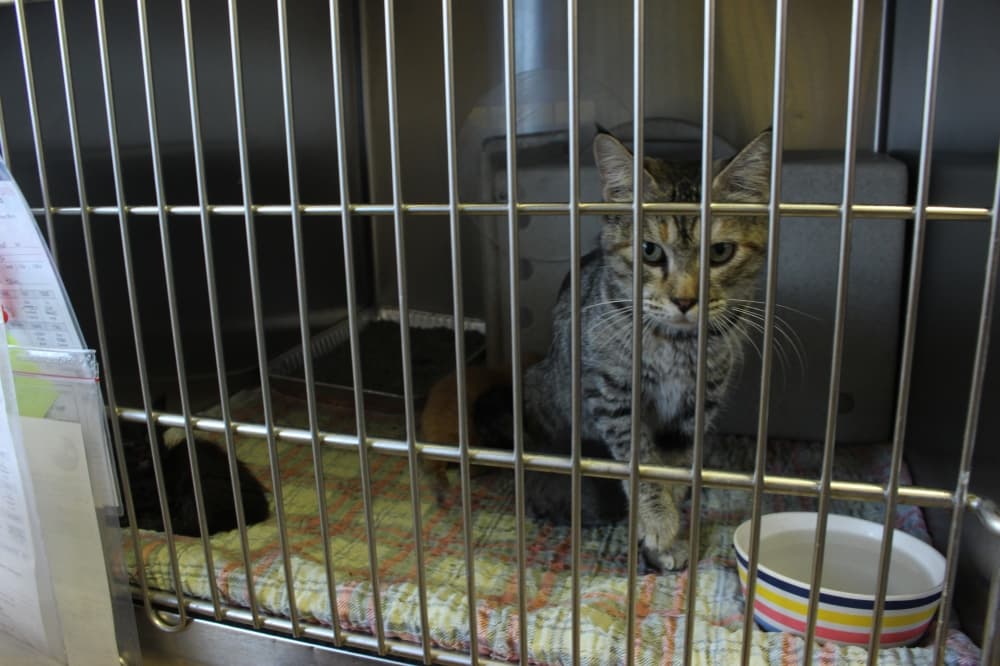
McKinney officials are considering implementation of a trap-neuter-release, or TNR, program with minimum staff involvement after receiving feedback from City Council members in December.
Some council members voiced support for a citizen-led TNR option during a Dec. 2 work session. Trap-neuter-release refers to trapping, spaying or neutering, vaccinating and ear tipping feral cats for identification before releasing them. The target population is feral cats, which is different from stray cats, Animal Services Manager Hannah Golden said in October.
What happened?
City staff returned to council members with three different options for allowing trap-neuter-release activities in McKinney. Code Services Director Phillip Hubbard’s presentation included an overview of each option that ranged from minimum staff involvement to high staff involvement.
“This presentation is intended to get your guidance on how we should move forward to allow [TNR] within McKinney,” Hubbard said.
Either option presented would require ordinance amendments passed by council to allow TNR activities in McKinney. Hubbard overviewed three options for allowing TNR that were separated by the amount of staff involvement.
The details
The first option would require minimum staff involvement, which means a lower cost to the city. McKinney citizens would manage TNR activities independently, according to Hubbard’s presentation.
“At the minimum staff level, we would be able to amend our ordinances, add a couple definitions to allow TNR, or to essentially not prohibit TNR activities that would require no additional staff time [or] additional paperwork,” Hubbard said. “It would allow folks that want to do this to be able to do it within the city of McKinney.”
The second option would require moderate staff involvement with more oversight provided for any TNR activities, according to Hubbard’s presentation. Through the second option, the city could make traps available for loan to citizens wanting to become involved, and feral cat colonies would be registered by the staff.
The third option would require high staff involvement and implement a colony sponsor program. Through the program, citizens or organizations can sponsor caretakers that will manage feral cat colonies in the city. The third option would include more oversight, such as maintaining a database of feral cat colonies and caretakers.
What they’re saying
Council member Patrick Cloutier asked if the city could contact veterinary offices to determine if there’s a fixed price for neutering or spaying feral cats. If the city were to implement the first option, city officials could list phone numbers to veterinary offices on the city website so citizens know where to take feral cats, he said.
“The hard cost to this is the actual neutering, and in the low staff involvement [option] we haven’t provided any clarity to motivated citizens to let them know what that might be,” he said.
The first option would give city officials a chance to determine TNR’s efficacy before budget discussions begin early next year, he said.
Council member Justin Beller said the first option seemed “easy to wade into” and offer guidance on how citizens can use best practices. City officials can explore other services like trap rentals in the future if it's needed.
“If there is more structure that’s needed, it’s easy to take that next step, to say traps are an issue and it would be nice to have them available to rent.” he said. “So you can get feedback and wade into that as it’s experienced.”
Mayor Bill Cox said he liked the minimum staff involvement option as well.
“If, as we get into this, it looks like we need to readdress this or address it again in the budget cycle, we’ll do that at that time,” he said.