The Fort Worth City Council asked city staff to see if they could raise a proposed bond capacity set to be on the May election ballot.
What happened
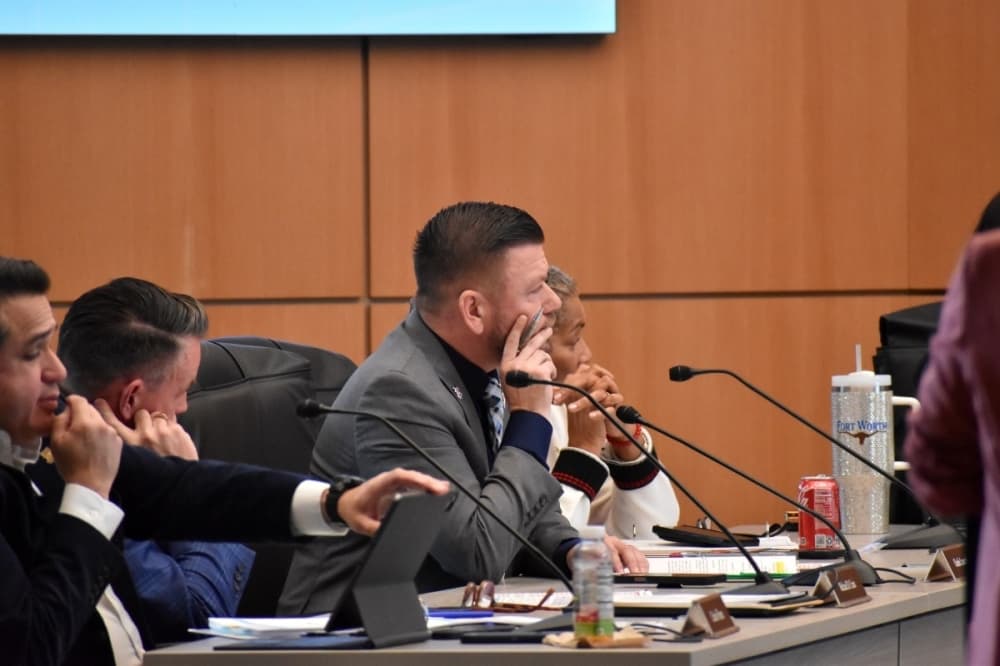
During a work session meeting Jan. 13, a majority of council members asked City Manager Jesus “Jay” Chapa to investigate whether the proposed 2026 bond could be raised to $845 million from $840 million without changing the impact on taxpayers.
The bond is broken down into six categories, which would be all single items on the ballot if approved by the council in February, he said.
The $840 million no-increase tax bond is heavily geared toward streets and mobility infrastructure improvements, with that portion of the bond accounting for $511.5 million.
Other funding would go toward:
- Parks and open space: $185.1 million
- Public library improvements: $14.6 million
- Animal care and shelter facility improvements: $59.9 million
- Public safety improvements (fire and 911 communication): $63.9 million
- Affordable housing: $5 million
The bond would pass or fail by each line item on the ballot, meaning street work could pass, but if animal care and shelter facility failed, it would not be done, and that money would fall off the bond amount.
Long story short
The biggest point of contention on the bond for council members was $5 million going toward affordable housing.
The end decision was to look to see if the bond capacity could be raised by an additional $5 million to bring that affordable housing number to $10 million and the overall bond to $845 million.
The two northeast Fort Worth council members, Alan Blaylock of District 10 and Charlie Lauersdorf of District 4, were the lone voices against additional bond capacity going to housing.
Blaylock said his greatest concern is the number of potholes in the district and the traffic issues throughout north Fort Worth.
He said some of the issues could be addressed with the bond passing, but he was in favor of adding any additional money toward streets or public safety if additional capacity was available. Blaylock said the city needs about $1 billion in road maintenance to keep up with the infrastructure.
What they’re saying
“I think the $5 million for affordable single-family housing is a good test for us moving forward,” Lauersdorf said. "I think it’s important for homeownership, and I would like to learn more about what other forms of homeownership are out there that could be multifamily. Sure, we need more housing; it’s a problem. I don’t think it’s this council’s problem to solve. I don’t think it’s the taxpayers' problem to solve directly, whereas the streets are directly our problem to solve. The same thing with public safety.”
Zooming in
Town hall meetings were held in October and November, and city data showed 260 people attended, while 13,758 watched live events for their respective council districts. The meetings were held to gather feedback on the bond package and whether residents would want to see any changes.
An online portal for suggestions was also launched, and the city got nearly 500 comments, said Christianne Simmons, chief transformation officer for the Fort Worth Lab, which works on the city budget.
Of the 1 million residents in Fort Worth, there are 689,988 people who are 18 years old or older and can legally vote. The turnout for the public comment in meetings and online generated 0.02% of the voting population, according to the presentation. BalancingAct, an online platform that allowed residents to use a sliding scale to change the proposed budget amount, 188 residents used that option. Overall, the public engagement accounted for a total of 0.05% of the voting population, according to the presentation.
“The number we got, the percentage of the population that are responding right now, we’ve got three or four months to really educate the voters,” District 3 council member Michael Crain said.
What’s next
Chapa said he and his staff will look into changing bond capacity. An additional work session is slated for Jan. 27 to look at the possible bond changes.
According to the presentation, Simmons said the city has until Feb. 13 to vote to place the bond on the May ballot. Chapa said the item is planned to be on the council agenda for the Feb. 10 meeting.