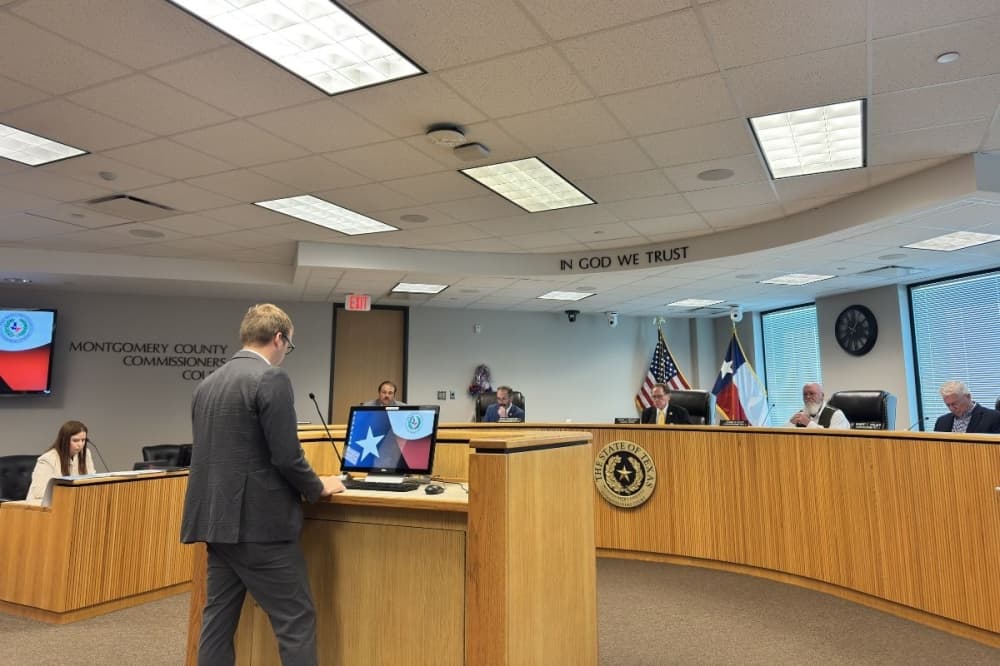
Montgomery County Commissioners Court voted April 9 to leave the county’s 40-foot minimum suburban lot width in place after hearing pushback from builders, real estate agents and residents during a public hearing on proposed development regulation changes.
The court removed the proposed 50-foot minimum lot width requirement and approved the rest of the update, which county engineering staff had described as a set of clerical corrections and clarifications.
What happened?
County documents show staff had proposed changing the minimum average lot width for suburban lots from 40 feet to 50 feet in the county development regulations. Other proposed changes included updates to traffic study requirements, as-built drawing language and clerical changes such as the acknowledgment pages and the Comissioners Court signature block.
Speakers who addressed the court largely argued the 50-foot change would raise housing costs and further squeeze first-time buyers already facing higher taxes, utility costs and insurance expenses.
Cody Miller, government affairs director with the Greater Houston Builders Association, said the proposed increase would make housing “less attainable” by raising land costs and reducing how many homes can be built.
Others told commissioners the lot-width increase was not a clerical correction but a major policy decision.
“If you increase lot sizes, you increase lot cost. When you increase lot cost, you increase home prices,” Mike Stoecker, a local real estate developer, said.
What they’re saying
Some speakers tied that concern directly to what they are seeing in the local market.
Magnolia-area broker Kenna Stephenson said some younger buyers she knows are purchasing homes in Waller County instead because they cannot make the numbers work in Montgomery County.
She said buyers in some newer developments are also facing steep monthly utility and tax-related costs, and warned that larger lot requirements would only make entry-level homes harder to justify.
“We’re losing them,” Stephenson said.
Builders also brought pricing data to the public hearing.
Mark Welch with David Weekley Homes said the company had 118 closings last year in Montgomery County on lots smaller than 50 feet, with an average home price of $366,000.
He said a 10-foot increase in lot width could add about $20,000 to lot costs and roughly $26,000-$27,000 to the final price of a similarly sized home.
Other speakers framed the issue around who gets priced out first.
Debbie Green, division president at D.R. Horton, said smaller lot homes matter for “the first responders, the people that work at your grocery stores, everybody that serves us in this county.”
She was not alone in that sentiment. Retired teacher and Montgomery County resident Christine Smith said she was able to buy her retirement home on a 40-foot lot after years of renting, telling commissioners, “This is my retirement. This means everything to me.”
Another broker, Susan Johnson, said that raising the minimum would mean “we are inviting our first-time buyers to go elsewhere.”
Diving in deeper
Commissioners did not all frame the issue the same way, but several signaled they were not ready to support the wider minimum.
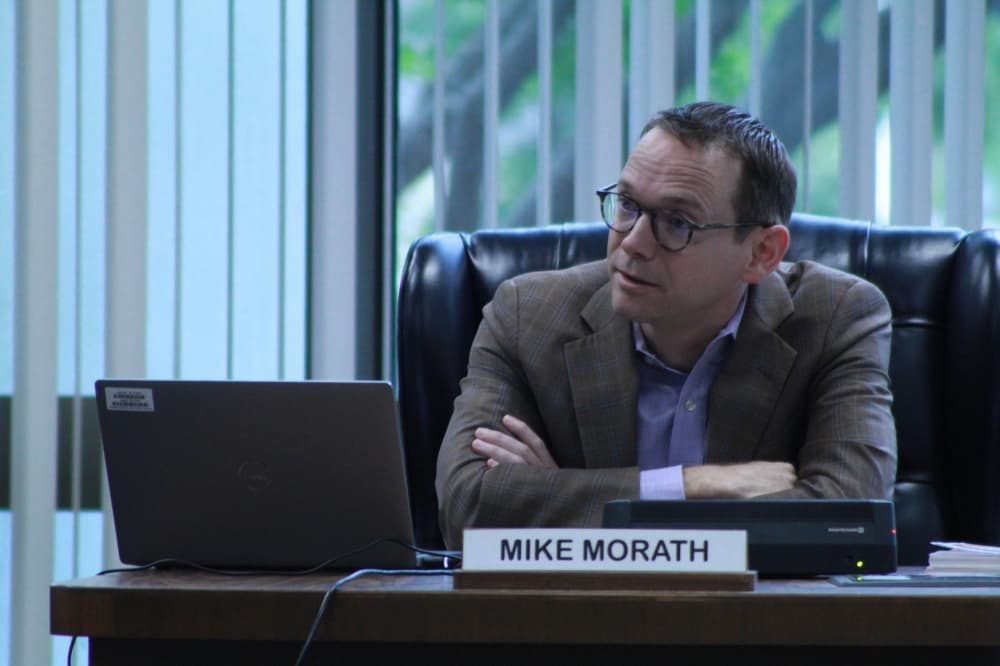
County Judge Mark Keough said the county had already spent considerable time working through lot-width standards when the development regulations were first adopted and said Montgomery County’s reputation for “stable government” means developers need to know the county will not “pull the rug out from underneath them and change midstream.”
Precinct 2 Commissioner Charlie Riley said earlier updates to the rules were meant to “encourage good development, good developers,” and said that “lot size needs to stay where it’s at.”
Precinct 4 Commissioner Matt Gray said he supports affordable housing and first-time homebuyers, but argued the discussion also has to include county infrastructure demands.
“I've had constituents and people from Montgomery County in the last several courts talking about the dense housing and the housing developments coming in around them,” Gray said. “So if you don't know, [Texas Department of Transportation] has cut billions and billions of dollars for transportation funding for the next couple of years, which is going to sting everybody here.”
Gray said Montgomery County’s service burden is heavier than in some neighboring suburban counties because much of the county is unincorporated, and that traffic and mobility are bigger long-term pressures.
Precinct 1 Commissioner Robert Walker also acknowledged the strain of rising home costs.
“It’s outrageous the cost to build a house now,” Walker said. “I don’t agree with it right now. I’m more for wider roads for safety.”
The motion to leave the county’s 40-foot minimum suburban lot width in place and approve clerical corrections passed 3-1, with Gray voting against. Riley was absent for the vote, and Keough voted in favor.