When residents turn on their taps in Montgomery County, almost all of the water flowing from their faucets, showers and sprinklers comes from the ground.
Of the 20 most populated counties in Texas, Montgomery County is one of three that get the majority of their water needs from groundwater, according to 2024 data from the Texas Water Development Board, with wells reaching deep beneath the surface to pull up the precious resource.
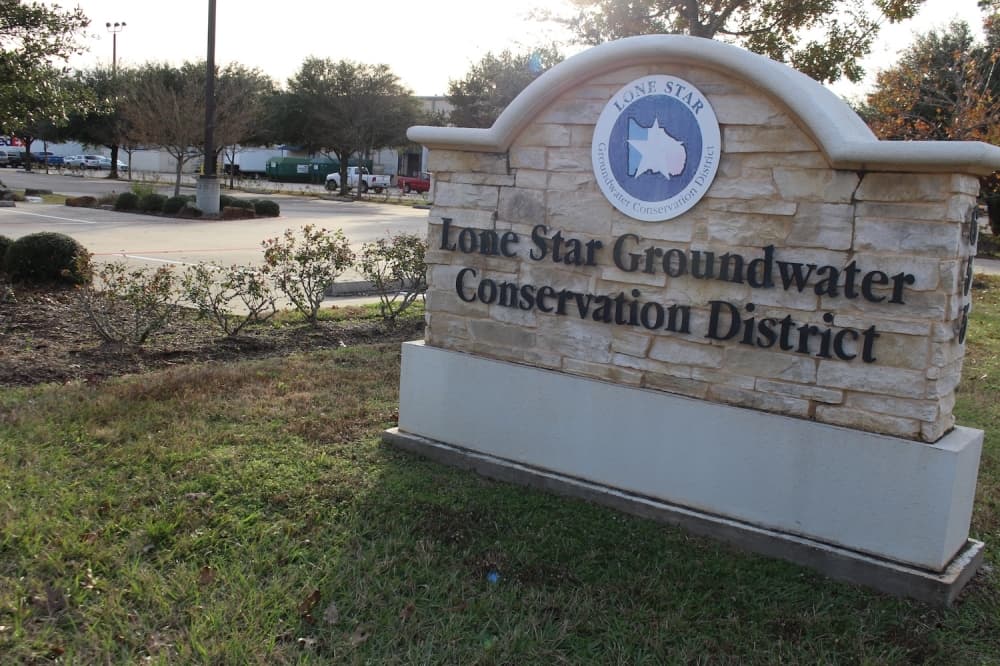
And for the last 25 years, the Lone Star Groundwater Conservation District has been tasked with managing the county’s groundwater.
Sarah Kouba, general manager of LSGCD, said conservation districts were designed to “provide for the highest practicable amount of groundwater possible in your area and then also balance that with conservation of the natural resource for the future.”
How we got here
LSGCD is one of 98 groundwater conservation districts in Texas. The Texas Legislature created the district in 2001, beefing up the county’s ability to manage wells and ensure not too much water is being drawn out from the Gulf Coast Aquifer.
To accomplish this, the district has several tools to manage groundwater use. Wells must abide by the district’s spacing rules with respect to property lines and other wells. Hydrogeological reports that study how new wells affect groundwater availability and nearby wells are a part of the equation as well. The legislature has empowered the district to fine violators who run afoul of the district’s rules, Kouba said.
Montgomery County in 2024 got 90 percent of its water from groundwater, according to a Texas Water Development Board data dashboard, highlighting the district's critical role in managing the county’s groundwater use.
Since 2001, the district has refined its hydrogeologic guidelines, Kouba said, as new studies and data have poured in.
“We have strong hydrogeologic guidelines, which over the course of 2001 to present, have been sharpened as we've learned things and as science has developed,” Kouba said. “So I think we're in a way better space as far as data and science are concerned than we were in 2001.”
The future
At a symposium celebrating the district’s 25th anniversary in October, multiple groundwater officials said the era of cheap water has passed.
Kouba explained that cheap water has been accounted for already and getting more water in the future will come at a higher cost.
“That doesn't mean that there's no water left to develop,” Kouba said. “I think that kind of gets misconstrued, but it will become more expensive.”
Investments like upgrading water wells, drilling deeper or even diversifying water sources like getting more from surface water will need to be made, Kouba said.
Montgomery County is fortunate to have such a prolific aquifer, Kouba said, but that doesn’t lessen the need for people to conserve water.
"Because we've got such a prolific aquifer, there's this misunderstanding that you won't be impacted," Kouba said. "With climatic trends and development, that's just not the case."
Montgomery County saw its highest groundwater usage during a severe drought in 2011, with more than 90,000 acre-feet of groundwater pumped, according to an annual report from the district. Despite the county's explosive growth in recent years, with its population increasing by 71% according to the U.S. Census Bureau, the district reported 87,000 acre-feet of groundwater pumping in 2025.
For the future of the district, Kouba is optimistic that the new technology and data the district is incorporating now and in the years to come will support good policy to protect the county's groundwater resource.
“We're protecting not only the resource for the future, but also your ability to utilize it,” said Sarah Kouba, general manager of LSGCD.