A Travis County-funded feasibility study has found no engineering dealbreakers for a 125 mph passenger rail line connecting Austin and San Antonio, Travis County Judge Andy Brown announced Aug. 20.
The roughly $13.5 billion project would run largely on public right-of-way along SH 130 and I-10, cutting travel time between the two cities to 55-65 minutes, according to county documents.
"Central Texas has studied passenger rail before, and we cannot wait another 30 years to study it again," Brown said in the release.
What you need to know
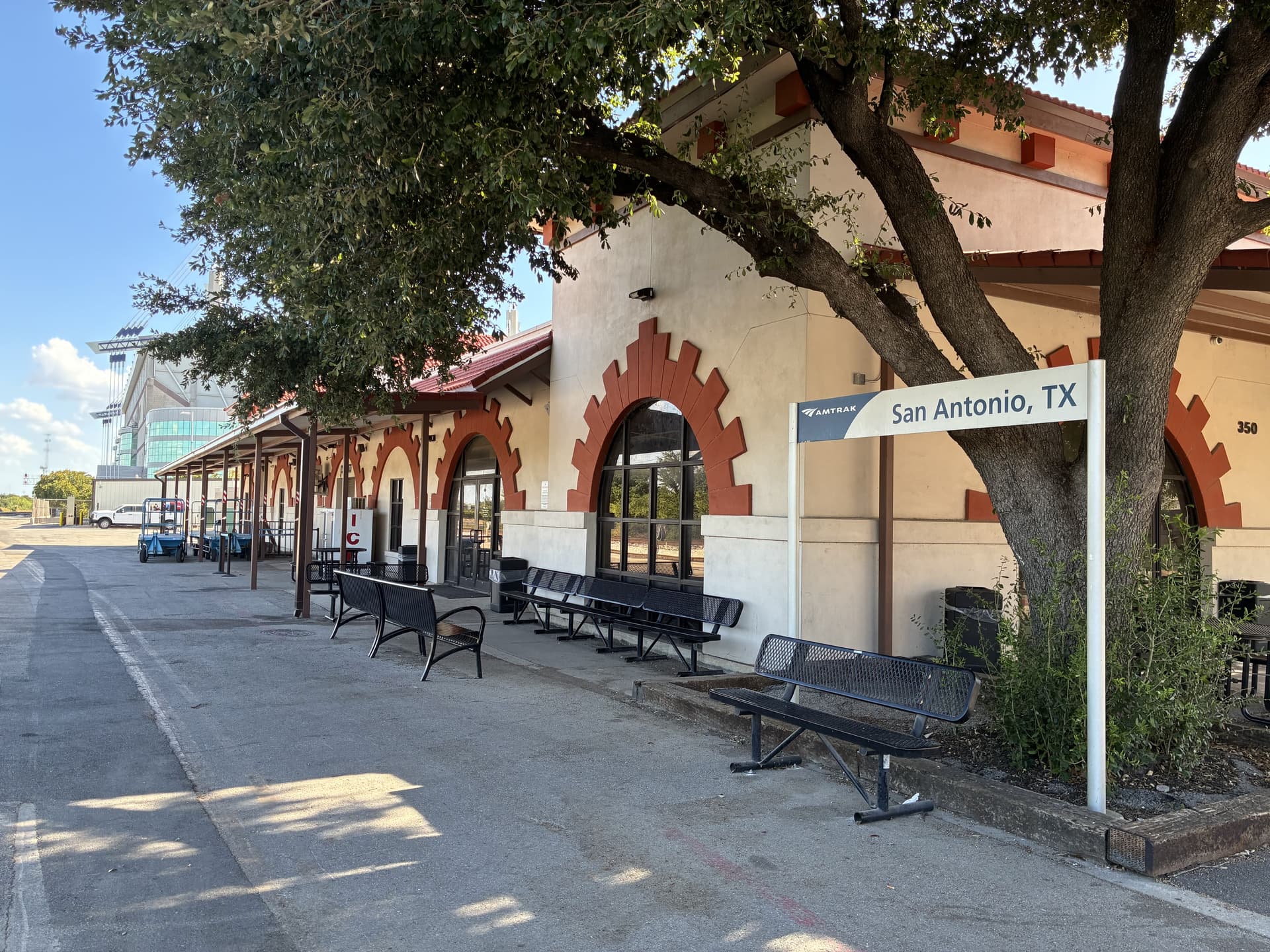
The line would connect Austin-Bergstrom International Airport to a terminus near downtown San Antonio's Alamodome, with connectivity to the existing San Antonio Amtrak Station, and run independently of freight trains, per the study.
Engineering firm HNTB conducted the study, examining a rail corridor separate from the Union Pacific freight line along I-35, county officials said. Direct rail infrastructure costs are estimated at about $69 million per mile, versus about $87 million per mile for I-35 highway construction.
This is a feasibility analysis only; not a funding commitment, as environmental, ridership and financial studies are still needed, per the release.
How we got here
Travis County Commissioners voted unanimously in October 2025 to hire HNTB for about $125,000 to study SH 130 and I-10 as an alternative to the congested I-35 corridor, according to previous Community Impact reporting.
Brown has pushed the idea for years. After Austin and San Antonio were left out of an $8.2 billion federal rail funding round in December 2023, he and Bexar County Judge Peter Sakai formed the Texas Passenger Rail Advisory Committee in February 2024 to lobby for future investment, past reporting shows. The concept itself dates to 1984, when the Greater Austin-San Antonio Corridor Council first formed, as stated on the organization's website.
The county's study complements a separate study from the Texas Department of Transportation, which examined options on the existing I-35 and Union Pacific corridor, the route the Amtrak Texas Eagle uses today. That study wrapped in June 2026, and a detailed review by Texas Rail Advocates priced the expanded service at $810 million for two daily round trips, or up to $1.89 billion for eight, well below the county's SH 130 and I-10 rail proposal.
The review also noted Union Pacific did not participate in the study and provided no operating data, and that TxDOT's own ridership model produced lower estimates—as few as 451 daily riders—than the consultant's custom model, reporting about 2,337.
Brown has said sharing tracks with freight rail creates reliability issues, and that a public right-of-way route avoids costly land acquisition, Community Impact previously reported. The path studied runs roughly 90 miles, with more than half of it elevated.
What's next
The release doesn't name next steps or dollars. Discussion is expected to turn toward who would operate the line, such as TxDOT, the Central Texas Regional Mobility Authority or a new entity; how funding partners like Bexar County get involved; and how this compares to TxDOT's now-completed I-35 findings.
Community Impact will continue to follow the story as Travis County weighs next steps, including funding partners and an operating agency. Residents can follow the Travis County Commissioners Court agenda for updates, or contact Judge Brown's office directly.