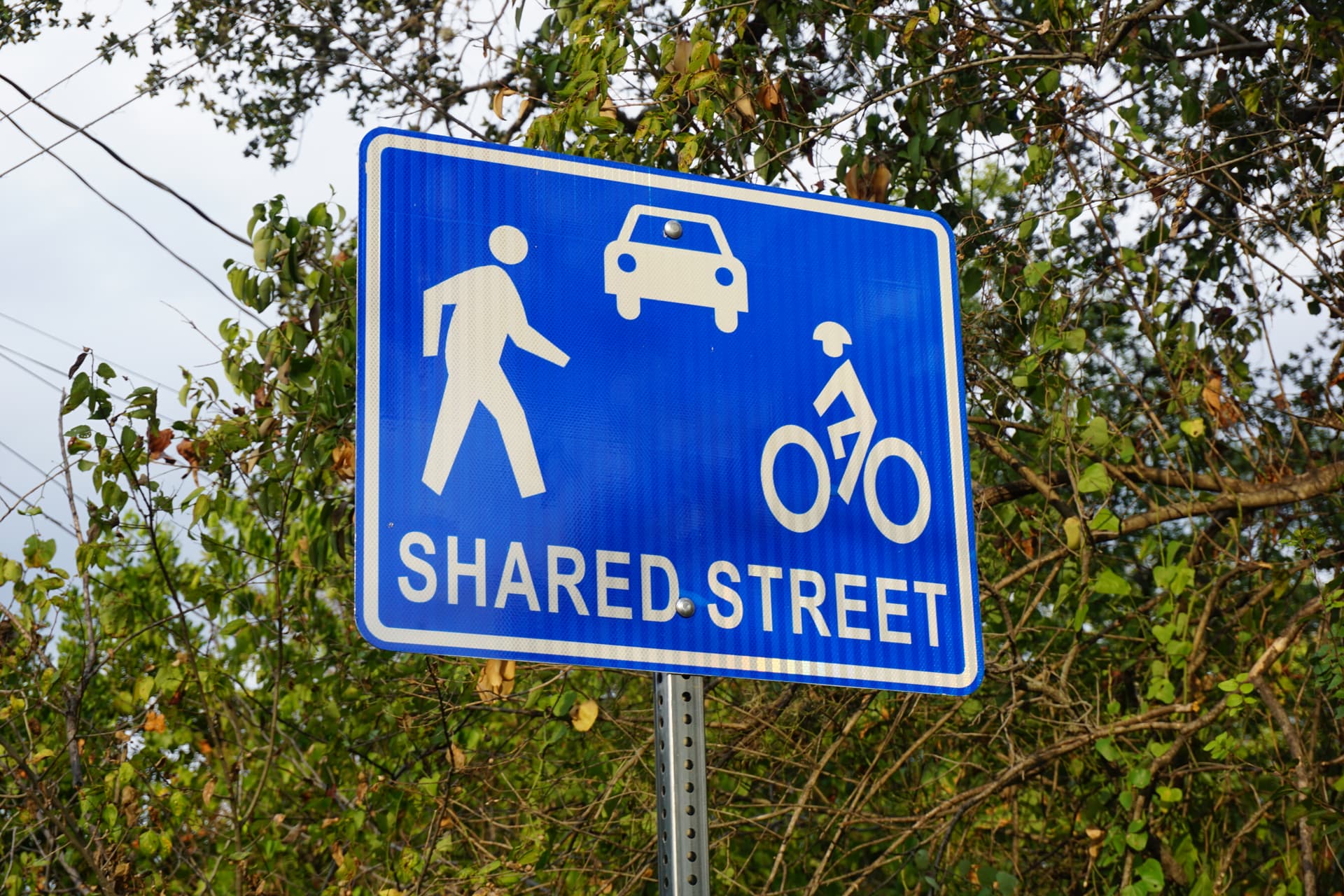
A "shared street" sign marks the gateway to a redesigned street in South Austin, where people walking, biking and driving share the road at slow speeds. (Jessica McLaren/Community Impact)
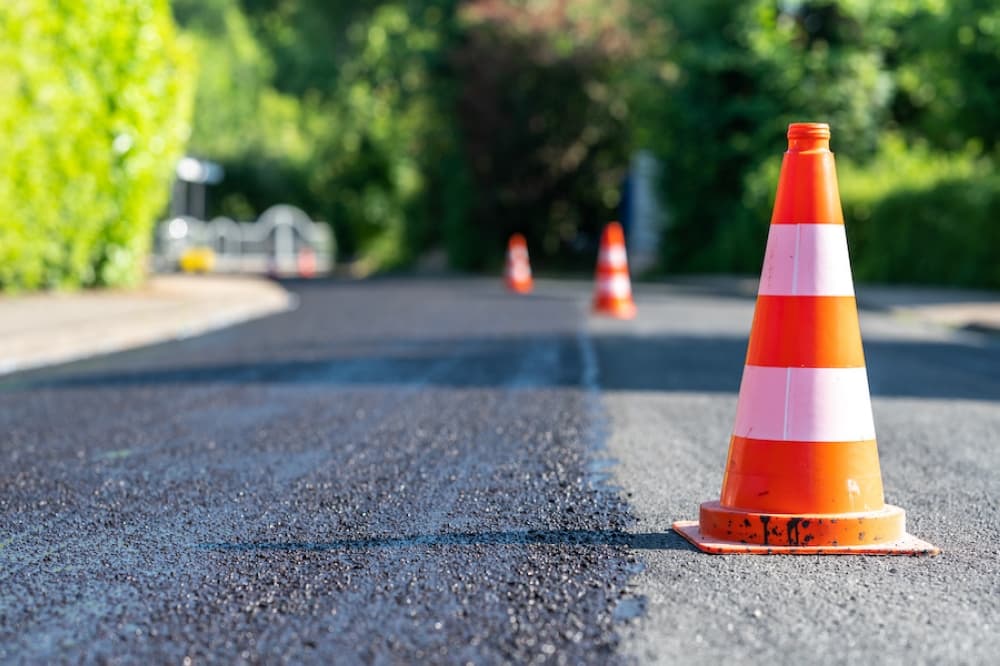
Austin is replacing the orange cones and barrels on its Living Streets with planters, curb blocks and flexible posts, and it's using the program to test designs for permanent street changes, said Matt Macioge, Capital Improvement Program manager for Austin Transportation and Public Works' Community Services Division.
Austin is replacing cones and barrels on its Living Streets with planters, which the city is working with local nonprofits to fill with drought-tolerant native plants.(Jessica McLaren/Community Impact)
There are 31 streets covering about 17 miles are now in the program, Macioge said. That's up from about 20 in March 2024, as Community Impact previously reported.
"We used to literally chase the barrels and cones all over the street," Macioge said.
The gist
City Council adopted Living Streets in October 2021, building on pandemic-era street closures. Residents can apply for three options, according to the city's website:
Block Parties: a one-time, 24-hour closure
Play Streets: close one block up to 12 hours a week
Healthy Streets: limit through traffic on about four blocks around the clock for three to six months, with the option to renew
The program only operates on residential streets with 25 mph speed limits, and applicants need signatures from at least 60% of the parcels on the street, Macioge said.
What's changing
In March, the city began testing four equipment designs on four streets, Macioge said. The most effective were simple layouts that narrow the road, shift traffic from side to side and keep neighborhood entrances open, he said.
A pinch point at South Sixth and Juanita uses planters and barriers to narrow the road and slow drivers.(Jessica McLaren/Community Impact)
The Harris Park layout is now the standard, and the rollout is expected to finish during the 2026-27 fiscal year, Macioge said.
"We know that our operational costs are going to go down and our aesthetics are going to go up," he said.
Residents have adopted the planters on every street where they've been installed, and the city is working with local nonprofits to fill them with drought-tolerant native plants, Macioge said.
From temporary to permanent
Living Streets now feeds into the city's Shared Streets program, which permanently redesigns streets without sidewalks so people walking, biking and driving can share the road at slow speeds, Macioge said.
A gateway and new sidewalk connection at South Sixth and Herndon are part of the city's Shared Streets program and the first to become permanent. (Jessica McLaren/Community Impact)
Neighbors test features like pinch points and diverters on a Living Street before the city builds permanent versions in concrete, he said.
"It's driven by the community, meaning they have to request it of us," Macioge said.
The first street to make the transition is in South Austin near South Fifth and West Oltorf streets, according to the city's project page. Plans call for pinch points, curb bulb-outs and new sidewalk connections, the project page says.
By the numbers
Installing a Healthy Street across roughly four blocks costs $4,000 to $8,000, Macioge said. Per mile, a Living Street costs about $25,000, a Shared Street about $250,000 and a sidewalk about $1 million, according to the city. Together, the two programs are expected to replace about 800 miles of planned sidewalks, city officials said.
The city approves more than 70 applications every six months across Block Parties, Play Streets and Healthy Streets, according to the city. Petitions average 64% support, Macioge said.
On most Living Streets, median speeds have dropped closer to the 25 mph limit and traffic volumes have gone down, Macioge said. Because these streets see few crashes to begin with, a drop in crashes is hard to measure, he said.
The funding
Living Streets is paid for through the city's operating budget, and Shared Streets through capital improvement funds, Macioge said.
The city is also matching a $1.5 million federal Safe Streets and Roads for All grant with $375,000, he said. The money will fund the program's next phase, which will explore replacing planters with benches, bike racks, bike repair stations or recycling collection points, Macioge said.
Zooming in
Some Living Streets have become neighborhood hubs, Macioge said. On one street, neighbors host a Sunday basketball tournament that draws players from nearby streets, he said.
"Apparently the smack talk is amazing," Macioge said.
On another, one house hosts the neighborhood kids for burgers while the adults go out to dinner, he said.
What's next
The city expects to have an update by December on how many streets have new equipment and on plans for the federal grant, Macioge said.