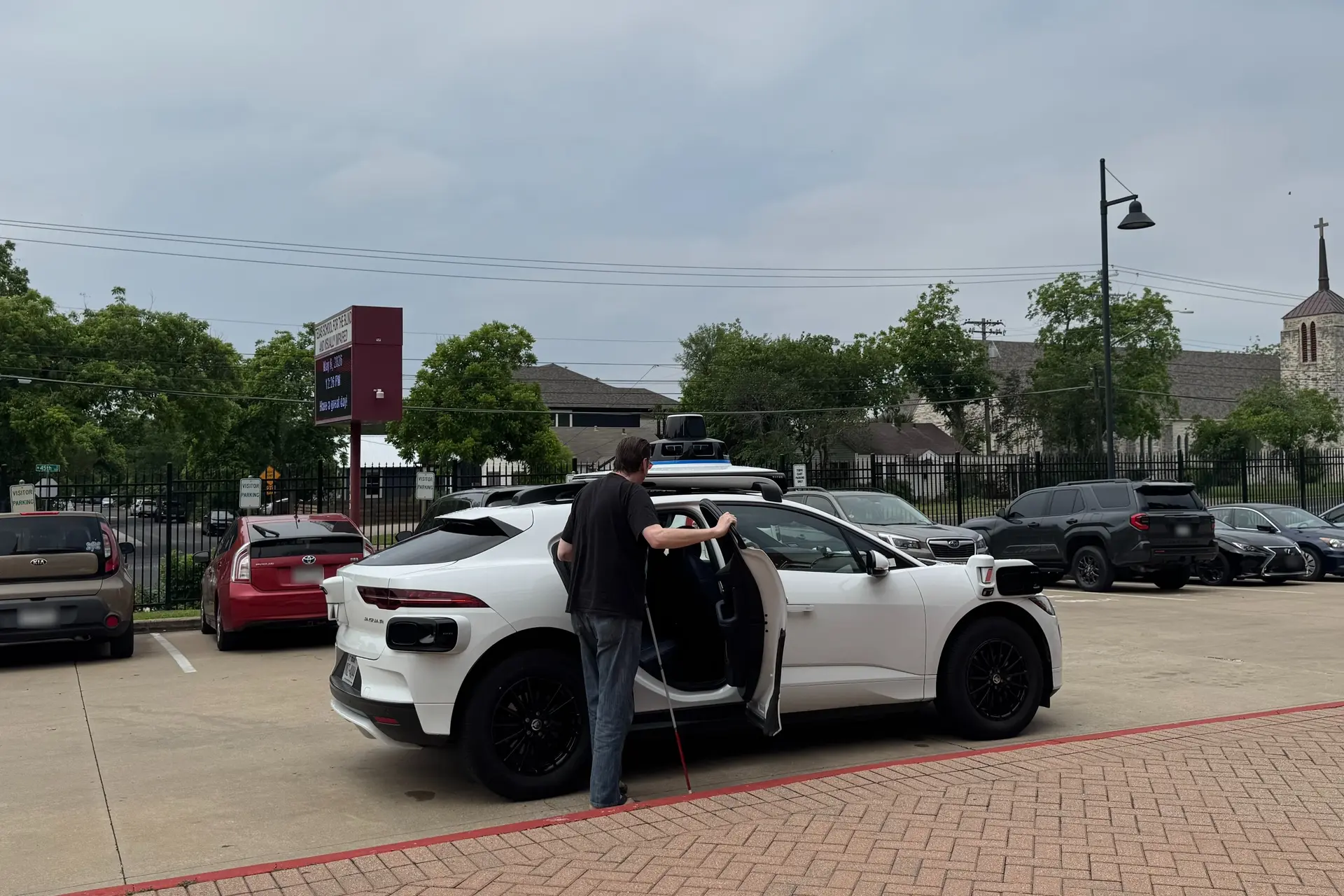
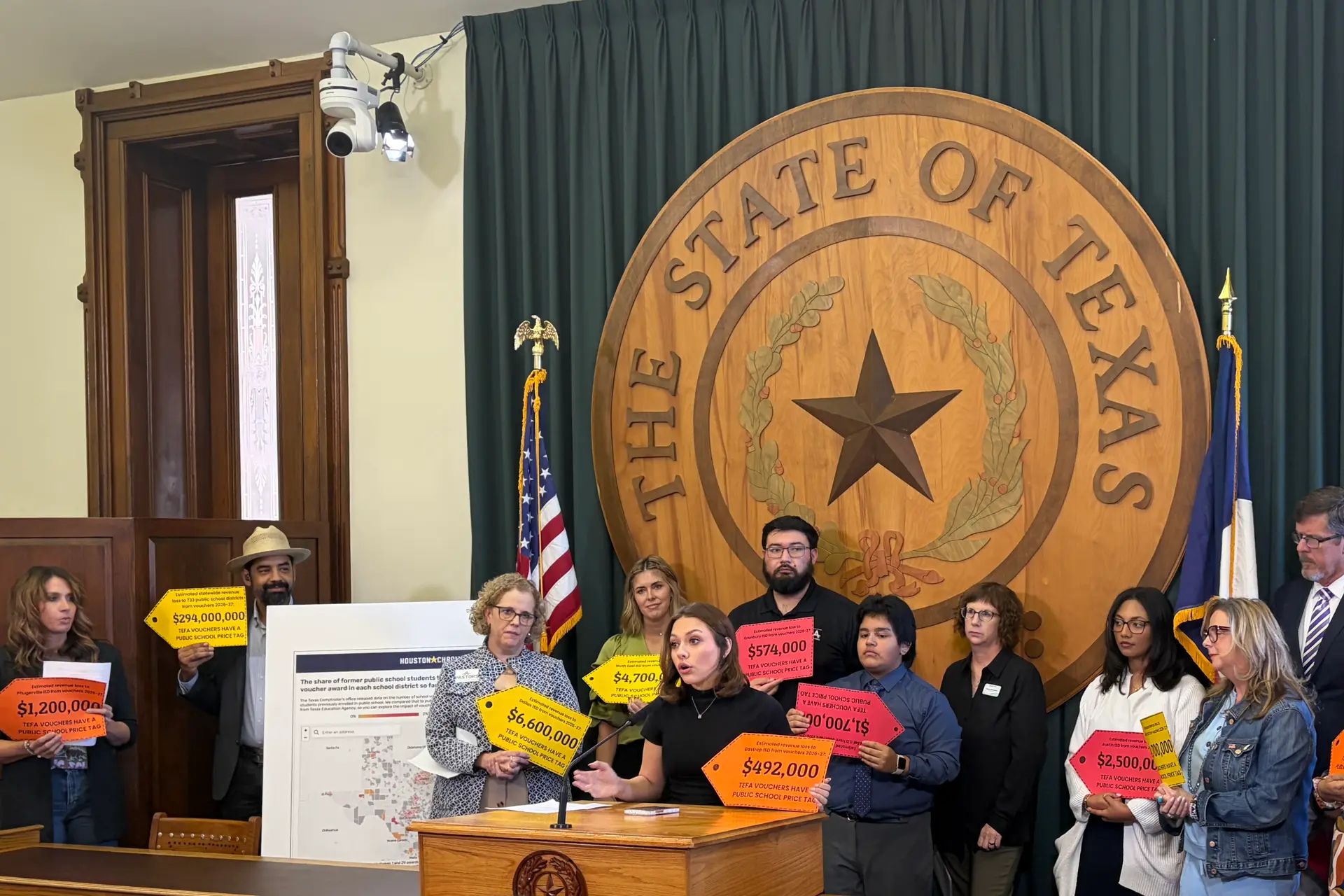
As the presence of driverless cars and semitrucks increases throughout Texas’ largest cities, the state is increasing its oversight of the autonomous vehicle industry.
The overview
Texas lawmakers implemented the state’s first safety requirements for autonomous vehicles in 2017, passing a law that allowed the state to regulate the industry and limiting local officials’ authority to do so. In 2025, legislators passed Senate Bill 2807, which placed oversight of autonomous vehicles in the hands of the Texas Department of Motor Vehicles and required all AV companies to receive an authorization to operate on Texas roads.
The Texas Department of Public Safety and local police enforce traffic laws and other road safety concerns related to driverless vehicles.
The authorization rules took effect May 28, meaning all companies operating autonomous vehicles in the state must be actively licensed by the DMV. The agency is responsible for:
- Setting safety, insurance and operational standards for autonomous vehicles
- Enforcing compliance with the standards
- Ensuring autonomous vehicles can safely follow traffic laws and respond to system failures
- Suspending or revoking companies’ authorizations if they do not meet state standards
A vehicle is considered autonomous or driverless if it is operated with Level 4 or Level 5 automation under SAE International’s automation standards, meaning the vehicle requires little to no human involvement.
Texans can find information about approved AV operators and submit complaints through the DMV’s website.
What’s happening
In the roughly three months since the rules took effect, the DMV has received 42 complaints about driverless vehicles, officials told the Senate Transportation Committee during an Aug. 25 hearing.
Three complaints were dismissed because they were off-topic, including a complaint about AV operation in Arizona, a payroll concern submitted by an AV company and a complaint about an AV’s door being opened into another vehicle.
“Looking at those 39, what should the people of Texas be most concerned with and what are the most common safety occurrences that you're seeing?” state Sen. Tan Parker, a Flower Mound Republican who chairs the committee, asked.
Corrie Thompson, who leads the DMV’s enforcement division, said most complaints were about autonomous vehicles being “overly courteous,” such as a vehicle waiting too long at a stoplight or stopping for pedestrians who are near a crosswalk but not actively crossing the street.
Thompson said the DMV has the authority to suspend or revoke an AV company’s authorization if it finds that an AV “endangers the public... when the operation has resulted in or is likely to result in serious bodily injury.”
“To date, we haven't received anything that has led us to issue that notice of intent to pursue the revocation or the suspension [of an authorization] or impose a restriction, but we are still evaluating them to see where the department lies and what is going to reach that standard,” Thompson told lawmakers Aug. 25. “We are getting ready to close out a number of [complaints], some for insufficient evidence received, ... and then others for no violation found in response to the attorney review.”
Sen. Paul Bettencourt, R-Houston, requested clarification that the department had received “no serious complaints” about autonomous vehicles.
“Not that I've seen to date,” Thompson said.
Sen. Brent Hagenbuch, R-Denton, said he had trouble accessing the state’s complaint system.
“I went on the portal to try to figure out how to make a complaint, and it wasn't really easy to do,” Hagenbuch told TxDMV officials. “I think you’ve got to just take a look at that and make sure that the public actually can access it easily enough.”
Terri Hall, founder of the advocacy group Texans United for Reform & Freedom, echoed Hagenbuch’s comments.
“I don't know how I would call or get ahold of anybody if there's a problem with a Waymo,” she told the committee. “We've seen Waymos that'll park and drop people off literally in the middle of a lane—they're not even in a safe spot. How is someone supposed to report that?”
Zooming in
Lawmakers said they wanted to ensure driverless vehicles were not rolling out too quickly in Texas, but largely lauded the industry’s performance so far and said they hoped the vehicles would help reduce fatal crashes on Texas roads.
Since Nov. 7, 2000, at least one person has died on Texas roads every day, according to the Texas Department of Transportation. The department reported 4,150 traffic fatalities in 2024, with state and local officials investing in roadway safety projects and initiatives in attempts to address the state’s “stubbornly high” level of roadway deaths, Community Impact reported.
“We have 4,000 fatalities a year on our roads—the most of any state—and I do think that over time, this is going to be part of the solution to solving that problem,” Hagenbuch said. “We've got to continue to watch, but so far, after a decade of operation, I have not heard of any major accidents or fatalities [caused by autonomous vehicles].
In early August, a man was killed after he stepped into the road in Dallas, was struck by a human-driven car and was thrown into the opposite lane of traffic. The man made contact with the side of a Waymo, which slowed down after detecting the person and came to a stop. No one has been deemed at fault for the accident, TxDMV officials said.
Thompson said the agency first learned about the Dallas collision through media reports, not from Waymo. Chandler Ludwick, Waymo’s Southwest Policy Manager, told lawmakers that the fatality happened late on a Friday night, so he reached out to the DMV, state officials and local leaders the following morning.
Earlier this year, a Waymo briefly blocked an ambulance from getting to the scene of the deadly March 1 Sixth Street shooting in Austin.
Ludwick said the Waymo got stuck between “two sets of sirens” and was in first responders’ way for about 28 seconds.
“By the time the ambulance came up, an officer had our vehicle moved in 28 seconds, approximately,” he said Aug. 25. “We're very fortunate that Austin officials said that it did not have a noticeable impact on patient outcomes, but regardless, we need to be better than that, and we put a lot of time and effort into being better than that.”
All autonomous vehicle operators are required to submit “first responder interaction plans” to the DPS detailing what their driverless vehicles will do in emergencies and how they will communicate with first responders. Approved plans are available here.
Ludwick and TxDMV officials said they did not believe Waymo’s first responder interaction plan was adjusted after the March 1 incident.
Lt. William White, who leads the Austin Police Department’s highway enforcement division, said the agency has seen consistent issues with AVs.
“We still have issues, and more than that, the same issues seem to occur repeatedly, which is both frustrating and dispiriting for our first responders,” he said Aug. 25.
White noted that it is harder to ticket an autonomous vehicle for a traffic violation. When a driver is ticketed, law enforcement will require them to sign the traffic citation, but the same cannot be done without a driver, he said.
“The process [to cite an AV] is overly cumbersome, and officers are significantly less motivated to go through the process each time they witness a violation by an AV, which is common,” White told lawmakers. “We believe AVs should be accountable for their driving behavior the same way Texans are.”
Another perspective
Hall and Rachel Hale, assistant director of TURF, said they were concerned that driverless vehicles are not subject to enough scrutiny and could pose national security threats.
“The question before you is not whether this technology is impressive,” Hale said. “The question is whether Texas has proven that fully autonomous vehicles can safely handle the unpredicted conditions of our roads and whether our laws adequately protect the public when the technology fails.”
They asked senators to consider requiring:
- “Comprehensive, transparent” reports on autonomous vehicles’ collisions and near misses
- Independent safety testing
- Strict cybersecurity standards to prevent hacks of autonomous vehicle systems
- “Clear accountability” when issues arise with driverless cars
- Public input before autonomous vehicle companies are allowed to expand
“I know I speak for my fellow colleagues that the national security issues, the adversarial nation concerns that we have, ... [we] are all very focused on that,” Parker said. “So I appreciate you sharing those thoughts and helping us to go deeper and think further through all these issues that are vitally important.”