Two Texas Republican legislators expressed a lack of confidence Nov. 20 in Democratic Gov.-elect Gina Hinojosa's proposed plan to send $1,500 checks to every household in the state.
At a glance
Hinojosa campaigned on the policy proposal this year, urging state lawmakers to pull $17 billion from Texas' Economic Stabilization Fund, the state's primary emergency reserve. Known as the Rainy Day Fund, it contains about $27 billion and recently reached its legal cap for the first time in state history, according to the Texas Comptroller's Office.
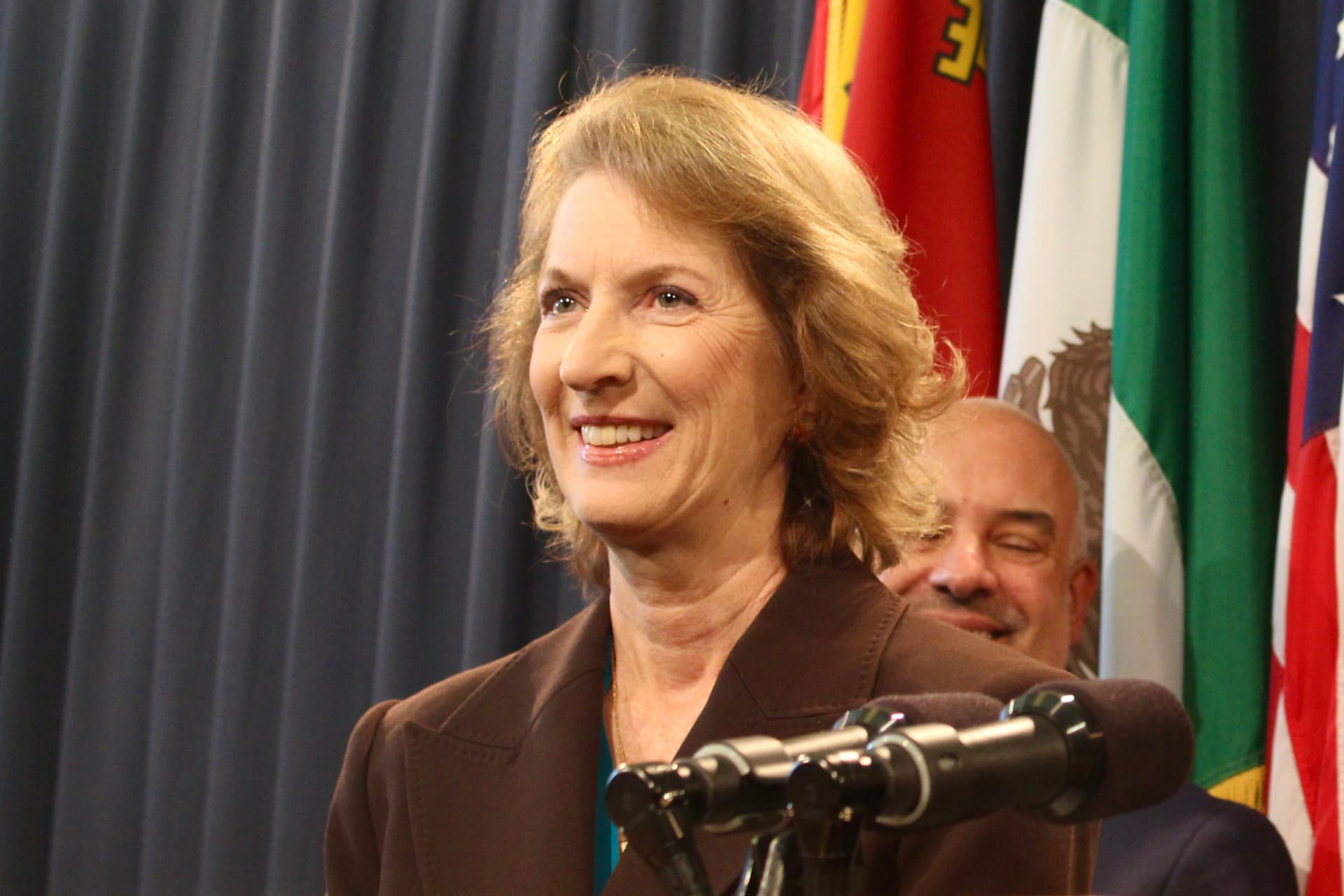
"Texans have lost trust in our government, and for good reason—Greg Abbott has hoarded our money while we struggle with the costs of healthcare, groceries, gas, and housing,” Hinojosa said in a July news release announcing her plan to declare an affordability emergency on her first day in office. “This proposal is about restoring that trust by putting money back in people’s pockets, especially at a time when Texans are hurting. We can come together in a bipartisan way to do this for Texans."
A Democratic state senator filed a bill that, if approved by lawmakers, would direct Comptroller-elect Sarah Eckhardt to issue one-time payments to qualifying households, which the bill defines as dwellings occupied by one or more people.
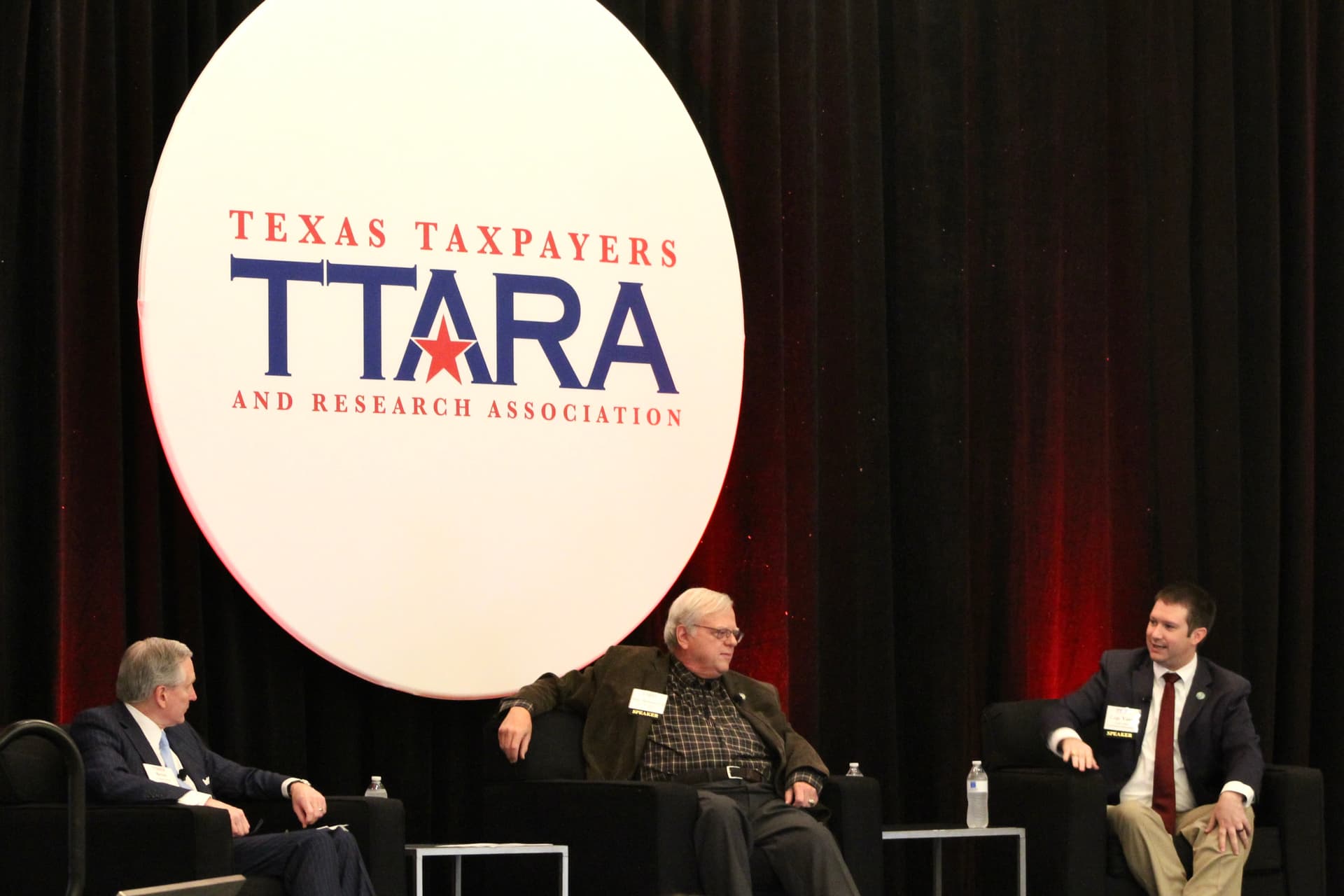
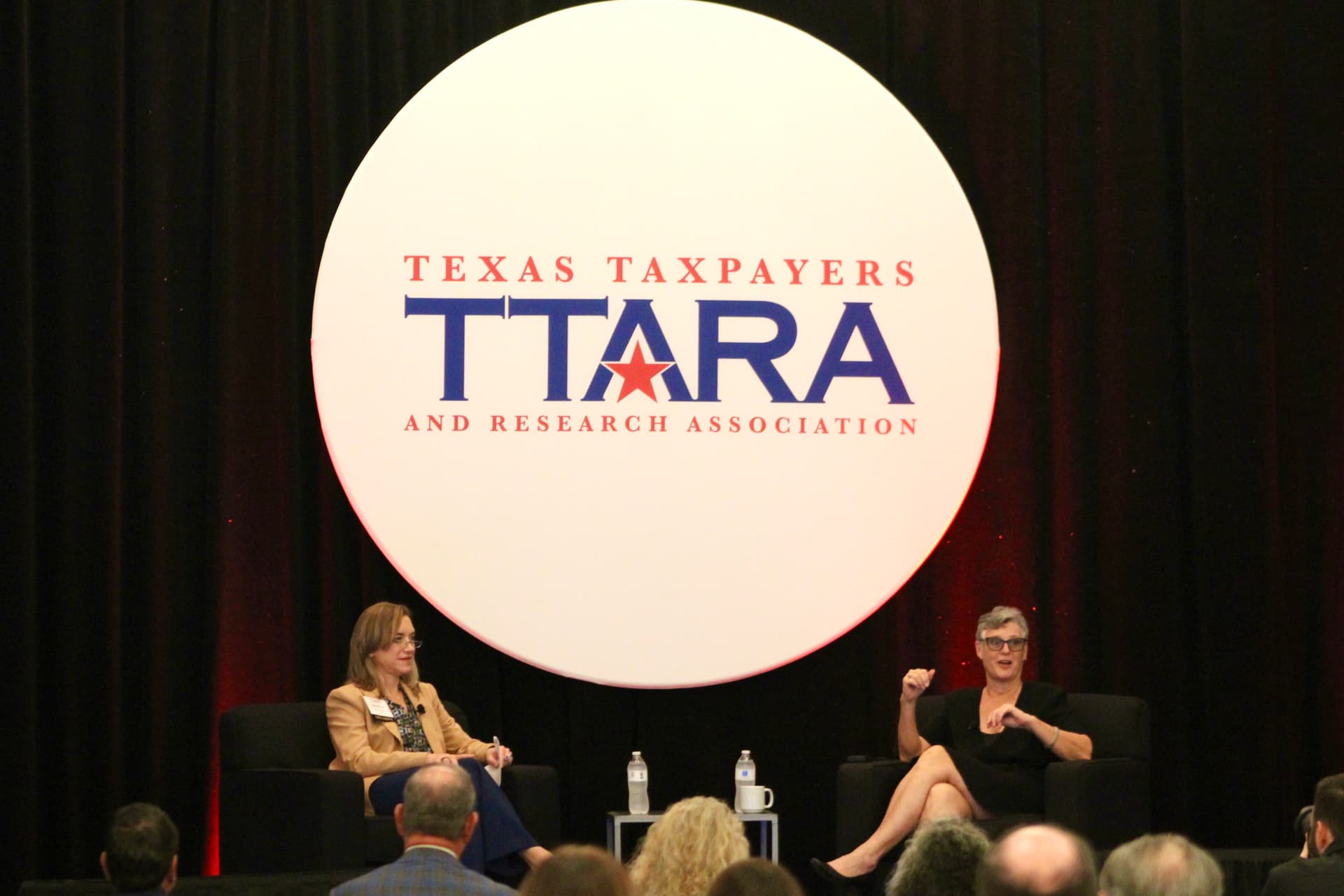
But during a Nov. 20 panel at the Texas Taxpayers and Research Association's annual meeting in Austin, Republican lawmakers appeared skeptical of approving the payments, which would require spending nearly two-thirds of the money currently in the Rainy Day Fund.
"Why would you take you know that one-time fund and spend it down like that?," Rep. Cody Vasut, R-Angleton, asked. "I mean, the Rainy Day Fund is for a rainy day, and we may not have seen one lately, but that's thanks be to God. If a Category Five hurricane is facing down my district, I'd like to know that I have $17 billion in the Rainy Day Fund."
Zooming in
Sen. Paul Bettencourt, R-Houston, said he and other lawmakers looked into sending checks to households during the COVID-19 pandemic, when the federal government sent payments to qualifying adults. State-funded stimulus checks were not issued during the pandemic.
"We actually looked at this back in COVID—Cody, I think when you were a freshman [lawmaker]—and we looked at the idea of giving out personal assistance payments," Bettencourt said Nov. 20. "Sen. [Charles] Perry and I looked at the state code, and we thought anything above $600 required a 1099 form and a social security number."
Vasut said he had "sincere equity concerns" about Hinojosa's plan, which would send $1,500 to each household, regardless of how many people live in the household or how much people have paid in taxes.
"Now, also, it's unconstitutional. ... You can't just give people money," Vasut said.
G. Brint Ryan, who leads the Plano-based Ryan Tax Firm and moderated the panel, argued that lawmakers could propose a constitutional amendment asking voters to approve the checks, predicting that about "90% of people are going to vote for that."
"Well, that's if you could get it to the ballot," Vasut said. "I don't think we'd ever let that out of the House."
Amendments to the Texas Constitution require support from two-thirds of state lawmakers before they are placed on the ballot in the November election following a legislative session. Democrats are expected to control the Texas House with 83 of the chamber's 150 seats, while Republicans will hold 19 of 31 seats in the state Senate—meaning Democrats would need to drum up GOP support in both chambers.
Breaking down the bill
The proposal by Sen. Roland Gutierrez, D-San Antonio, would declare a "statewide household affordability emergency," due to increases in housing, electricity, food, transportation and insurance costs. It states that the $1,500 checks would be one-time, temporary aid.
In the bill, a qualifying household is defined as the "usual place of residence" of one or more people as of Jan. 1, 2027. Each household would receive one check, mailed to a person who is at least 18 years old or an emancipated minor.
The comptroller would establish rules to verify household eligibility, although the bill states that "eligibility for a payment may not be conditioned on the household ’s income, homeownership, property-tax liability, employment, receipt of public benefits or whether its members filed a state or federal income tax return."
More details
Vasut and Bettencourt discussed other ways to address the high cost of living. They highlighted the $51 billion the state is currently spending to drive down property taxes and emphasized that they hoped to expand tax relief during next year's legislative session.
That $51 billion covers tax exemptions and other methods of reducing property taxes for homeowners and businesses, with the state giving local school districts money to ensure they do not lose revenue as a result of the lower taxes. Unless existing property tax exemptions are rolled back, the state will be required to spend that much or more on tax relief in every two-year budget.
Some lawmakers and state leaders—including outgoing Republican Gov. Greg Abbott, whom Hinojosa beat in the Nov. 3 election—have proposed zeroing out the property taxes that homeowners pay to their local public school districts. Doing so would cost about $8.6 billion per year, Community Impact previously reported.
"We've had tremendous relief, and in some cases outright elimination for some property taxpayers," Vasut said Nov. 20. "I think the question was coming into this session was, how can we continue to build off of that? Based off of the results on Nov. 3, there are a lot of questions, and I'll just kind of leave it at this: The big question is how much money is available."
Eckhardt, the incoming state comptroller, is required to release a report detailing the state's revenue for the next two years by Jan. 11, the day before the 90th legislative session begins. Experts have estimated that lawmakers could have several billion dollars in surplus money to pull from next year, although it is not expected to be as high as their about $33 billion surplus ahead of the 2023 legislative session and the $24 billion surplus going into the 2025 session.
Bettencourt said "the whole affordability crisis is really what drove the election," noting that lawmakers are looking at how to extend tax relief to renters.
"There's going to be an open question about how much money is available and what kind of relief we can continue to build on," Vasut said. "[House Republicans] are committed to good, conservative public policy and putting that forward to the people of Texas. Whether we do that by bills that we're able to get to the floor, whether we're able to do that by debate or whether we're able to do that by [raising] a point of order—however we can do it, we're going to."