During a disaster, it often takes about 36 hours for all state and local emergency response agencies to be on one communications plan, which can slow down recovery efforts, Texas officials said Sept. 14.
This is because Texas does not have a single system to connect first responders in emergencies. Emergency response agencies and government organizations often operate on a network of radio systems that are not always compatible with the technology used by other local, state and federal teams.
"[This] is not simply a communication issue—it's a responder safety issue and an operational effectiveness issue," said Kyle Mills, head of planning and preparedness for the Texas A&M Forest Service. "As disasters become more complex, ensuring responders can communicate and share information seamlessly across agencies will remain one of our highest priorities."
One state lawmaker has vowed to pass legislation that would integrate first responder communications under a statewide system, with some emergency management experts calling interagency communications "the No. 1 issue" in the aftermath of disasters.
The big picture
State leaders said there are more than 50 different radio systems used by first responder agencies across Texas.
"We have situations where counties and cities are on separate ones—they have inoperability within their own community, and they never know it until they have to [communicate with] each other, and then they can't talk," state Rep. Ken King, R-Canadian, said during a Sept. 14 hearing of the House State Affairs Committee.
Some agencies use satellite phones or wireless networks built specifically for first responders, such as AT&T's FirstNet, although officials said each system has its limitations.
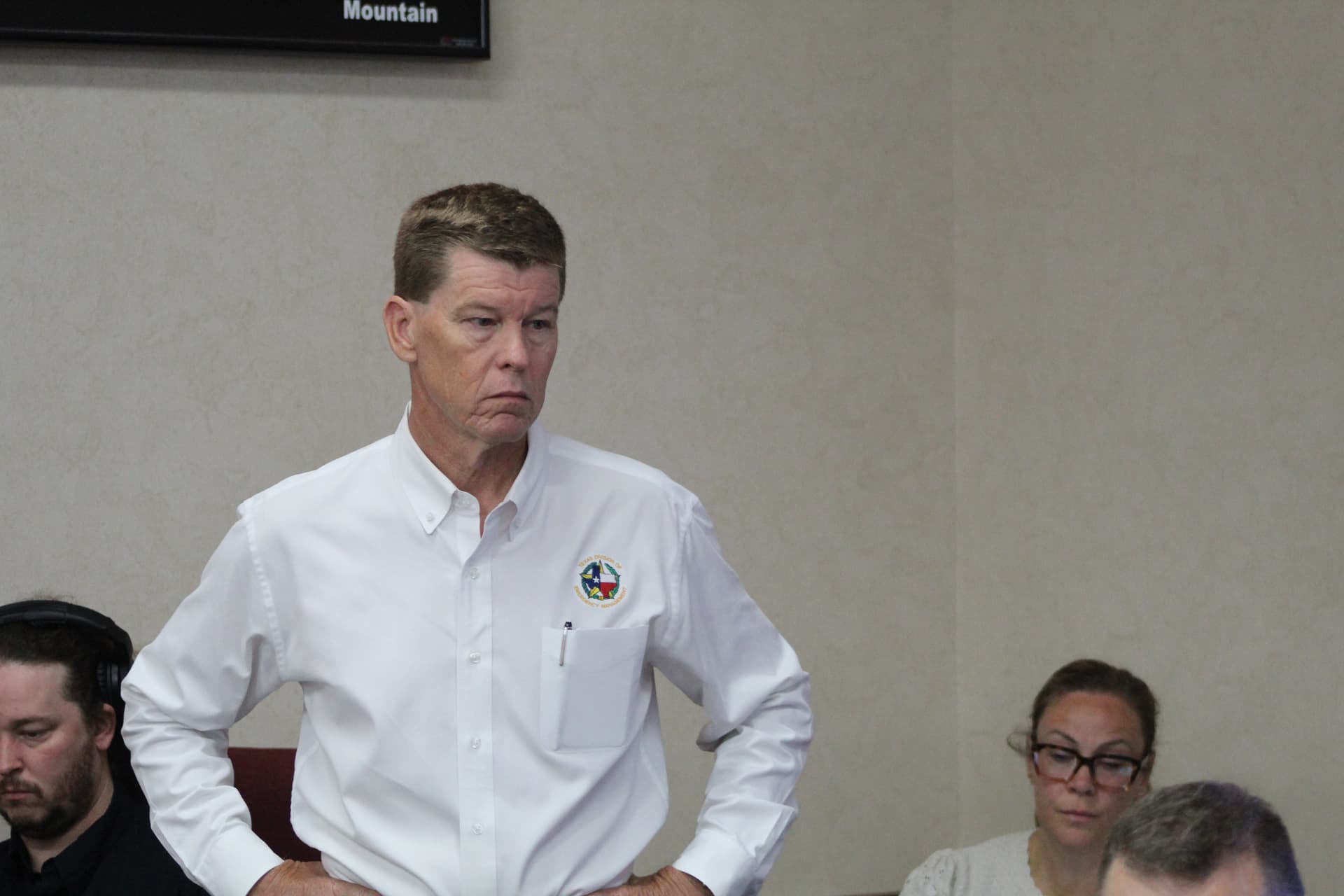
"We [also] have a few state agencies that have built out their own statewide radio network and share that with some others," said Nim Kidd, who leads the Texas Division of Emergency Management. "But my firm belief is there is no single statewide, state-owned radio system in the state of Texas today, and I think we should look at doing that together."
Kidd told the committee that when he joined the San Antonio Fire Academy about 34 years ago, he wasn't taught how to work and communicate with other agencies at an emergency scene. He said he didn't know if that kind of training had improved in recent years.
"The more we've talked about this in hearings, it seems like we're making micro steps in that direction," Kidd said Sept. 14. "But today, if a fire department is not does not have its own EMS agency, there's no guarantee that those firefighters have any idea what the EMTs or paramedics are going to need when they show up on the scene."
The background
King has twice attempted to address emergency communication issues by creating a Texas interoperability council, which would be tasked with coordinating a statewide communications strategy, supporting existing regional systems and improving how local, state and federal first responders work together. He first proposed the idea during the 2025 state legislative session, in response to 2024 wildfires that burned more than 1 million acres of land in the Texas Panhandle, killing three people and over 15,000 cattle.
At the time, King's bill passed the House but did not gain traction in the state Senate. He proposed a similar measure during special legislative sessions last summer, after floods in the Texas Hill Country killed more than 130 people. It again cleared the House but was not heard in the upper chamber.
"I'm not being facetious when I say this is my favorite subject," King told legislators and committee witnesses Sept. 14. "As many times as y'all heard me say 'wildfire' last session, you're going to hear 'interoperability' at every hearing until we do something about this."
Legislative committees are currently holding interim hearings to speak with experts and shape their policy priorities for 2027, although they are not considering specific legislation at this time. Lawmakers can begin filing bills for the 90th state legislative session following the Nov. 3 election, and the legislature is scheduled to reconvene in mid-January.
Further details
In an emergency, some first responders carry multiple radios to ensure they can communicate with all agencies on scene, Mills said. In areas where interoperability channels do exist, they may become "oversaturated" during major disasters, he added.
"[In 2024], my fire chief, who I went to high school with, he's out there fighting fires on the front of a brush truck, carrying five devices and hoping one of them works," King said. "How the hell are you supposed to hold the hose and hang onto the truck and check five devices? It's kind of insane that we're still fighting this battle after all these years."
Mills said the Texas A&M Forest Service is "evaluating" a communications system that could connect the various radio systems used by local agencies.
"As this project continues to mature, sustained interagency coordination, additional technological support, additional equipment and stakeholder engagement will be important to fully realize its statewide potential," he said.
One more thing
Emergency management experts also emphasized that even when interoperability is improved, first responders must be trained on how to use the new systems.
"It's a big training curve for law enforcement," said Col. Freeman Martin, director of the Texas Department of Public Safety. "We barely keep up with our required [Texas Commission on Law Enforcement] trainings. That's one of the biggest complaints we have, that there's only so much time when they're [on duty] and it's hard for them just to get the required training in."
During a July 2025 hearing in the aftermath of the deadly Hill Country flooding, emergency communications leaders said many first responders do not have “good working knowledge” of the radio systems their agencies use.
“Police officers receive extensive firearms training and are required to regularly, even though most will never fire their weapon in the line of duty,” said Thomas Gilbert, who leads radio communications for the Brazos Valley Council of Governments. "There is no such requirement for radios, which they use every day.”
That summer, Gilbert and other experts said the legislature should consider providing state funding to build out statewide radio infrastructure, requiring first responders to be trained on radio use and establishing state and regional interoperability units.
“There is no bill, no one shot [or] money that's going to solve this—this is over time,” King said at the time. “To get it really up and running, a statewide system, it's a 5-10 year buildout.”