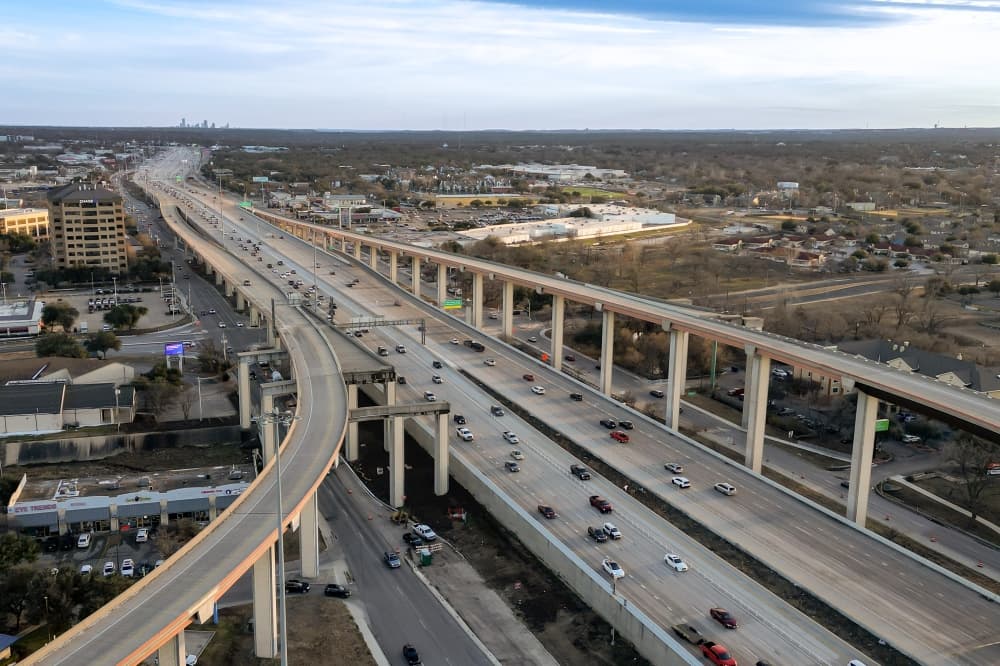
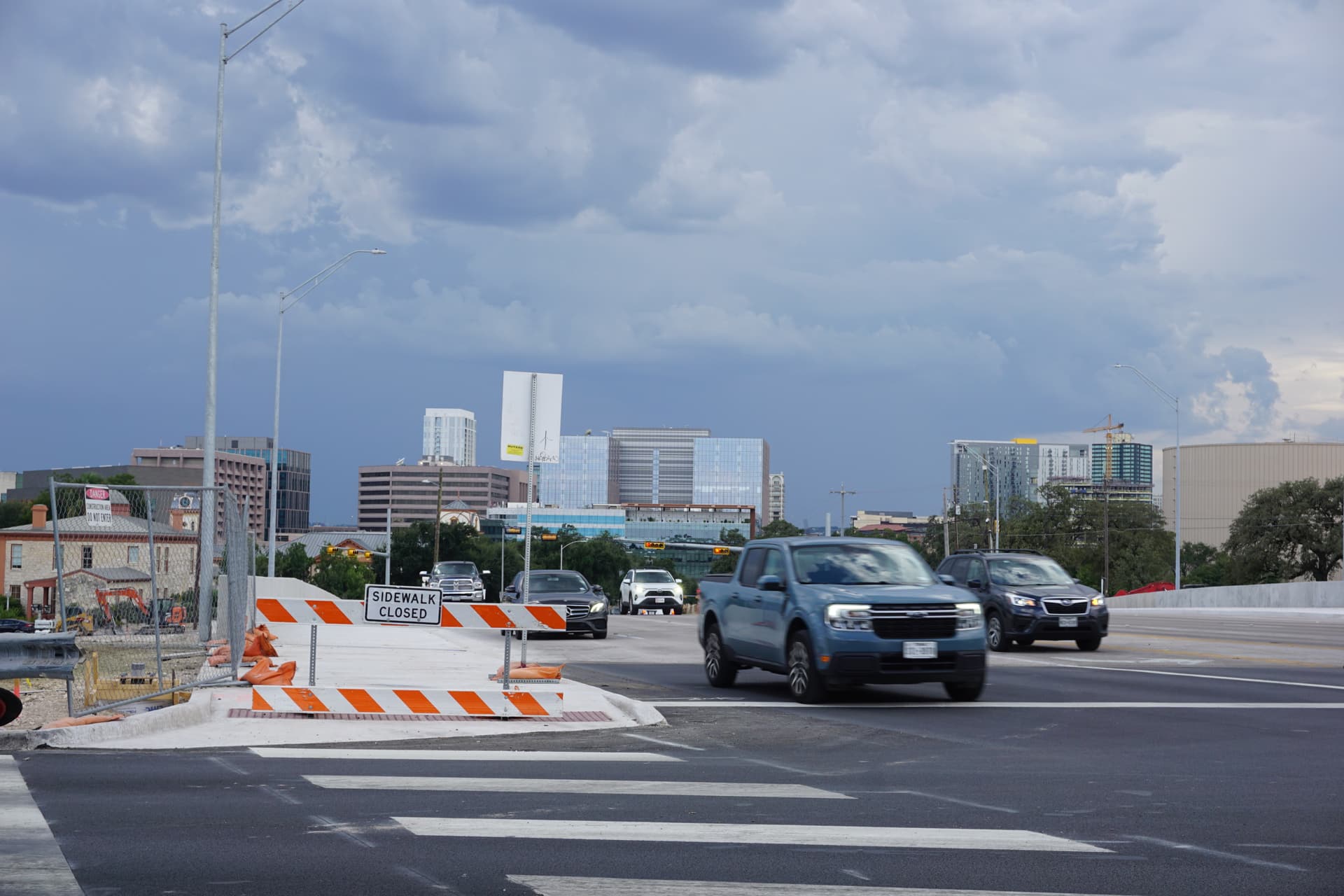
Northbound express lanes along US 183 headed toward Cedar Park are now open. (Matthew Brooks/Community Impact)
Editor's note: To view this story as it appeared in Community Impact's Cedar Park edition, click here.
A yearslong project to expand and improve US 183 headed toward Cedar Park is nearing completion.
The last major piece, the southbound express lanes, could be open as early as March, said Mike Sexton, director of engineering for the Central Texas Regional Mobility Authority. The northbound express lanes opened in January.
Life in the express lane
The 183 North Mobility Project is an infrastructure project undertaken by the Central Texas Regional Mobility Authority with the goal of improving the 183 corridor along a 9-mile stretch from MoPac to SH 45.
The Mobility Authority says the project “aims to improve mobility, reduce congestion and provide more reliable travel times for transit and emergency responders.”
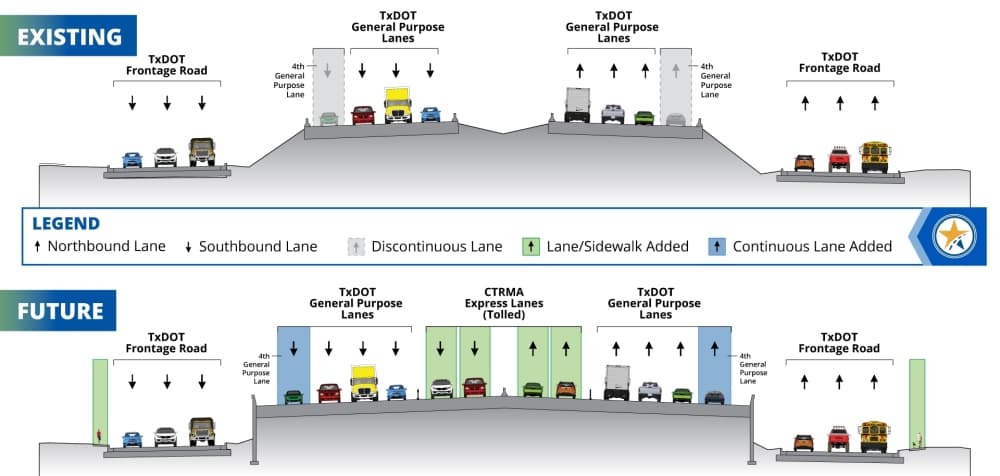
At the heart of the 183 North Mobility Project is the construction of two tolled express lanes and one additional nontolled lane in each direction, as well as a flyover connection to MoPac. The project also includes building new sidewalks and shared-use paths for pedestrians and cyclists along the 183 corridor.
The 183 North project includes additional lanes, both tolled and nontolled, as well as shared-use path improvements. (Rendering courtesy Central Texas Regional Mobility Authority)
From 2000 to 2025, the population of Cedar Park grew by about 60%, according to the city’s Development Services Department. To the north, Leander and Liberty Hill continue to see similarly explosive growth.
Sexton said the project was necessary to keep up with the growing number of people who need to travel between Austin and the northwestern suburbs.
Arthur Jackson, Cedar Park’s chief economic development officer, said that the project will benefit Cedar Park economically.
Jackson said that congestion along the 183 corridor costs local businesses tens of millions of dollars in lost productivity each year. By reducing congestion, he said, the project will reduce those losses.
He also said that the improved connectivity the project creates will help to attract new businesses to the area—and new customers to the existing businesses.
“This is really support for local businesses and commercial development,” Jackson said. “Reducing that travel time really improves access and makes commercial sites along the corridor—whether it’s office parks, retail development centers or industrial parks—more viable and attractive to those types of investments.”
He explained that the construction itself was a boost for Cedar Park, as jobs were created and money was spent at local businesses.
Beyond the economic benefits, Jackson said he believes the project’s most important impact will be improved traffic safety.
The new express lanes will use variable tolling. That means the rates will fluctuate based on demand. Sexton said the goal is to maintain a steady flow of traffic in the express lanes even when the nontolled lanes are congested.
Tolls are charged by segment—the span between an entrance and the next exit. Initial toll rates start at $0.73 per segment with a toll tag or $1.10 per segment by mail and will increase as traffic gets heavier. Tolls will be displayed on electronic signs at the entrances to the express lanes. Drivers will be charged tolls based on the rates in effect when they enter the express lanes, even if those rates change before they exit.
Drivers heading north on the US 183 express lanes would pay $2.33 with a toll tag or $3.51 by mail to travel the full 9-mile stretch to the 183A Toll/Avery Ranch Boulevard. Price subject to increase during peak demand.
Sexton said authorities hope to keep traffic in the express lanes moving at least 45 miles per hour at all times.
Some vehicles can use the express lanes for free, including:
The total cost of the project is approximately $612 million, according to the Mobility Authority.
The nontolled lanes were built with $104 million in federal funding allocated to the project by the state. The remaining cost is covered by a combination of federal loans and toll revenue bonds, which will be repaid with revenue from the express lanes.
What’s next
Sexton said crews will continue working to put the finishing touches on the project through at least the end of the year, including finishing some connections, painting and planting vegetation.
“There’s a lot of the smaller, finer elements of the project that still need to be completed,” Sexton said. “Those will be done mostly nights and weekends so that they’re not impacting traffic during rush hour periods.”
Sexton said he looks forward to wrapping up the project and opening it fully to the public.
“With all these improvements, everyone benefits,” Sexton said. “It’s been five years, and I know people are ready to move on—we’ll be wrapping this up, the part that impacts the public the most, by the summer. ... People will get to enjoy the corridor moving forward for years to come.”