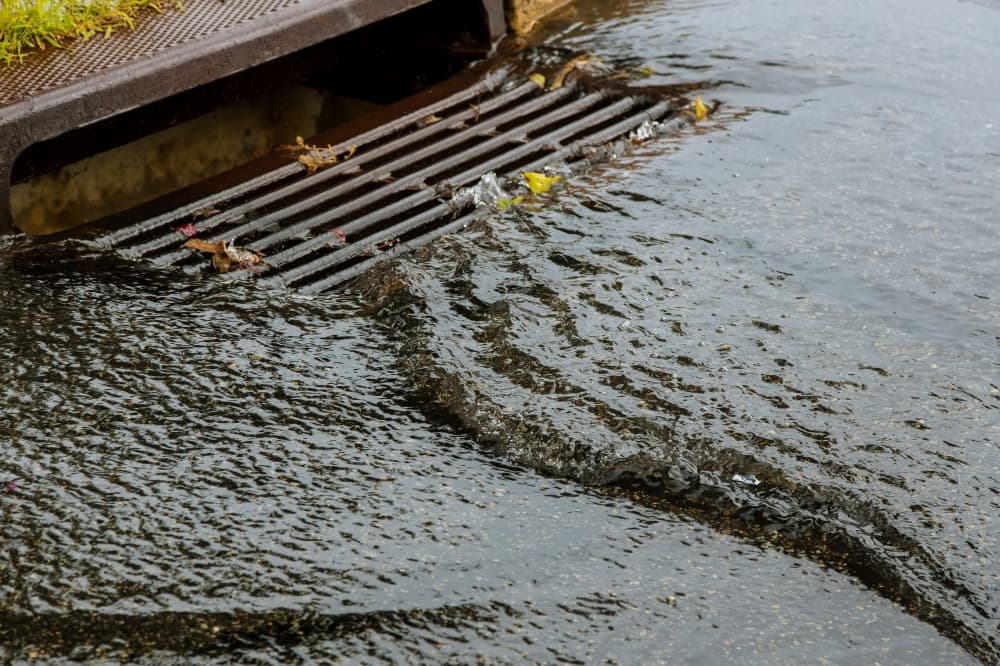
College Station City Council members agreed Aug. 13 to continue monitoring impervious cover and drainage concerns in the Bee Creek basin rather than pursue immediate changes to city regulations. (Courtesy Adobe Stock)
College Station City Council members agreed Aug. 13 to continue monitoring impervious cover and drainage concerns in the Bee Creek basin rather than pursue immediate changes to city regulations.
The discussion centered on how increased residential density and redevelopment in areas near Texas A&M University could affect stormwater runoff, particularly as the city allows more housing density through its middle housing zoning.
The gist
The workshop was prompted by concerns from the College Station Association of Neighborhoods about impervious cover in the Bee Creek drainage basin, based on meeting conversation.
Impervious cover includes surfaces, including buildings, driveways and parking areas that prevent water from soaking into the ground.
Assistant City Engineer Lucas Harper presented potential policy options but did not recommend changing the city’s current regulations.
Under current rules, property owners seeking to exceed impervious cover limits can use engineered drainage and detention measures to offset the additional runoff. Some proposed changes would have required certain exceptions to receive additional review from the city’s Zoning Board of Adjustments.
Council members ultimately did not direct staff to pursue those changes.
Why it matters
Council members discussed the potential for redevelopment near Texas A&M University to increase density and impervious cover.
Council member Scott Shafer said some areas could see impervious cover increase from 55% to 75% as properties are redeveloped under middle housing regulations.
College Station City Council members agreed Aug. 13 to continue monitoring impervious cover and drainage concerns in the Bee Creek basin rather than pursue immediate changes to city regulations. (Courtesy city of College Station)
Speaker Charles Elliott suggested the city balance its efforts to encourage additional housing with concerns about drainage and the impact of redevelopment on existing neighborhoods.
Council member Mark Smith suggested the city consider regional detention facilities in areas downstream from redevelopment to help offset increased runoff.
Lucas said current drainage requirements are designed so that development and redevelopment must limit the amount of stormwater leaving a property to the amount that would have left before development.
However, some council members said the city should continue evaluating whether those policies will be sufficient as College Station’s population and housing density increase.
What’s next
Council members reached a consensus to monitor the issue and continue receiving public input rather than make immediate changes to the impervious cover ordinance.
Mayor John Nichols said the city should reconsider the regulations if staff begins denying a significant number of redevelopment projects because they cannot meet existing standards.
Smith also noted increased density will affect more than drainage, including traffic, utilities and other city services.
The council is expected to revisit the issue if future development or staff analysis indicates changes to the city’s impervious-cover regulations are needed.