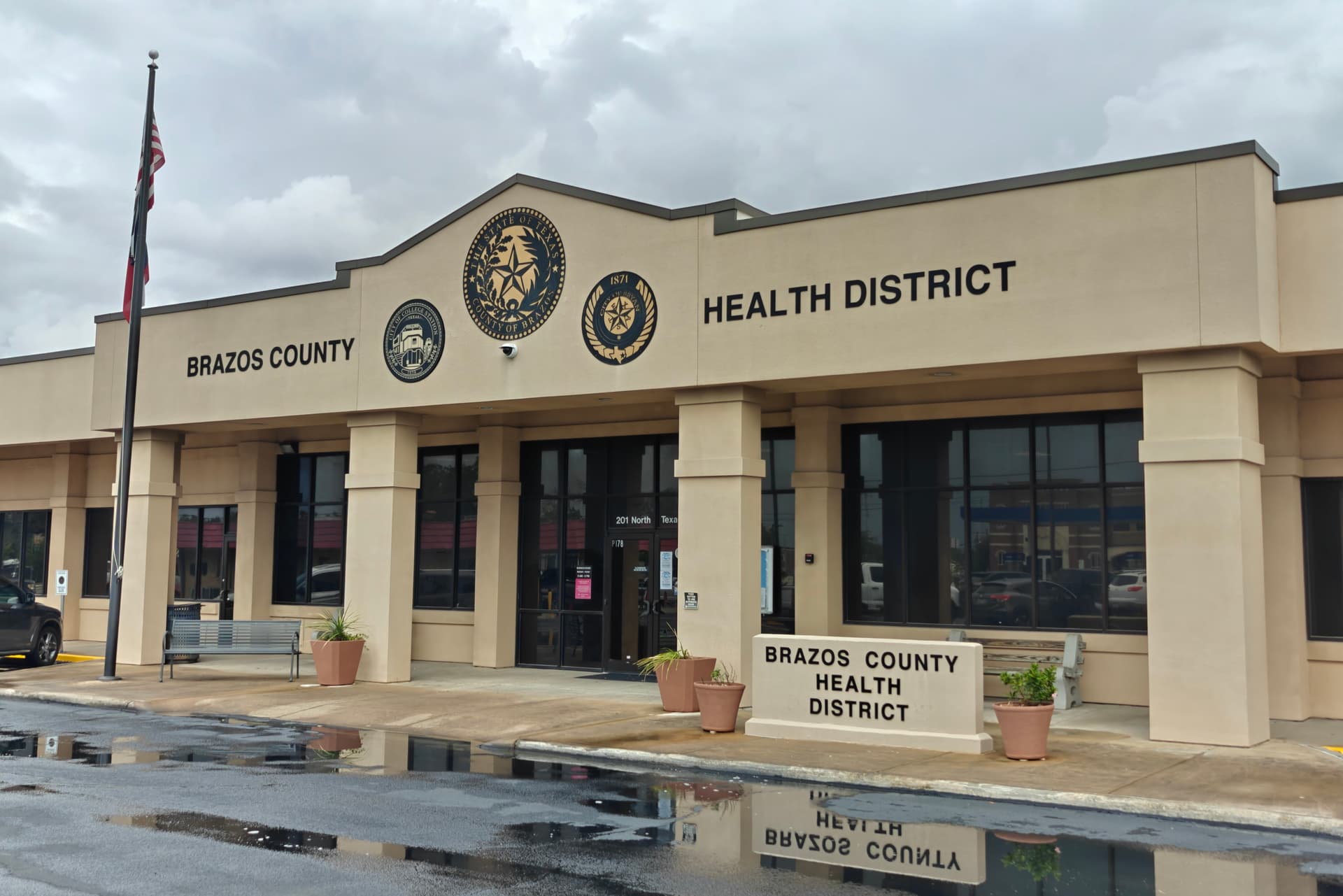
“Yay for aquifers” was the main theme of a public presentation hosted by the Brazos Valley Groundwater Conservation District on June 30 at the Brazos Center. Attended by concerned residents and local officials, including state Rep. Paul Dyson, the district outlined how local aquifers are monitored, how pumping is regulated and how long-term water availability is planned across the region.
While much of the information covered in the presentation was addressed at the district’s 2025 annual report before Commissioners Court on March 24, the June 30 event was an opportunity to dive deeper and allow residents to get answers about growth, industrial development and future water demand.
At a glance
General Manager Alan Day explained how the Brazos Valley Groundwater Conservation District, or BVGCD, uses long-term planning models, monitoring data and permitting rules to manage groundwater use across Brazos and Robertson counties.
He emphasized management is based on protecting aquifers over time while also following Texas law, which recognizes groundwater as a private property right subject to reasonable regulation.
“We are on a knife’s edge every single day,” Day said, describing the balance between protecting groundwater resources and respecting landowner rights.
BVGCD currently monitors roughly 224 wells across multiple aquifers, collecting water level data used to track long-term trends and guide planning decisions.
A long time coming
Day explained the district’s planning is guided by “Desired Future Conditions,” or DFCs, which set long-range goals for how much groundwater level change is considered acceptable over a 50-year period. He said DFCs are reviewed every five years.
For the Simsboro Aquifer, the DFC adopted during fiscal year 2021-22 allows for an average decline of up to 262 feet between 2000 and 2070.
According to district data shared at the meeting, about 68 feet of decline has occurred so far, meaning current levels remain within the long-term planning range.
Looking ahead
Residents asked how the district accounts for continued growth, including industrial development and potential large-scale water users such as data centers.
Day said those projections are built into long-term planning scenarios, though no specific scenarios were recently accounted for. He explained any large groundwater user must submit technical studies showing expected impacts before receiving a permit.
He also noted that while water use varies by project, energy production tied to large industrial operations can significantly affect overall demand.
About the UW Brazos Valley Farm groundwater transport project