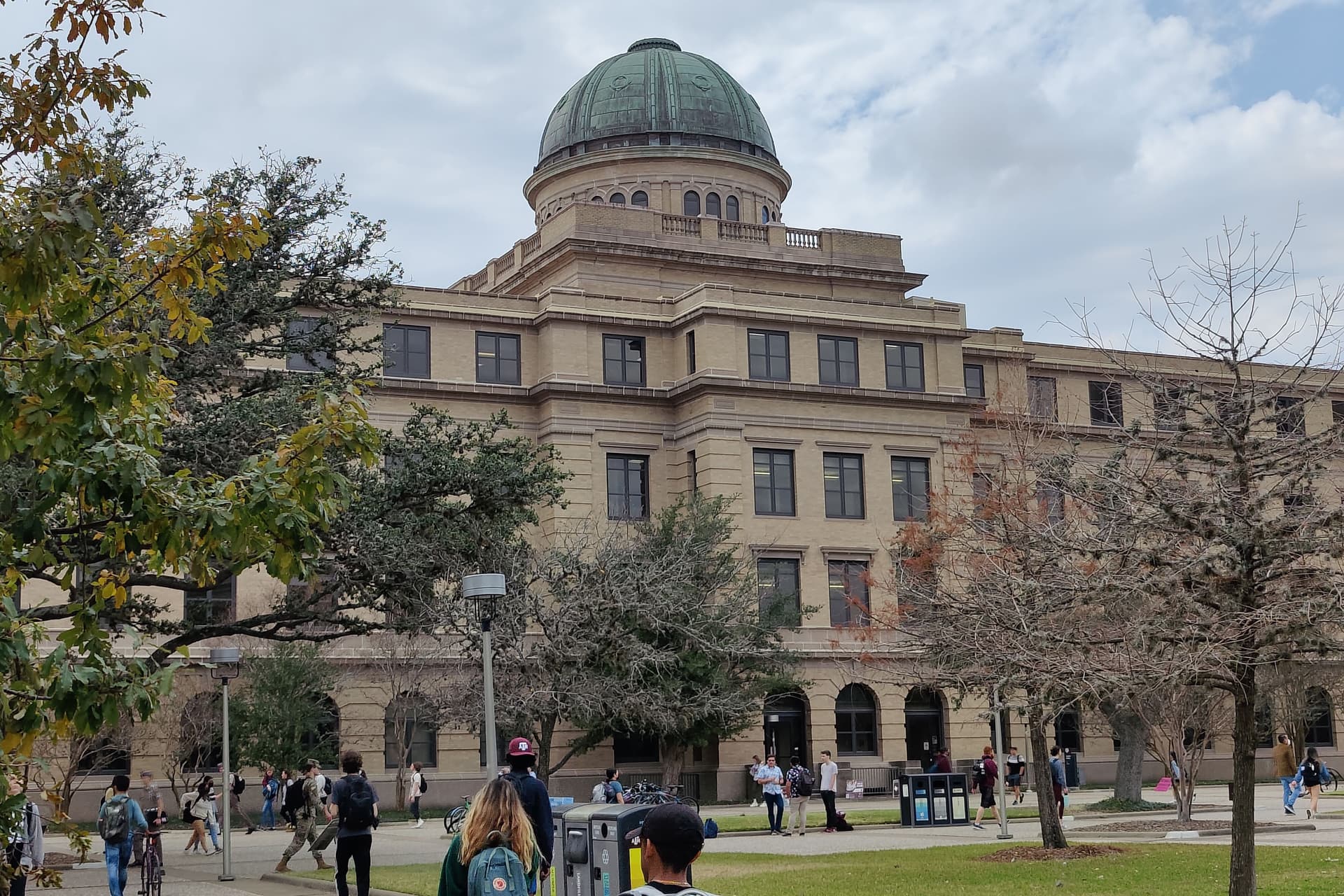
Texas A&M University President Susan Ballabina outlined A&M's research and student-focused project plans on Sept. 28 as part of “Beyond 150: One University for Good." Ballabina said projects, such as the Aggie research commons, will put public good at the forefront of the university's efforts.
The overview
Beyond 150 is the university’s new strategic plan coinciding with the school’s 150th anniversary. The plan advances initiatives in education, the Texas A&M system, research, growth, development and the Aggie spirit.
Ballabina said the university will have to navigate the changing landscape of public education, along with what she described as an increasing skepticism toward universities in Texas and the country.
“Our ambition is for Texas A&M to become a place for candid conversations about public trust, the purpose of higher education and the obligation to remain relevant and useful for the people we serve,” Ballabina said.
The approach
Ballabina continued speaking on the changing economic landscape and overall discourse and said Texas A&M will have to be a place for these conversations and changes.
“Trust has declined, technology has changed every part of society, athletics have changed completely, polarization has made meaningful dialogue harder and workforce needs are evolving faster,” Ballabina said. “For Texas A&M, they are not barriers. They are hills to climb and we intend to climb them.”
The university president highlighted A&M's pedigree during the presentation, stressing how the school needs to build on its foundation for future success.
“Texas A&M enters its next 150 years as one of the premier public research universities in the world,” Ballabina said. “Vision 2020 played a huge role in that progress. Now, it’s our responsibility to build on that work and chart a course for what comes next. Beyond 150 is our future. Serving as a force for good is why we exist.”
Meeting highlights
Texas A&M is following four pillars for the Beyond 150 plan, including:
Collaborative vision-driven ecosystem: Collaboration with affiliated state agencies and philanthropic organizations to achieve a shared vision, fostering a culture of excellence and collaboration that amplifies collective impact
Transformative experiences: Providing transformative experiences that prepare all Aggies for roles of responsibility as engaged citizens in service to society
Discovery, innovation and entrepreneurship: The pursuit of building a brighter and safer world by creating an environment that fosters research as a force for good for Texas, the nation and beyond
Community partnership and engagement: Impact-driven research, workforce-aligned academic programming and transformative experiences that benefit the state, nation and world, along with building trust, deep connections and relationships in every community in which Texas A&M operates
Ballabina said the students are the heart and soul of the university, which led her to introduce the Aggie Passport. The passport will be credentialed around the official transcript and students will be required to conduct high-impact research, study abroad or complete internships for the ever-changing workforce.
Ballabina also announced more projects and initiatives the university is pushing, including:
Aggie research commons: Through this collective based on interdisciplinary research and tenured professors, the university aims to reach new levels of collaboration never before seen.
Corps of Cadets funding: Ballabina said the Corps is among the biggest sources of spirit for the university and the administration wants to keep it that way with infrastructure improvements and future funding.
The bottom line
The current Beyond 150 plan is set to guide the university until 2028, according to its website. As previously reported by Community Impact, the university adopted $9.1 billion for its operating budget for 2027 and $6.8 billion toward a capital plan from 2027-2031. Texas A&M Chancellor Glenn Hegar said the allocation of public resources will allow academic institutions and state agencies to invest in the future of the state.