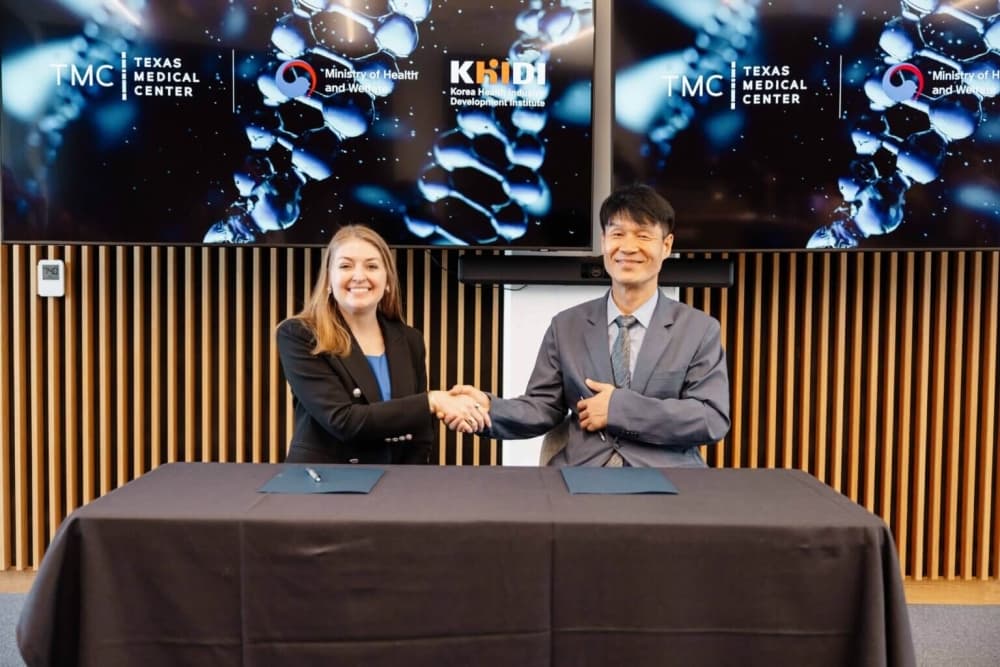
On June 29, Houston’s Texas Medical Center and the Korea Health Industry Development Institute announced via news release their partnership that will expand TMC’s BioBridge, a global network designed to advance clinical research and commercialization through cooperation between foreign healthcare systems, clinicians and industry leaders.
As a result of this partnership, 12 Korean companies will establish on-site presences in Houston through the newly created TMC-KHIDI Residency Program, officials confirmed.
The Republic of Korea is the seventh country to be added to TMC’s BioBridge ecosystem and sits among the Netherlands, Australia, Ireland, Denmark, Japan and the United Kingdom, according to the center’s website.
Two-minute impact
The pathway, titled TMC Republic of Korea BioBridge, grants Korean innovators greater opportunities to enter and expand their digital health, biotechnology and medical device companies within the U.S. healthcare market, officials said.
While assisting KHIDI in developing its U.S. market strategies, the program also seeks to foster collaboration between Houston’s medical center and KHIDI through joint projects, educational initiatives, conference participation and collaboration among public, private and academic institutions, per the release.
Officials said the purpose of this expansion is to bridge the gap between two leading healthcare innovation systems. Additionally, the expansion will promote the exchange of knowledge and accelerate the adoption of new life science technologies on an international scale.
“Through the TMC Korea BioBridge, we are creating a direct connection between Korea’s innovators and the world’s largest medical city,” President and CEO of TMC William F. McKeon said. “This collaboration between TMC and KHIDI provides companies with a place to establish a presence, build strategic relationships, engage with leading clinicians and researchers, and accelerate the path toward commercialization and patient impact in the United States.”
Some context
The TMC’s BioBridge was officially launched in 2015 and has since welcomed more than 90 startup companies to its network, all specializing in clinical research and invention across the biohealth sector, according to release details.
KHIDI was established in 1999 by the Ministry of Health and Welfare of the Republic of Korea with the goal of advancing medicine and improving the international deployment of Korean healthcare solutions, according to the announcement.