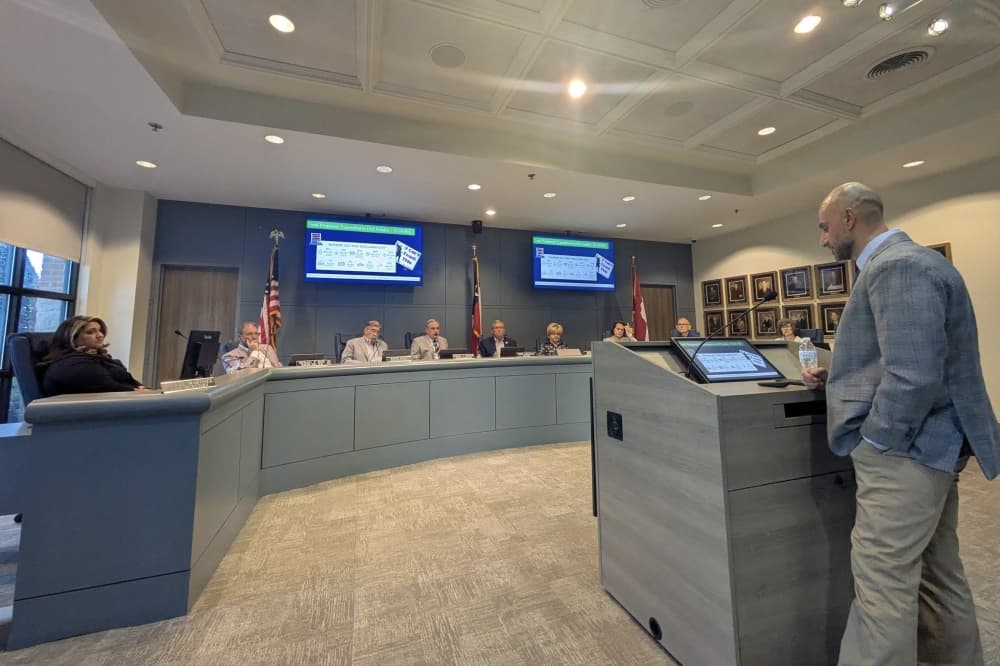
For the past 13 years, Mark Hanna with the Insurance Council of Texas has led an annual “Hurricane Tour” to bring expertise from agencies involved in weather forecasting and insurance to talk about disaster preparedness. Community Impact Newspaper hosted a panel discussion with Hanna along with Dan Reilly, a meteorologist with the National Weather Service, Manuel Villarreal, an ombudsman for the Texas Windstorm Insurance Association, and Jeremy Adams, an agent with State Farm, to talk about the current hurricane season and changes happening to the insurance market. This interview has been edited for length and clarity.
What is the current hurricane season projected to look like?
Reilly: The initial forecast was for near- to above-normal activity in the Atlantic. … But since that time, it's become clear that the waters in the Atlantic are cooler than average. What that doesn't tell us is if Texas will get hit. Alicia formed in '83 in a very quiet season overall … it only takes one to have a busy season for us. … If we can get through the month of September, we're usually in pretty good shape here in Texas.
What exactly does flood insurance cover?
Hanna: Any agent can sell it, and there is a limit on how much you can buy. If you're buying it for your home, you can buy up to $250,000 for the structure of your home and it has maximum limits of $100,000 for your personal property inside. And there are differences between flooding and say wind-driven rain … and say, sewer backup. Inside the flood zone, also your rates are going to be a lot higher. ... If you live outside a flood zone, they're all the same price—it's $450 for the maximum coverage for anywhere you might live. Reilly: NOAA is actually redefining the hundred-year rain event. That's something that is going to come out maybe in a month. So that's going to actually have implications on perhaps down the road these maps being redrawn … which could change insurance rates for some folks.
What is the most common reason for a claim to be denied after a hurricane event?
Villarreal: TWIA, for an example, does not cover ... flash flood, storm surge and so forth. Another common reason for denying a claim may be that the policy holder did not allow TWIA the opportunity to inspect the damages before repairs were made. Hanna: After every catastrophic event ... you'll see storm-chasing roofers and contractors coming through your neighborhood. … Be very, very careful. Stay away from any folks who show up, whether its a cold call on the phone or a cold call in front of your house. Talk to your insurance adjuster first so that you know you're going to get some money to pay for a new roof ... or whatever the case may be.