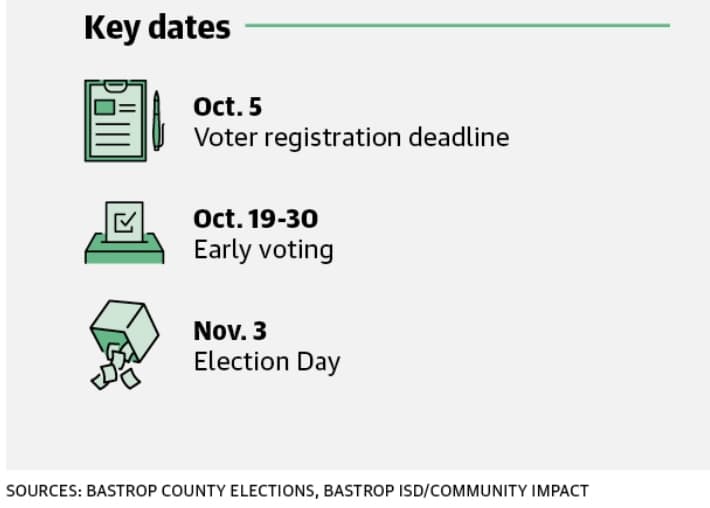
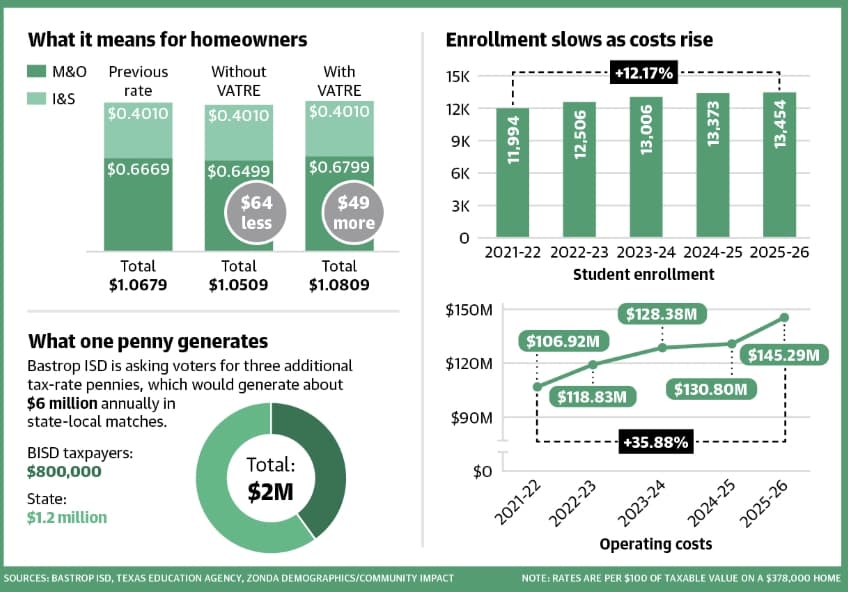
Bastrop ISD voters will decide Nov. 3 whether to approve a 1.3-cent tax rate increase through a voter-approval tax rate election, or VATRE. The measure would generate about $6 million annually.
The ask comes as the district faces a $1.7 million budget shortfall and another state-mandated reduction to its maintenance and operations tax rate, or M&O. State law requires districts to lower M&O rates as property values rise to limit local tax revenue growth.
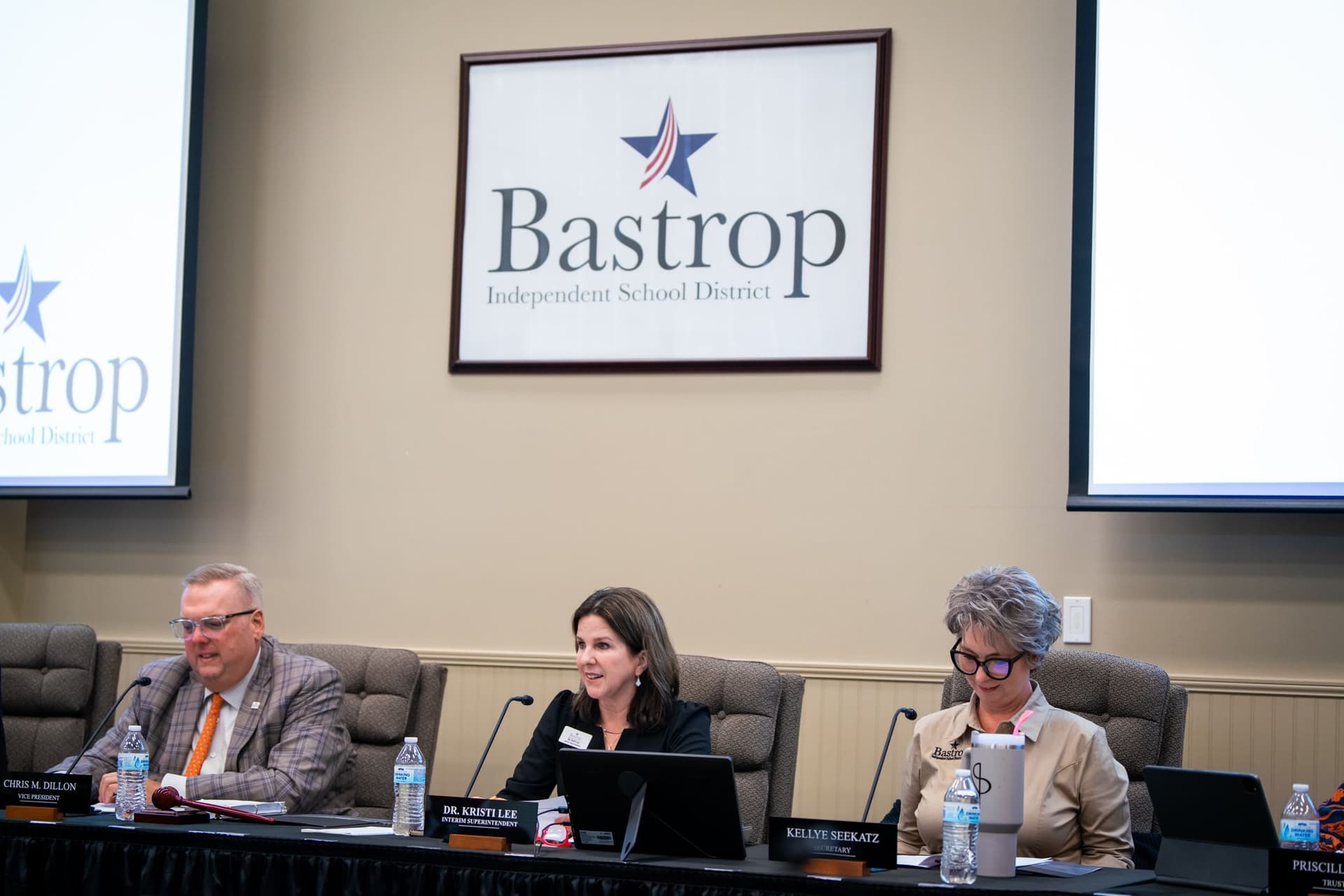
“Not once, not twice, but year after year,” Board President Chris Dillon said of the district’s declining M&O rate.
Chief Financial Officer Mike White also pointed to inflation, which he said has risen about 30% since 2019, while the state’s basic allotment, or funding the district gets per student, “just went up 0.8%.” Texas lawmakers approved $8.5 billion in new public school funding in 2025, but districts said funding gaps remain.
“We still have to do all the same things,” White said. “It’s eating our lunch and is really affecting our ability to balance budgets and to hire staff.”
Breaking it down
Bastrop ISD trustees adopted the 2026-27 budget on June 16, with a planned $1.7 million draw from the fund balance.
A fund balance serves as a district’s financial cushion and can be used to cover unexpected costs and balance the budget.
White said the district’s reserves are above recommended levels, but warned that repeated deficits can quickly add up.
Slowing enrollment limits the district’s attendance-based funding, while rising operating costs put additional pressure on its budget.
As property values rise, the state compresses school districts’ M&O tax rates to limit the growth of local property-tax collections.
That compression will lower Bastrop ISD’s M&O rate by 1.7 cents for the 2026-27 school year.
Looking back
Bastrop ISD has gone more than two decades without raising its total tax rate. City of Bastrop financial records show the last time the district’s total tax rate rose was in 2005, when it grew from $1.6430 to $1.7420.
Board President Chris Dillon said the state has repeatedly lowered BISD’s M&O rate even as district costs continued to rise.
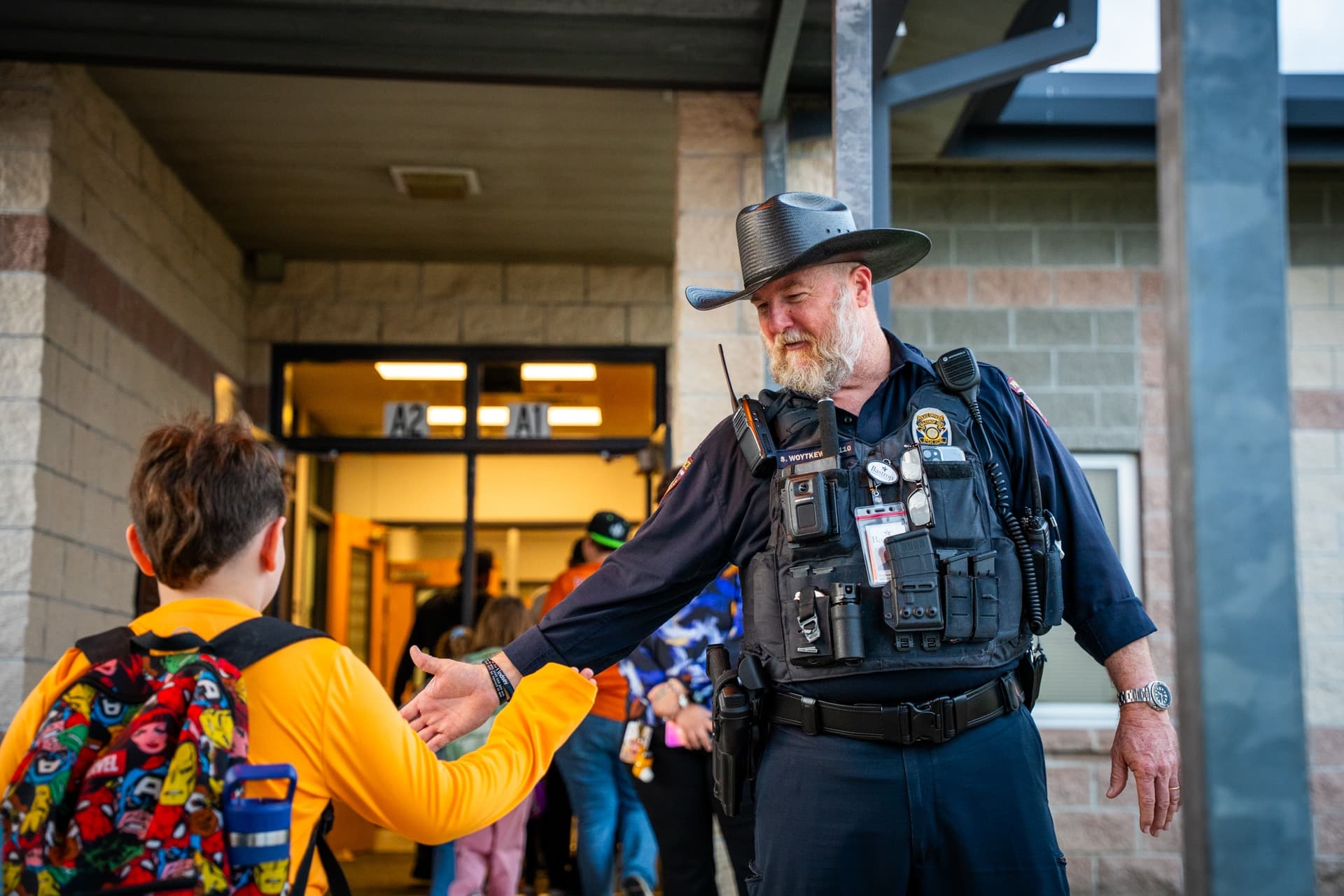
White said state funding falls roughly $3 million short of special education costs and about $2.5 million short of the cost of state-required campus officers—two funding pressures absorbed within the district’s overall budget.
He explained that the district is already “running pretty lean” as department heads were directed to cut 15% of their spending during the budget process.
“Like everyone, we have more needs than we have resources,” he explained, noting that a voter-approved tax-rate election would offer more flexibility to address shortfalls.
White said revenue generated from a tax-rate increase could be used to pay the projected shortfall, improve staff compensation and retention, add campus officers, and maximize school funding under the current state formula.
What’s next?
Early votes can be cast at the Bastrop County Courthouse Annex in Bastrop, the Smithville Recreation Center, the Cedar Creek Annex or the North Bastrop County Community Annex in Elgin. Election Day voting can happen at any county voting center. If approved, trustees will return to amend the 2026-27 budget to account for the additional revenue and lock in final details on how the funds will be allocated.