Producers across Bastrop County are adjusting their business models as beef prices and ranching costs continue to rise. (Courtesy La Tierra Fina)
Editor's note: Click here to see this story as it appears in Community Impact's September 2026 printed edition.
Bastrop County ranchers are balancing rising production costs with customers’ budgets as beef prices climb nationwide.
Ongoing drought has contributed to smaller herds, while screwworm-related limits on Mexican cattle imports have further tightened supplies. Meanwhile, strong demand for beef is expected to keep prices elevated through 2026, according to the U.S. Department of Agriculture.
Yissell Torres, who co-owns Bastrop ranch La Tierra Fina, said the market has been a “double-edged sword,” noting the rising costs of production can outweigh the higher value of the cows.
She and other local producers are responding to the pressures by changing how beef gets from the ranch to the freezer.
Behind the evolving sales strategies is a Bastrop County cattle industry with fewer animals each year.
USDA estimates show that between 2021 and 2024, the county’s cattle inventory fell 44%.
Despite the smaller herd, cattle remains a major part of the local agricultural economy, with sales totaling nearly $27 million in 2022, accounting for 46% of Bastrop County’s total agricultural sales.
With nearly half the local agricultural economy tied to cattle and generations of ranching at stake, local producers are adapting to mounting costs with more emphasis on direct sales and flexible buying options that fit customers’ budgets and freezer space.
That move toward direct sales is also gaining momentum, with the USDA Census of Agriculture showing direct-to-consumer food sales are up 42% compared to a decade earlier.
Source: USDA National Agricultural Statistics Service/Community Impact
La Tierra Fina
One animal that does not sell as expected can mean months of financial recovery, Torres said.
Because the operation is small, she and her partner Leticia Ortegon are working to reduce that risk by moving toward preselling each animal and matching customers with purchase sizes that fit their budgets and freezer space.
The approach gives the ranch more financial security before processing while helping customers plan larger beef purchases.
“Customers want a rancher they can contact directly, and they appreciate knowing that the person answering their questions is also one of the people caring for the cattle,” Torres said.
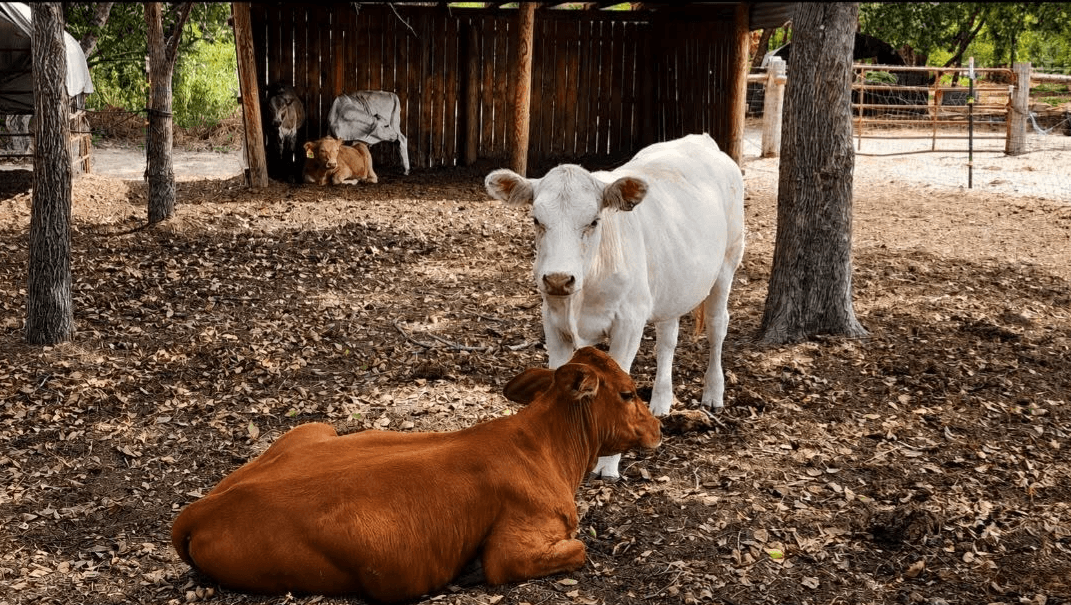
Cattle rest in the shade at La Tierra Fina, a family-owned, woman-operated ranch established in 2019 in Bastrop. (Courtesy La Tierra Fina)Courtesy La Tierra Fina
“We are a small operation, so adapting is not an abstract business exercise. It can mean the difference between earning enough margin to reinvest in the ranch and spending months recovering.” Yissell Torres, La Tierra Fina owner
Watterson Ranch
Bastrop’s Watterson Ranch representative Trina Miller said she has seen an influx of ranch-direct customers and has expanded operations to include stocking their freezers within 75 miles of Bastrop.
She emphasized that customer relationships remain central as more people buy directly each year, adding that customers value knowing where their beef comes from and that their preferences guide each expansion idea.
That growth comes with financial challenges: Miller said higher selling prices do not necessarily cover rising operating expenses—leaving ranchers weighing smaller herds or other ways to control costs.
Watterson Ranch's multigenerational cattle operation is among several navigating shifts in the beef industry as cattle inventories decline and more producers turn to direct-to-consumer sales.Courtesy Watterson Ranch
“Our focus remains on protecting the land, caring for our livestock, and keeping the ranch sustainable for the next generation.” Trina Miller, Watterson Ranch representative
La Estancia Ranch
Owner Amber Gonzalez said higher beef prices have drawn first-time buyers to La Estancia Ranch, where she said the family offers cuts through their Brahman Darlin Beef brand with no minimum purchase, along with payment plans and a free 5-cubic-foot freezer for each customer’s first quarter-beef purchase.
"We have found [our] options help the average family put high-quality beef on their table," she said.
The family also offers skin care products made with tallow, or rendered beef fat, including a magnesium-infused balm, sugar scrubs, scalp oil and more.
In addition to meat, La Estancia Ranch sells skin care products made with tallow, or rendered beef fat. Courtesy La Estancia Ranch
“If there is one thing for certain in ranching, it's that there will be challenges. It's all about diversification, education, resilience and knowing when to make changes for improvement.” Amber Gonzalez, La Estancia Ranch owner
Bastrop Cattle Co.
Sourcing cattle from three family-owned ranches in Bastrop and Fayette counties offers some protection from market fluctuations for Bastrop Cattle Co., but owner Max Kruemcke said operating costs have still risen.
Six years into selling all the company’s beef directly to customers, Kruemcke said he is seeing a surge as grocery prices climb. For half- and whole-beef orders, he said the team helps buyers choose cuts, saves their preferences for future purchases and handles processing arrangements.
New products are also on the horizon, as Kruemcke plans to debut beef sausage products, subscriptions and additional bundles.
Bastrop Cattle Co. has operated as a direct-to-consumer beef business for six years.Courtesy Bastrop Cattle Co.
“We are the ones packing the orders, so it’s very easy for customers to talk with us.” Max Kruemcke, Bastrop Cattle Co. owner
The outlook
As they look ahead, the Bastrop ranchers said maintaining customers’ trust remains central to their businesses.
Their expansion plans build on those relationships, with customer needs helping guide future investments.
For these ranchers, growth means turning interest in locally raised beef into sales that cover rising costs and support reinvestment while keeping purchases manageable for families.
For Torres, the measure of success is what those changes provide for families.
“If we can continue providing good value, quality beef and a positive overall experience for local families, then we are fulfilling our mission,” she said.
Sources: Amber Gonzalez, Max Kruemcke, Trina Miller, Yissell Torres/Community Impact
Chubby’s Barbershop finds new downtown Bastrop home