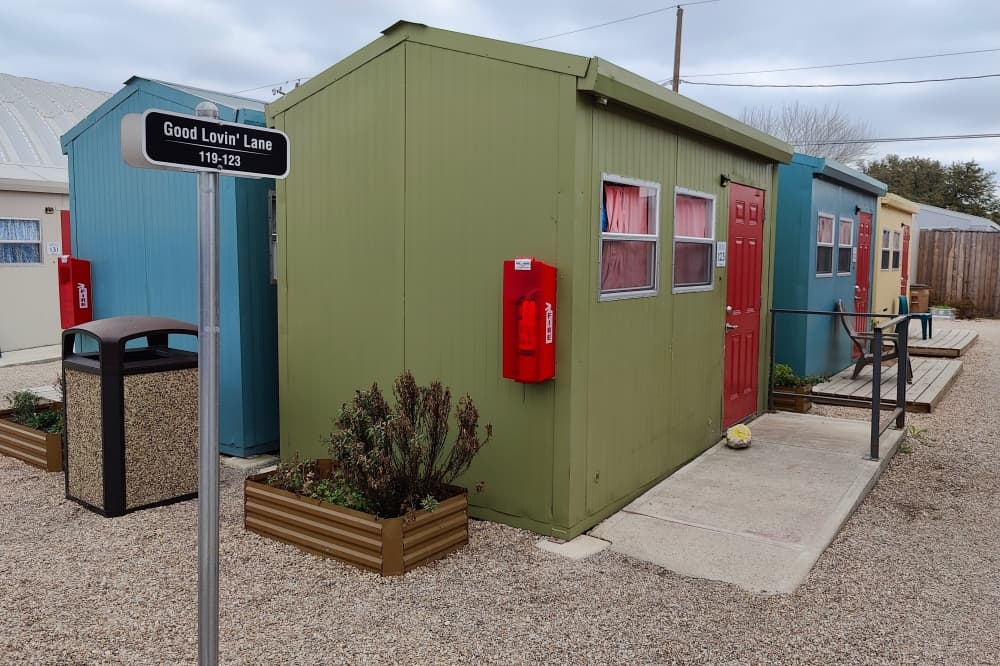
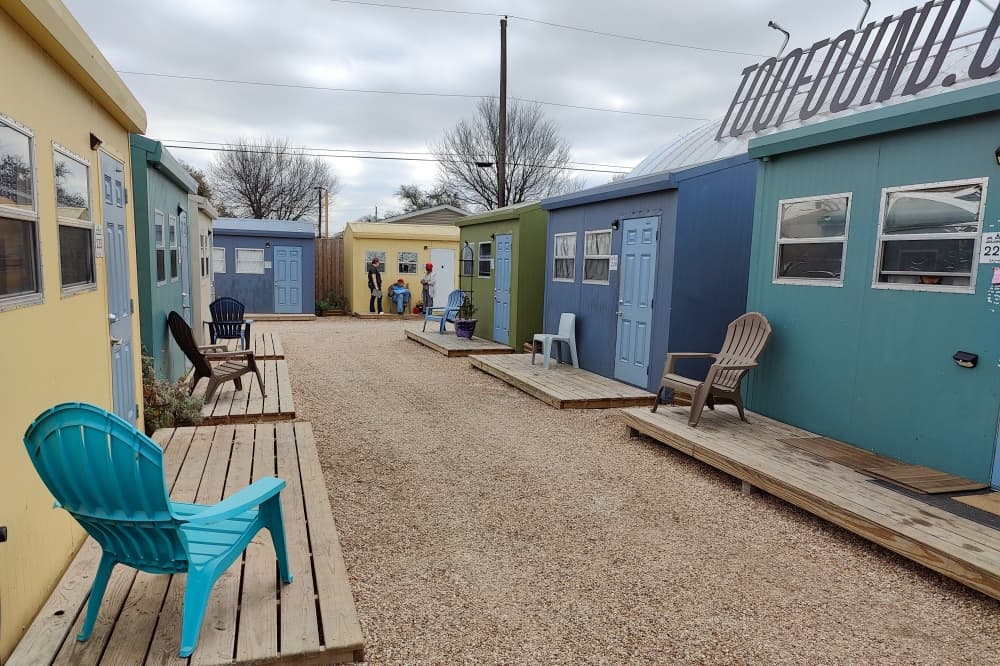
Hundreds of individual cabins and non-congregate shelter units are being developed through The Other Ones Foundation's Esperanza Community expansion. (Ben Thompson/Community Impact)
Millions of dollars were dedicated to several Austin homelessness programs, including the ongoing expansion of the Esperanza community that could place it among the largest non-congregate shelters in the nation.
“At the end of the day, we’re going to see not only 325 [more] people at a time, but that’s going to cycle through. People who are going to have four walls and a roof and a bed, and a place that they can feel safe and secure and start to heal. And ultimately move, get workforce training and into self-sufficiency," council member Ryan Alter said. "There are few things as critical as this that we can do.”
The overview
Homeless response funding approved by Austin City Council Feb. 26 included:
$8 million for Endeavors' management of the city's 300-bed Marshalling Yard shelter this year, with another $8 million addition possible for next year
$2.67 million this year for operation of the city's 145-bed Southbridge shelter by The Other Ones Foundation, or TOOF, in a contract worth up to $20.02 million over five years
A $440,000 addition to Integral Care's contract for its Homeless Outreach Street Team program, worth up to $3.76 million total over five years
Dollars for the Marshalling Yard were already reserved in the city's fiscal year 2025-26 budget. This month's financing update was needed to shift from expiring federal relief dollars to local funds.
Council approved the Southbridge update as TOOF is taking over for the Austin Area Urban League, which previously ran the shelter. TOOF scored highest in a competitive solicitation for the work last year.
The change brings "opportunity for new service delivery" at the shelter off I-35, said David Gray, Austin homeless strategies and operations director, as TOOF is already reaching out to local businesses and civic groups for feedback about its approach.
"That's exactly what we want, right, is kind of a proactive orientation towards how we move the needle forward," he said in an interview.
Zooming in
Additionally, a resolution from Mayor Kirk Watson committing civic support to TOOF's Esperanza initiative advanced Feb. 26. The community is located on state-owned land off US 183 and was first developed in partnership with Texas leaders in response to homeless encampments in the city.
“All throughout this process, the city and the state have been working really closely together, very aligned on our vision and on our mission for wanting to bring more of these types of critical shelter resources to the community," Gray said.
Esperanza is approaching a 200-bed capacity and in the process of adding hundreds more spaces for clients exiting homelessness. Nearly $50 million was set aside for that expansion in 2023 through the Texas Department of Housing and Community Affairs—a move partially facilitated by Watson—and council's action this year was needed to help secure that federal funding formally awarded by the TDHCA board in December.
The city dedicated almost $3 million to TOOF's Esperanza operations last December through an agreement that could total $14.5 million over five years. Watson's February measure didn't reserve more local funding yet but calls to send nearly $8 million more to Esperanza II in two of Austin's future budgets.
Gray called the expansion a "significant impact" for Austin's homeless community.
"I think the population should expect to see much less visible street homelessness. We'll have many more people connected to shelter services," he said. "And what TOOF is really good at is the workforce development component: making sure that people in the shelters have access to job assistance and professional development so that they can transition from Esperanza to a point of self-sufficiency."
What they're saying
Securing the outside dollars would be a boost for one of the city's best-performing shelters that's already brought "phenomenal outcomes" for clients, Watson said.
"The Esperanza Community model helps folks move steadily upward from the streets to safety and dignity, offering case management, workforce development through Skillpoint Alliance, and pathways to permanent housing," he wrote on council's message board.
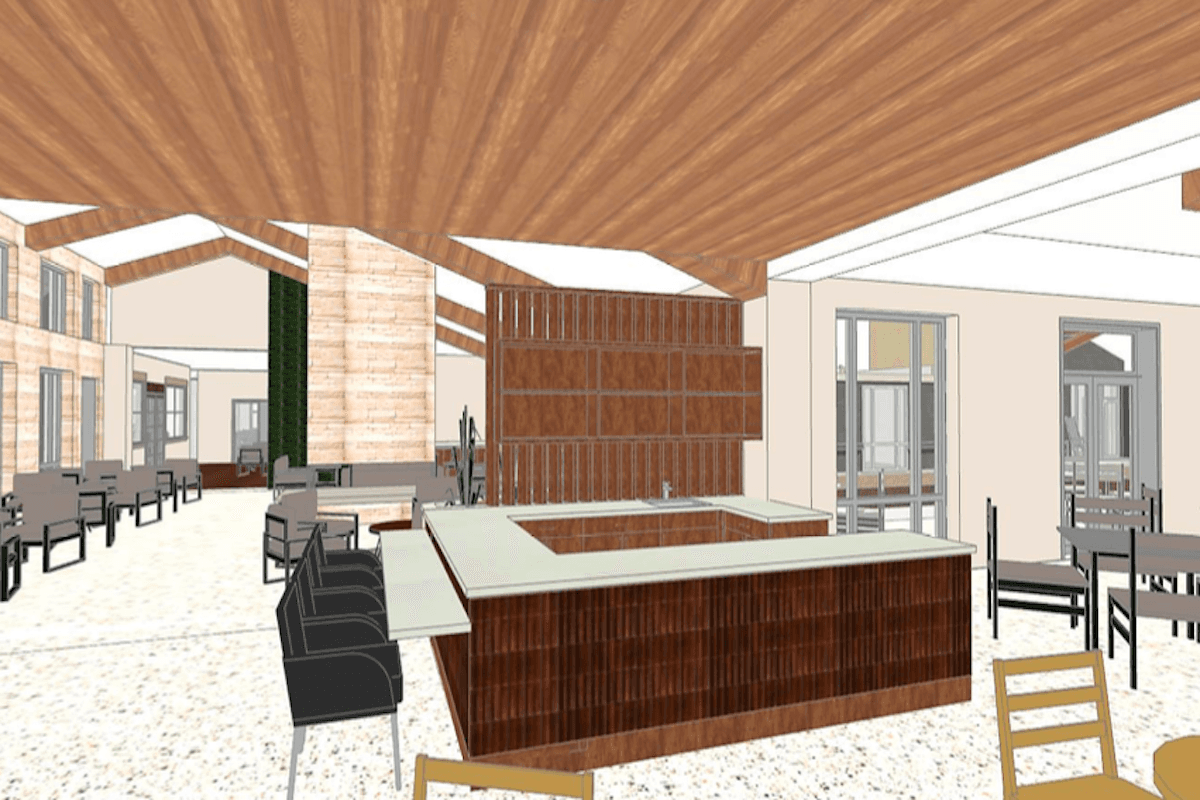
The TDHCA's $48.42 million allocation is a "once in a generation" chance to significantly impact Austin's homeless community, according to TOOF Executive Director Elizabeth Baker. The project also won't rely solely on city dollars once completed, she said, as TOOF is working out sustainable funding to continue after 225 cabins and 100 new shelter units open in the late 2020s.
"This will be the largest non-congregate shelter in the United States, serving more than 1,000 people each year. And based on Esperanza’s community model, proven success, this model will produce strong outcomes for Austin’s unhoused neighbors," Baker said.
TOOF's Esperanza Community is already home to scores of cabins, as well as and workforce training and other resources for residents exiting homelessness. (Ben Thompson/Community Impact)
While Esperanza is located in East Austin, the Downtown Austin Alliance is partnering with TOOF on the project. Senior Vice President Bill Brice said Austin shouldn't pass up the opportunity to leverage outside resources for an established local benefit.
“Over the past decade, The Other Ones Foundation has demonstrated their effectiveness as a shelter developer and operator, but also in the areas of job training and workforce development," he said. "This allows us to unlock and partner with the state to draw down $49 million as well as state-owned land to create new shelter beds that will save peoples’ lives.”
What else?
The city remains on the lookout for extra shelter space, with an estimated community-wide need of hundreds more beds still remaining. Some new facilities could be funded through Austin's next bond package, Gray said.
The expansion or redevelopment of Northbridge following the city's purchase of adjacent land, the closure and replacement of the Marshalling Yard, and the closure and relocation of the Eighth Street Shelter and Austin Resource Center for the Homeless downtown are all potential future options, according to Gray. Other expansions of Austin's shelter network are under consideration as well.
“We’re always searching for opportunities to either acquire property that is turnkey for us to house families and children and adults, or through land acquisitions that give us an opportunity to do something a little bit more custom-built and tailored for the populations we’re trying to serve," he said.