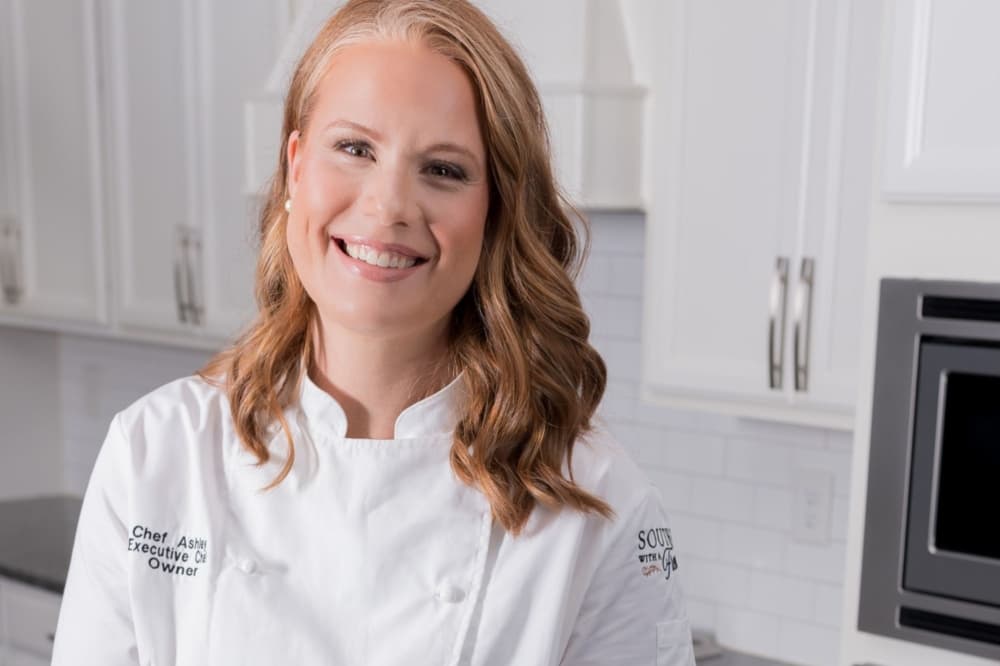
Ashley Olson is the founder and executive chef of Southern with a French Twist, a Hays County-based personal-chef business offering in-home meal services, small-event menus and retreat catering.
The award-winning personal chef spoke with Community Impact to offer tips for those who want to eat healthier but aren’t sure where to start.
This interview has been edited for length, style and clarity.
What are your top three starting points in the kitchen when making a shift toward healthier eating?
I always tell people to start smaller than they think and to release the idea that healthy eating requires deprivation. In my experience, restriction is rarely the answer. Nourishment comes from adding care, not taking joy away.
Pantry staple: a high-quality olive oil. When you enjoy what you’re cooking with, you naturally cook more simply and with more intention. A beautiful olive oil encourages you to roast vegetables, finish dishes thoughtfully, and let food be satisfying without needing excess.
Fridge staple: something bright and living. Pickled vegetables, fermented foods, fresh herbs, or citrus. These elements wake food up and support digestion, which I’ve learned is just as important as what’s on the plate. When food tastes vibrant, you don’t feel like you’re “missing” anything.
Technique: roasting. It’s approachable, forgiving, and deeply nourishing. Roasting brings out natural sweetness and comfort without requiring heavy sauces or complicated methods. It’s one of the easiest ways to make vegetables feel craveable rather than obligatory.
What does a well-rounded menu look like in your kitchen, and how do you balance indulgence with wellness?
A well-rounded menu has contrast and care. There’s richness balanced with brightness. There are grounding elements alongside fresh, enlivening ones.
Indulgence shows up in thoughtful moments rather than excess, while wellness shows up in how the meal supports conversation, energy and presence.
Through my own work with a nutritional therapist, I’ve learned that stress, speed and perfectionism can undermine even the most healthy meal. That insight has deeply shaped how I cook for others. When people feel relaxed and connected at the table, digestion improves, satisfaction increases, and food does what it’s meant to do: it nourishes.
What’s one comfort-food dish you’ve adapted over time to make it healthier, and which tweaks made the biggest difference?
Over time, I’ve learned that comfort doesn’t come from heaviness. It comes from familiarity, balance, and how a dish makes you feel afterward. The biggest shift was moving away from excess and toward intention. Mac and cheese is a great example.
I use better-quality cheese in smaller amounts, build flavor with roasted garlic or a touch of Dijon, and often add vegetables, fresh herbs and a crisp topping to create contrast so the dish feels complete without relying solely on cream and butter.
Those changes made the biggest difference. The dish still feels indulgent, but it supports the body rather than overwhelming it. That’s the goal for me. Food that feels generous, grounding, and joyful—especially when shared with others.