Editor's note: To view this story as it appeared in the May edition of Community Impact, click here.
A decade after two historic Hays County floods, memories are vivid as recovery continues.
Mark Gleason, a Blanco Gardens resident and former San Marcos council member, recalls standing outside his home during the first flood as waters receded, surrounded by eerie silence. There was no highway noise, no electricity, no neighbors—only the sound of rushing water.
“The roar of the river and that was it... I’ll never forget the roar of the river,” Gleason said. “You could almost feel it under your feet. It was so powerful.”
Virginia Parker, then Martindale resident and now executive director of the San Marcos River Foundation, remembers that same haunting sound from her own experience of the flood.
"Just such an overwhelming sight to see the river that full and raging—it’s a sound that unless you’ve heard it, you can’t picture it,” Parker said.
What happened
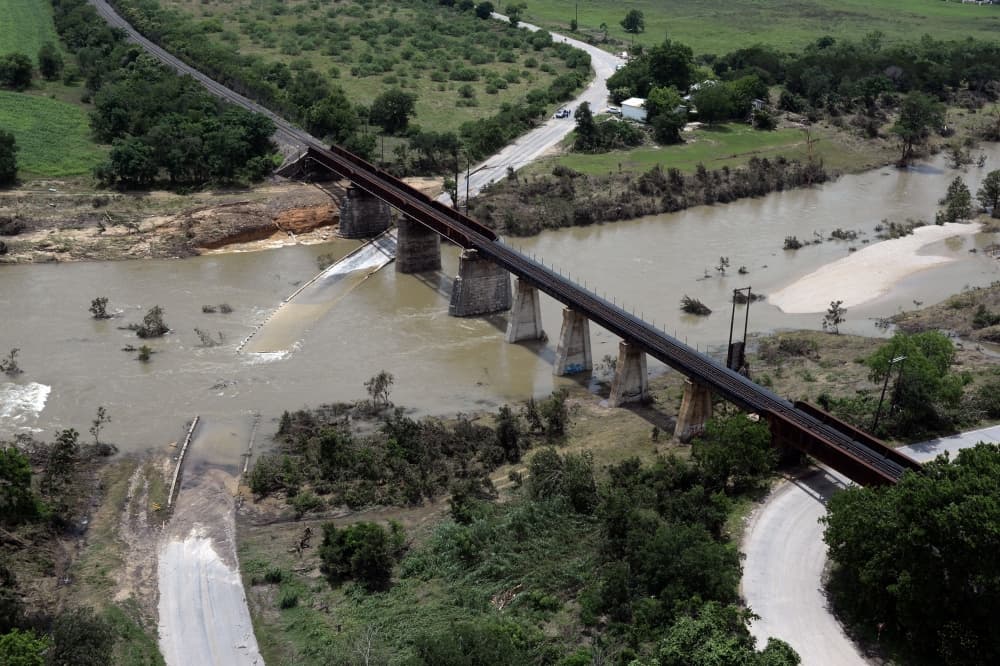
The Memorial Day flood struck on May 23-24, 2015, causing the Blanco River to rise rapidly and overflow into the surrounding areas, according to the National Weather Service. Wimberley and San Marcos were among the hardest hit, suffering catastrophic property damage and 11 deaths.
Saturated ground turned stormwater into dangerous runoff. In Wimberley, the Blanco River surged from around 9 feet to 40 feet overnight, rising 5 feet every 15 minutes. In San Marcos, it crested at 43.08 feet, after being below 15 feet just hours earlier.
The community began recovery as the county was declared a federal disaster area. Less than six months later, the All Saints flood hit. Thanks to improved efforts, no lives were lost, according to San Marcos' city website. Still, the flood destroyed much of the progress made.
“It was devastating,” said Kharley Smith, former Hays County’ emergency management coordinator. “Disaster survivors had done so much work ... only to face destruction again.”
Many families, like Gleason’s, had just returned home after months of repairs.
“It was a kick in the teeth,” Gleason said.
Next steps
Flood debris destroyed homes, blocked drains and uprooted trees. Emergency services were overwhelmed, prompting National Guard deployment and helicopter rescues. Relief groups like the Red Cross and Samaritan’s Purse assisted, with shelters set up in churches, schools and community centers, according to current San Marcos mayor Jane Hughson, then a council member.
In response, the Blanco River Regional Recovery Team, or BR3T, formed to support long-term recovery. It now serves four counties, helping residents rebuild and access resources, President Earl Bolls said.