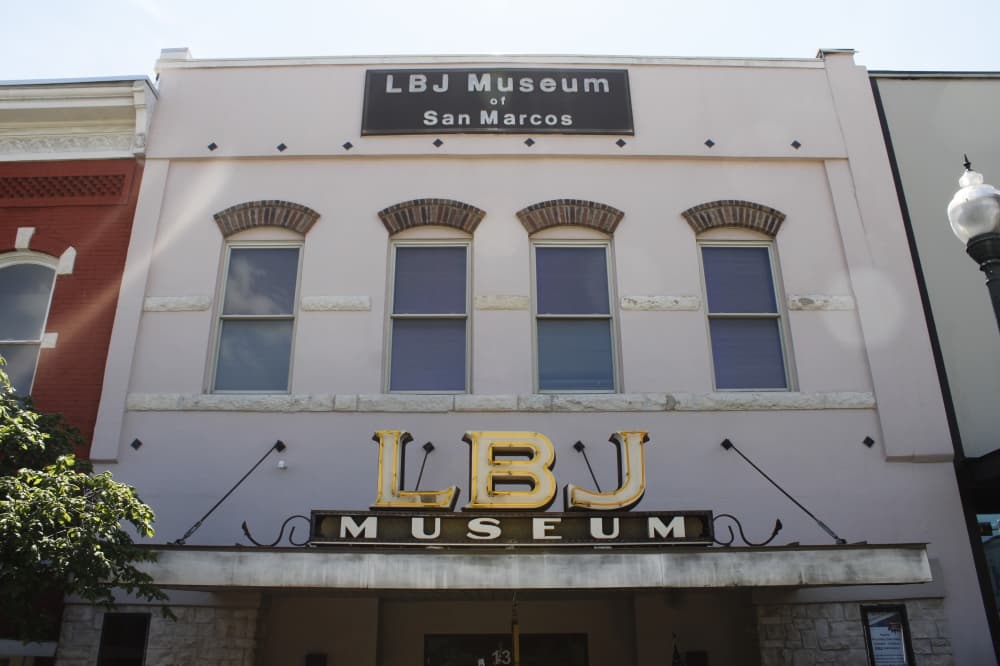
Lyndon Baines Johnson, the 36th president of the United States, attended Southwest Texas State Teachers College, now known as Texas State University, from 1927-1930. In 1998, the Hays County Commissioners Court voted to honor Johnson’s time at the university in San Marcos with a museum.
The Lyndon Baines Johnson Museum of San Marcos opened in 2006 and is celebrating its 20th anniversary throughout the year.
The gist
The museum’s mission is to highlight the values Johnson learned during his time at the San Marcos university that influenced him during his presidency, said Debby Butler, LBJ Museum of San Marcos manager.
“He loved San Marcos,” Butler said. “He loved coming back to San Marcos. He really loved the city and some of the values that he learned at the school are what we try to show.”
In order to earn funds for his tuition at the university, Johnson taught at a segregated school in Cotulla servicing impoverished Mexican-American students, according to the National Park Service.
“He got to see segregation firsthand, that it doesn't work and it's not good for anybody,” Butler said. “When he had a chance to [fight] it, he did.”
Johnson signed the Higher Education Act at the Southwest Texas State Teachers College campus in 1965, increasing access to postsecondary education.
“At the time of the signing, his comment was that he remembered those kids' faces, and that no one else would have to go through [what they did],” Butler said.
What’s next
The museum will hold events throughout the year to celebrate its 20th anniversary, Butler said, including:
- July: United States birthday celebration
- August 13: Summer Chautauqua, a presentation on fashion through the lens of Lady Bird Johnson and Jackie Kennedy
- August: Community birthday for Johnson
- September: Back-to-school contests with Head Start programs
- October: Fall lecture
- December 6: Official 20-year anniversary celebration with museum dedication and reception
“The thing that's so amazing about the museum is, in the 20 years we've been here, we have not had an admission fee,” Butler said. “We're free to the public, all of our educational programs. We've been able to maintain [the museum] with grants, donations and the generosity of people for 20 years.”