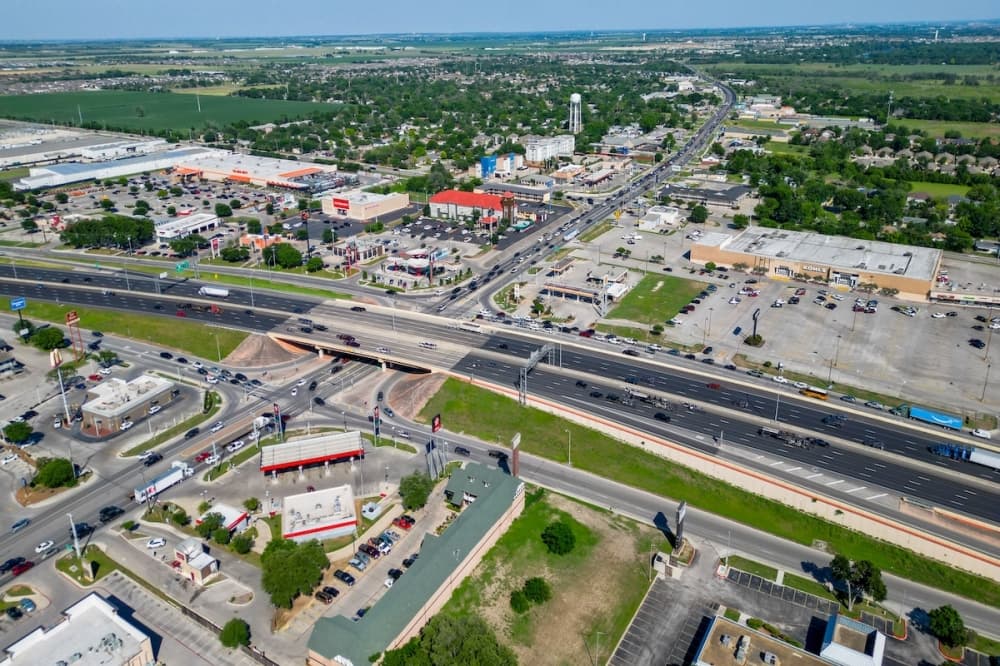
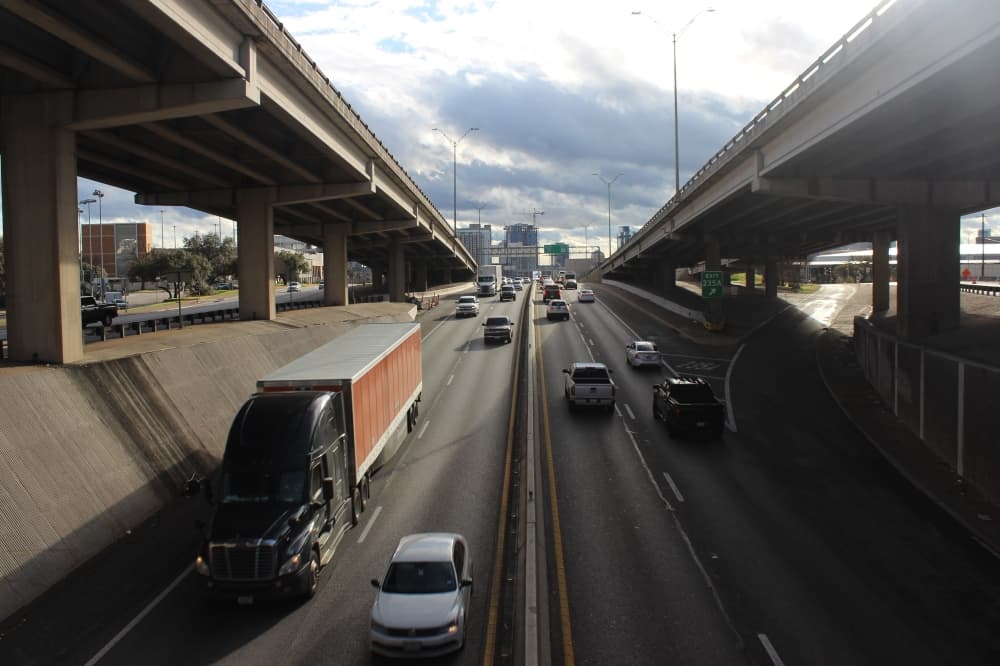
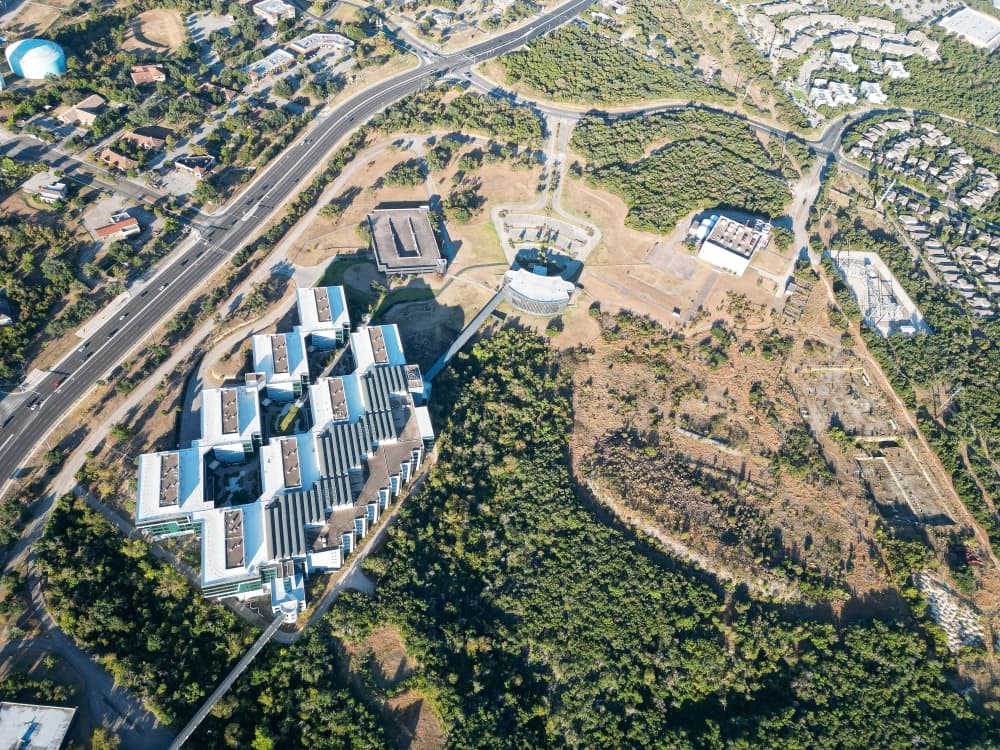
Austin is planning to add several public areas spanning I-35 after the highway is lowered and its upper roadway decks removed. (Ben Thompson/Community Impact)
As Austin continues to plan a series of future amenity decks and improved crossings over I-35 as its state-led expansion progresses, city staff have proposed a final outline for two "stitches" covering portions of the highway between 41st Street and the Red Line railway.
The big picture
Alongside the Texas Department of Transportation's multibillion-dollar development of a widened, sunken I-35 through Central Austin, the city has been working on its own related project to bridge the east and west sides of the highway with new public spaces.
Although the entities are coordinating on planning and construction, Austin's program isn't part of TxDOT's I-35 project. It's also separate from larger amenity decks being developed by The University of Texas at Austin alongside its campus.
City Council finalized a framework last spring for the local initiative to build out a series of public decks, or larger caps and smaller stitches. Based on that plan, the city will first fund the foundations of three multi-acre caps downtown as well as two 300-foot northern stitches for $104 million total—a smaller package than was originally hoped for under the community Our Future 35 vision plan.
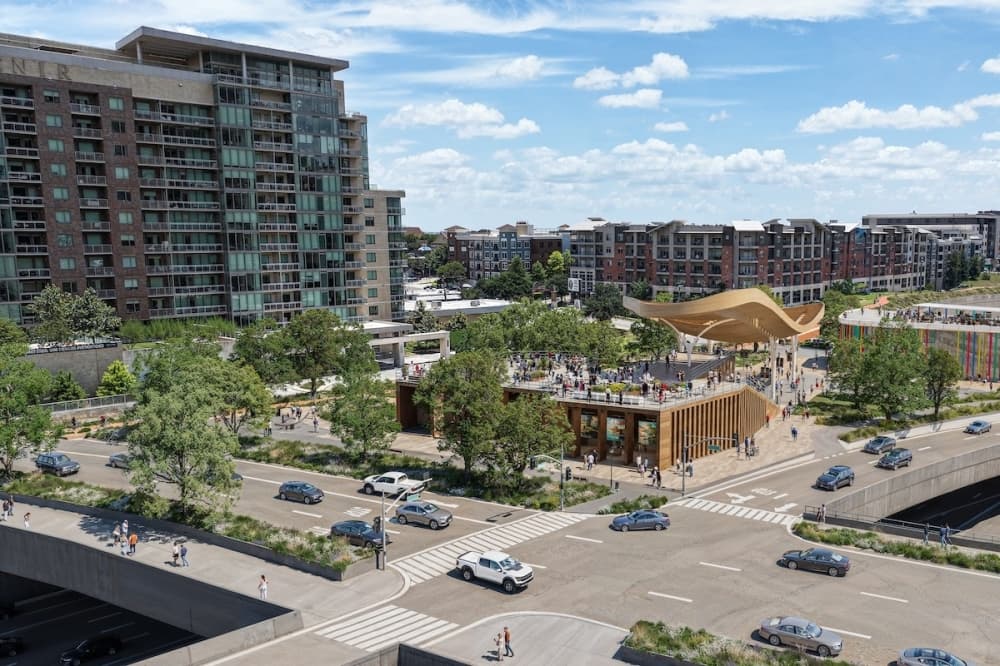
An amenity deck around 11th and 12th streets downtown is included in Austin's proposed cap and stitch initiative. (Rendering courtesy city of Austin)
Once that work is complete and the roadway is ready, building the actual caps and stitches will likely cost hundreds of millions more. The city has yet to detail its financing plan for that infrastructure, and also lost more than $105 million in previously approved federal support for the biggest planned cap between Cesar Chavez and Fourth streets downtown.
Officials learned late last year that TxDOT had changed some of its project timelines, moving up funding and design deadlines for Austin's deck projects. That included a recent deadline to finalize the scopes of the northern stitches connecting the Hancock and Cherrywood neighborhoods.
The approach
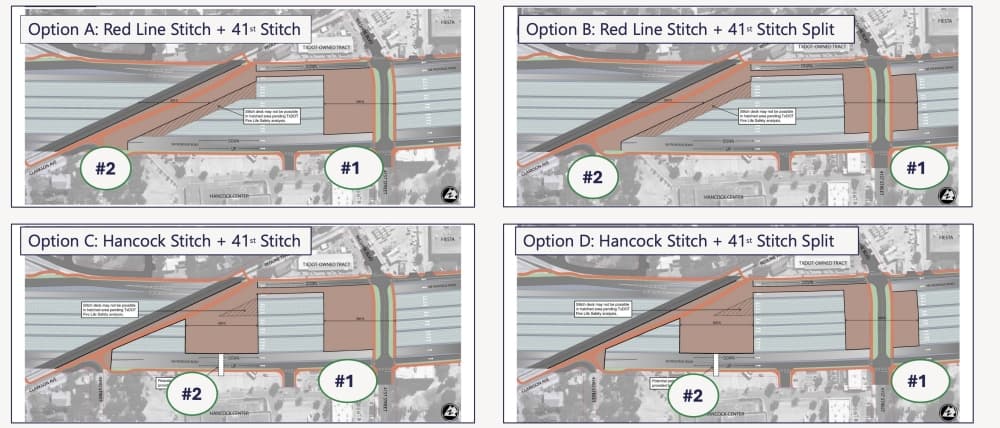
After a public open house and council reviews in the fall, city staff settled on one of four similar proposed options for the northern 41st Street and Red Line stitches. Their favored "Option B" would cover nearly 2.5 acres between 41st and 43rd streets, with foundational roadway elements and the future stitches costing an estimated $69 million total.
That outline includes:
A highway deck spanning the north and south sides of 41st Street over I-35 with the capacity for amenities like small buildings and shade trees
A deck on the south side of the railroad crossing providing access to a future Red Line station west of I-35
A deck connection between both pieces along the east side highway frontage road
New shared-use pathways throughout the project area
City staff recommended one of four options for new decks and improved crossings over I-35 in Central Austin. (Courtesy city of Austin)
Zooming in
All four options were graded based on factors like transportation connectivity, safety, economic opportunity and project costs. Options A and B were both scored at the same level, and the latter's slightly lower costs contributed to staff's final recommendation.
"Option B is the most fiscally responsible alternative while still reflecting the community’s expressed desire for both a pedestrian and bicycle connection across the highway, and a split configuration at 41st Street. It provides the strongest balance between active transportation mobility benefits, feasibility, and cost," transportation and financial officials wrote in a Jan. 9 memo.
Austin residents also favored Option B in a weighted scoring activity during a November open house; both it and Option D led the four designs with roughly the same amount of positive feedback.
Most of the project cost—an estimated $60.3 million—will be dedicated to building the northern stitches themselves down the road. The remainder, about $8.4 million, will be used for the initial roadway elements needed before future deck construction.
Council budgeted $24 million for those elements last spring, meaning Option B preserves $15.6 million in case of any cost overruns, escalation or other unforeseen impacts, according to the city.
What's next
With Austin's northern stitch plan now finalized, city leaders must now consider how to pay for the full cap program. A deadline for that decision was initially set for this fall but recently moved up to the spring, leaving officials with a compressed timeline to lay out Austin's funding strategy.
City management is now meeting with council offices to discuss the financing outlook. The issue will next be publicly taken up during a City Council work session in March, when full funding and phasing plans for the caps and related amenities will be presented. A council vote on those details is now expected in May ahead of TxDOT's deadline to add any future decks to its I-35 construction plans.
New stoplights, reduced speed limits: 6 Austin area transportation updates
TransportationKeller - Roanoke - Northeast Fort Worth